


Audio By Carbonatix
A heated debate is currently gripping the nation: should senior high school students in Ghana be allowed to keep their natural hair?
On one side, many argue that forcing students to cut their hair is a leftover from colonial times, a rule that suppresses our identity and stops our youth from embracing who they are. On the other side, people worry about the consequences of removing such rules, fearing it could lead to a loss of discipline in our schools.
At first glance, the issue seems simple. Why should a hairstyle, which doesn’t affect a student’s ability to read or solve a math problem, be so strictly controlled? This perspective is powerful and rightfully challenges us to let go of past impositions.
However, as a society, we must look deeper. Schools are not just buildings for academic learning; they are communities built on shared rules and a common purpose. Their main goal is to create an environment where focus, discipline, and equal standing are prioritized. The concern is that if we remove one key rule in the name of personal freedom, we must be prepared for what comes next.
This is often called the "slippery slope" argument. Let’s consider it logically. If we agree that students can wear any hairstyle because it doesn't impact their learning, how do we then respond to other requests based on the same logic?
For instance, what do we say to:
1. A student who refuses to wear the school uniform, arguing that clothes don't affect their grades?
2. A student who wants to wear heavy makeup, false eyelashes, or multiple rings and bangles to class?
3. A student who wishes to pierce their nose or tongue, or get visible tattoos?
4. A student who alters their uniform to be extremely short or sag their trousers low?
If our only principle is "whatever doesn't directly stop learning is allowed," then we would have to say "yes" to all these scenarios. This would fundamentally change the character of our schools, shifting the focus from collective identity and learning to individual appearance and style.
We only need to observe trends on social media platforms like TikTok to see how quickly personal expression can push boundaries. While creativity is valuable, the school’s role is to provide a counterbalance, a structured space that prepares young adults for the world by teaching them that rights come with responsibilities.
This is not about saying Ghanaians cannot handle freedom. It is a practical recognition that for adolescents, clear boundaries provide a sense of security and order that actually enables true freedom to learn and grow.
So, where does this leave us?
The solution is likely not an absolute "yes" or "no." Instead, we need a thoughtful middle path. Perhaps our schools can develop grooming codes that allow for neat, natural, and culturally significant hairstyles while discouraging styles that are extreme, unkempt, or disruptive.
The hair debate is about more than just hair. It is a conversation about the kind of values we want to instil in our next generation. It forces us to balance two important goals: celebrating our identity and maintaining the discipline that underpins achievement. As we move forward, our challenge is to find a balance that honours both our heritage and our future.
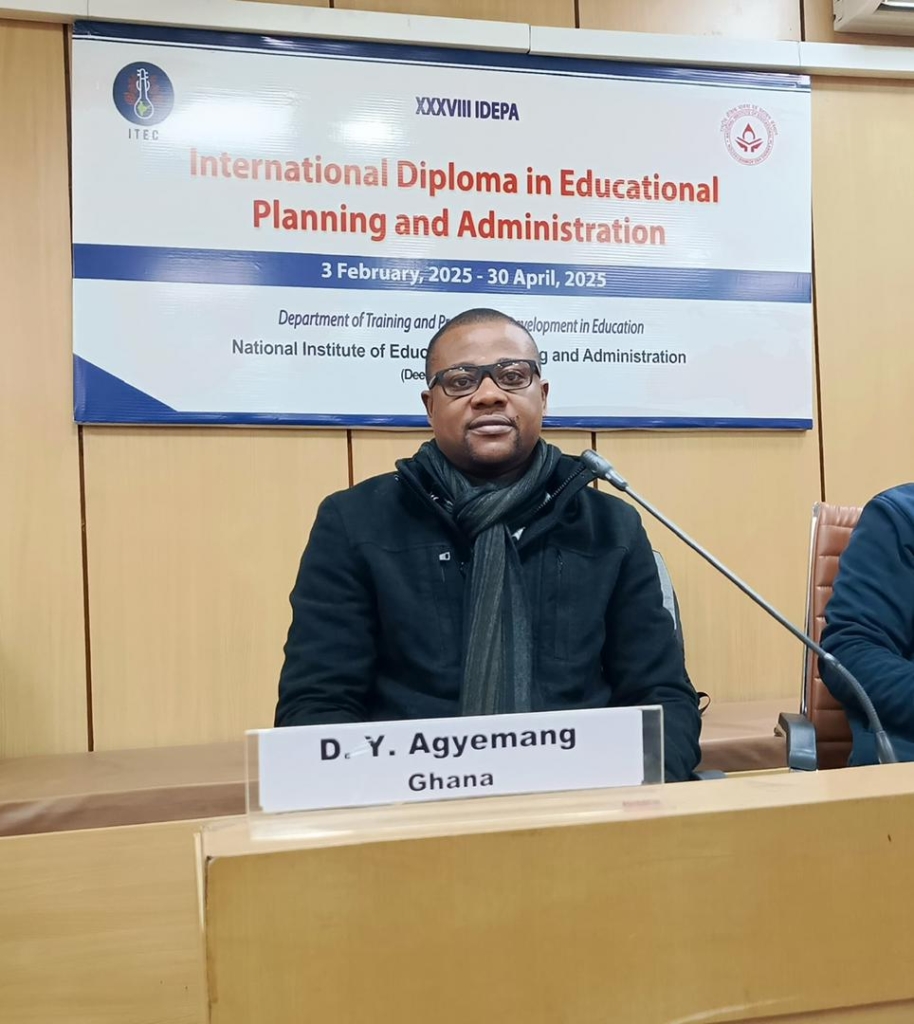
Written by David Agyemang Yeboah
Public Relations Officer
GES, Akuapem North Municipal
Latest Stories
-
Removal of GH₵1 levy won’t automatically lower pump prices – Arko Nokoe
2 minutes -
Decision to strip Senegal of AFCON title reflects independence of institutions – CAF President
7 minutes -
Energy Committee Vice Chair assures Ghanaians on stability amid fuel prices
35 minutes -
Mahama hails 48 Engineer Regiment after successful disaster recovery mission in Jamaica
37 minutes -
Rising crude prices expose flaws in ‘One Ghana Cedi’ levy – NPP MP
45 minutes -
TechServe Employability Programme launched to deploy females in ICT into startups
1 hour -
Parliament passes Security and Intelligence Agencies Bill, renames NIB to BNI
1 hour -
Ghana’s fuel supply secure, but prices remain uncertain – Bulk Oil Distributors
2 hours -
Adu Boahene’s case: I’m not aware of theft or missing GH¢49m – Prosecution witness tells court
2 hours -
Ghana Deposit Protection Amendment Bill 2025 passed
2 hours -
Minority Leader warns of neglect in agriculture amid focus on gold for reserves
2 hours -
Minority alleges ‘state capture’ in mining sector, points to Ibrahim Mahama’s influence
2 hours -
Make your relationship independent
3 hours -
Poor road condition on Kumasi-Bosomtwe stretch puts patients’ lives at risk
3 hours -
Standard Chartered invests in next generation with youth empowerment session at St. Louis SHS
3 hours