

Audio By Carbonatix
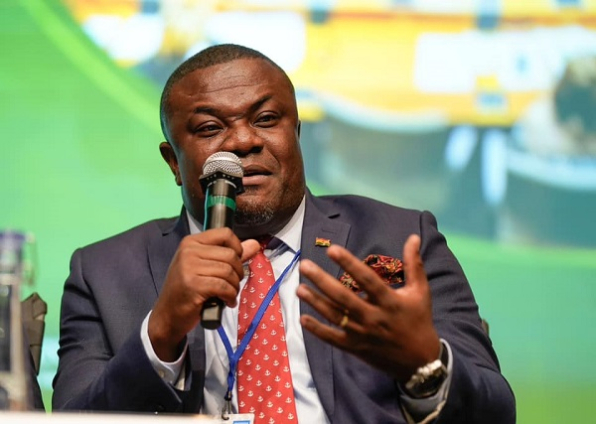
The Deputy Ranking Member on Parliament’s Energy Committee, Collins Adomako-Mensah, has argued that the recent surge in global crude oil prices has exposed fundamental weaknesses in the controversial “One Ghana Cedi” fuel levy.
According to him, the levy—introduced at a time when crude oil prices hovered between $60 and $70 per barrel—was based on overly optimistic assumptions about stability in the international oil market.
Speaking in an interview on Joy FM’s Top Story, the Afigya Kwabre North MP said the Minority had consistently warned government against relying on favourable external conditions to justify additional fuel taxes.
“We made the point clearly that crude oil prices are not within the control of government, and therefore decisions based on temporary stability could backfire,” he stated.
Crude oil prices have now surged beyond $100 per barrel, triggering upward adjustments in fuel prices at the pumps and intensifying pressure on consumers.
The lawmaker said this development confirms the Minority’s long-held position that the levy would become burdensome under changing global conditions.
He maintained that the policy reflects a broader problem of using taxation as a primary tool to address structural challenges in the energy sector.
“It is not prudent to tax your way out of problems. What we are seeing now is the direct consequence of that approach,” he stressed.
Mr. Adomako-Mensah acknowledged efforts by Bulk Distribution Companies (BDCs) to absorb some cost pressures in a bid to cushion consumers, but insisted that such measures are not sufficient in the face of rising global prices.
He is therefore calling on government to immediately scrap the “One Ghana Cedi” levy to help reduce fuel prices and ease the burden on Ghanaians.
“Government must also come in and support the consumer by taking off the levy to bring prices at the pump to the barest minimum,” he urged.
The lawmaker further questioned the continued relevance of the levy, noting that it was introduced as an addition to existing charges meant to clear legacy debts in the energy sector.
With government recently indicating progress in settling these debts—including claims of clearing about $1.4 billion and ensuring timely payments to Independent Power Producers (IPPs)—he argued that the justification for maintaining the levy is increasingly weak.
Despite these concerns, he conceded that Parliament has limited authority to compel the Executive to repeal the tax, leaving advocacy as the Minority’s primary tool.
“We cannot force government to repeal it, but we will continue to appeal and push for a reconsideration,” he said.
Mr. Adomako-Mensah noted that prevailing global economic conditions, particularly the volatility in crude oil prices, should prompt government to review its position and prioritise relief for consumers.
Latest Stories
-
Children among 109 dead after boat capsizes off Djibouti, UN says
30 seconds -
OmniBSIC Bank’s 11th health walk promotes fitness and business growth
10 minutes -
2026 World Maritime Day: Danish Embassy organises “The Gulf of Guinea Speaks”
32 minutes -
New Economy will tackle unemployment and restore hope – Ato Forson
37 minutes -
IMMILAC president recounts personal losses as security women lead breast cancer awareness campaign in Wa
45 minutes -
University of Ghana postpones October 12 reopening as GAUA strike persists
59 minutes -
Bahass Foundation launches vocational skills training to support mental health recovery in Wa
2 hours -
NPP orders parliamentary aspirants and their supporters to suspend campaign activities
2 hours -
Techiman unites against child marriage: Joy Impact Makers Awardee leads charge on International Day of the Girl Child
2 hours -
Ghana Psychological Association calls for greater involvement of people with lived experience in mental health care
3 hours -
Ablakwa says Ghana could evacuate more citizens from South Africa if the situation worsens
4 hours -
Violence against girls must be tackled through individual responsibility – Gender advocate
4 hours -
Ghana’s BRICS bid must be guided by national interest – International Affairs Analyst
4 hours -
Journalists look back on a decade of breast cancer reporting in Ghana
5 hours -
President Mahama ends Resetting Ghana tour of Ahafo Region
7 hours