

Audio By Carbonatix
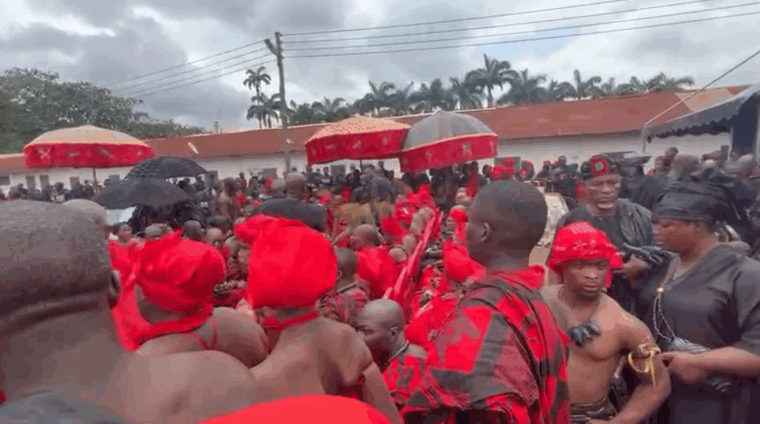
The Manhyia Palace in Kumasi once again became the heartbeat of solemn tradition on the third day of the burial rites of the late Asantehemaa, Nana Konadu Yiadom III.
The palace courtyard echoed with the sights and sounds of heritage, the rhythm of drums, the call of horns, and the wailing of dirges as hundreds gathered to honour the memory of the revered queen mother.
Day three of the Dote Yie rites saw a growing number of dignitaries arriving at the palace grounds.
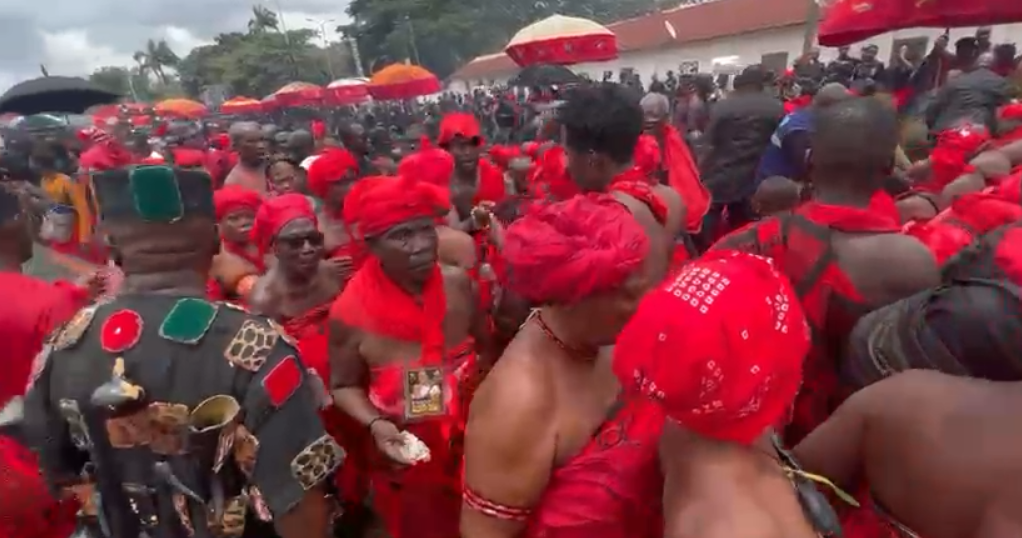
Political leaders, religious figures, and high-profile personalities joined mourners dressed in red and black, each paying their respects to the late Asantehemaa.
Traditional leaders from various tribes across Ghana were also in attendance, commiserating with the Asantehene, Otumfuo Osei Tutu II, and the Ashanti royal family.
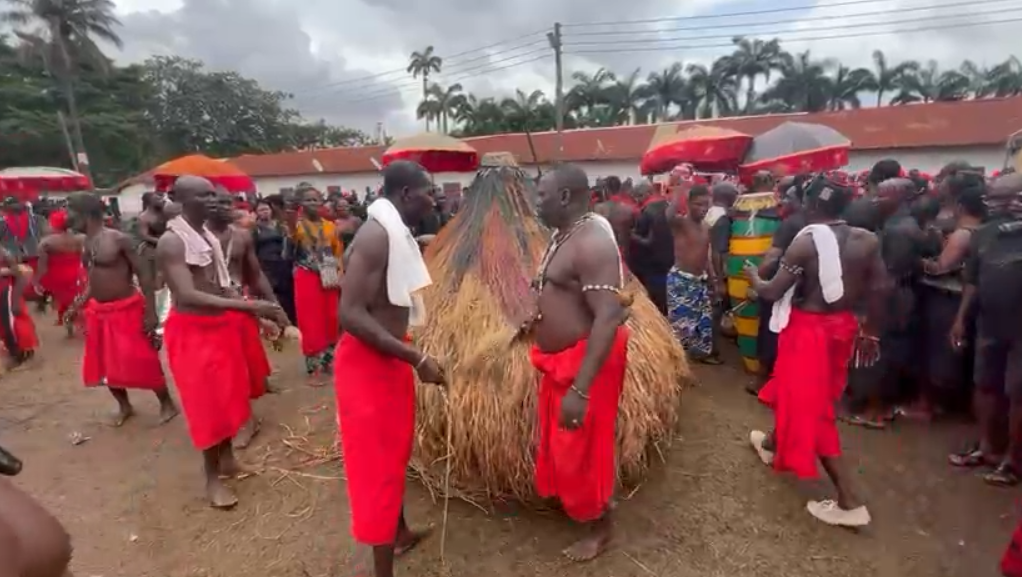
Notably, Igbo traditional leaders resident in Ghana joined the solemn procession, underscoring the cultural significance of the rites beyond Asanteman.
Chukwudi Jude Ihenetu and his entourage of Igbo tribesmen in Ghana have arrived in Kumasi to attend the third day of funeral rites for the late Asantehemaa, Nana Konadu Yiadom III. pic.twitter.com/KdLN9sOrTq
— SIKAOFFICIAL (@SIKAOFFICIAL1) September 17, 2025
With one more day of mourning rites ahead, Manhyia Palace continues to serve as the center of Ghana’s traditional and political convergence, reflecting the deep reverence for Nana Konadu Yiadom III and her lasting impact on the Ashanti Kingdom.
Yesterday, the Asantehene, Otumfuo Osei Tutu II, stood as the embodiment of a grieving kingdom, his attire speaking volumes where words fall short.

Clothed in a black mourning cloth intricately adorned with cowries, his presence reflects both the sorrow of loss and the weight of cultural continuity.
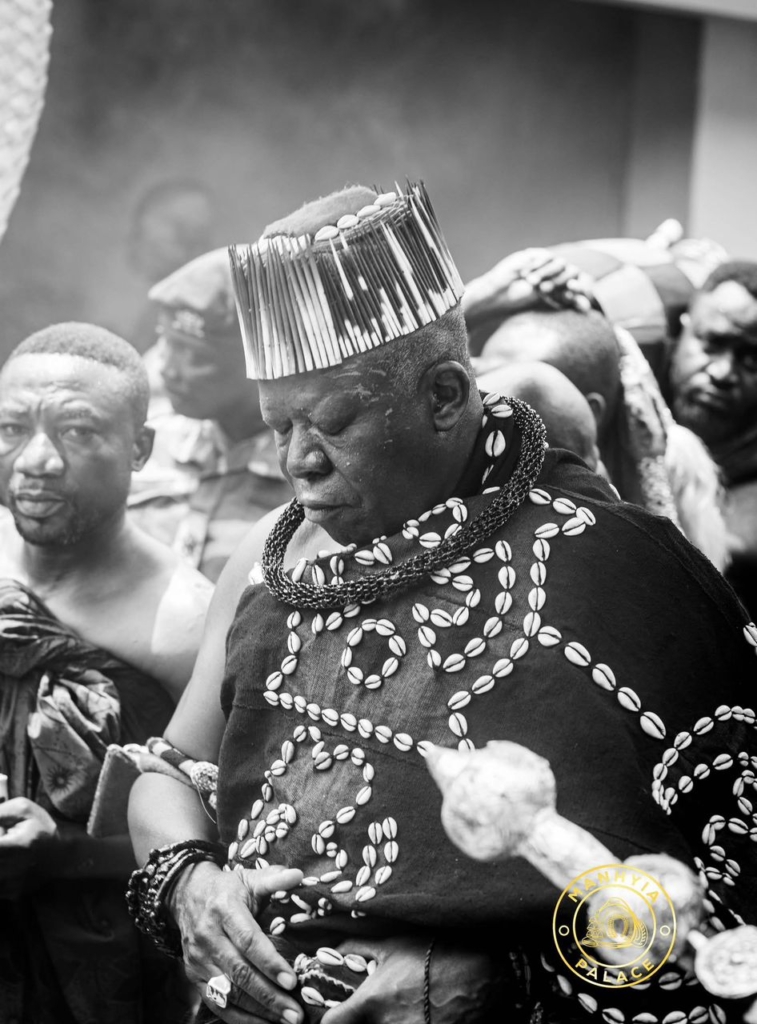
In Asante tradition, black is the ultimate symbol of bereavement, evoking solemnity and respect for the departed.
The cowries stitched across his garment carry a deeper resonance as they are not mere ornaments but ancient emblems of wealth, spirituality, and ancestral connection.
Once used as currency, cowries in this context symbolise the priceless value of the departed queen mother, the Asantehemaa, whose life and service to the Golden Stool cannot be measured.
Mfantse delegation, led by Oguamanhene Osaberima Kwesi Atta, joins Asantehemaa’s Dote Yie.
Below is the royal household of Tepa led by Tepamanhene and Tepamanhemaa, together with the children of Tepa Barnie.
Watch as the Mfantse delegation, led by Oguamanhene Osaberima Kwesi Atta, joins Asantehemaa’s Dote Yie.
Latest Stories
-
Livestream: The Law discusses Supreme Court @150
27 minutes -
MTN Momo staff walk to promote wellness and fitness
44 minutes -
Assafuah: Sedina Attionu’s return from Nevada will test government’s commitment to accountability
48 minutes -
How GRA’s Modified Taxation Scheme is boosting revenue compliance & SMEs competitiveness
1 hour -
Stonebwoy Can Do It: A call to unite behind 2026 BHIM Fest
2 hours -
World Shea Expo returns to Tamale for 2026 edition
2 hours -
Prioritise cocoa sector with better prices, timely payments-Annoh-Dompreh urges NDC
2 hours -
Lands and Mines Watch Ghana endorses Heath Goldfields’ mining capacity
2 hours -
Gbintiri residents protest alleged diversion of 24-hour market project
3 hours -
Justin Bieber headlines Coachella with nostalgia-fuelled set
3 hours -
Ukraine and Russia accuse each other of hundreds of ceasefire violations
3 hours -
Asha Bhosle: The sound of Bollywood dies aged 92
3 hours -
Fire destroys section of 4-bedroom apartment at Tantra Hill
3 hours -
Safe city: Unnoticeable protection
3 hours -
North East Regional Police Commander raises alarm over burning of checkpoints
4 hours