

Audio By Carbonatix
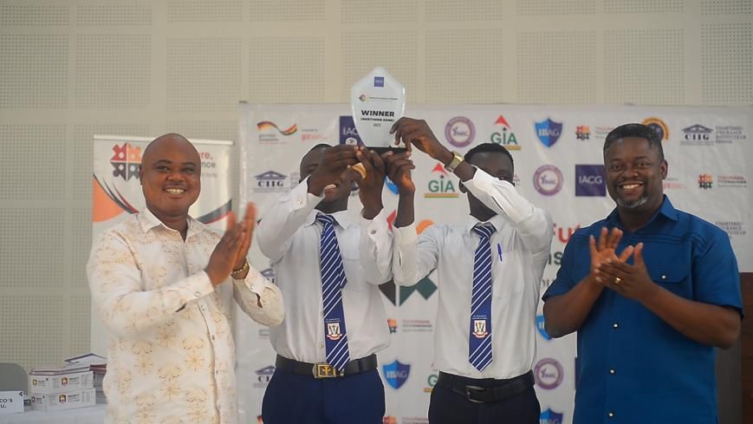
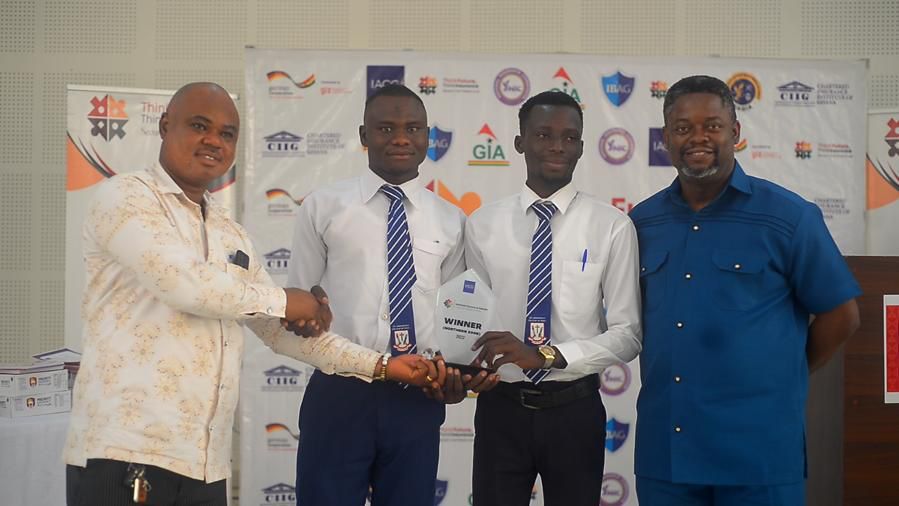
St. John Bosco College of Education has emerged the Northern Zone winners of the maiden National Tertiary Insurance Debate.
The Upper East Region-based education college beat its fierce opponents from the Bolgatanga Technical University to win the debate.
After rounds of a competitive intellectual debate, St. John Bosco College amassed the highest score of 72, with Bolgatanga Technical trailing with 65 points.
The debate organised by the Insurance Awareness Coordinators Group (IACG) assembled eight schools for the Northern Zone championship.
A total of 16 Insurance Awareness Clubs from selected tertiary institutions nationwide, engaged in the debate competition.
The National Insurance Debate seeks to increase the insurance knowledge levels of tertiary students.
The debate will offer the opportunity for students and stakeholders to share perspectives of tertiary students to inform the insurance industry.
It will also clear insurance misconceptions and empower the students to be change agents within their communities.
The contest forms part of the ‘Think Future Think Insurance’ educational campaign by the IACG.
A representative of the Chairman of IACG, Gabriel Kwame, said the contest would nurture and grow the penetration rate of insurance.
“In a growing economy, you need people who understand financial products. If we can impart critical knowledge of insurance at this stage, they would grow into real future leaders and enhance our economy. With this, penetration rate of insurance will grow in Ghana,” he said.
A Prime Time representative, Abigial Serwaa Wiredu, noted that the two zonal champions would compete together in the champion of champions to debate in the final competition on November 16.
“They [winners] will have internship opportunities, and increase their awareness level, get certificates, souvenirs and brochures,” she said.
St. John Bosco College of Education will lock horns with the Komenda College of Education, who won the Southern Zone debate.
Ashanti Regional Manager of the National Insurance Commission, Dennis Farouk Dramani, indicated that “... insurance coverage has actually grown from 2020 till now. It has jumped from 30% to 45% which is quite a very huge growth and this is because of some of these activities that we are undertaking in collaboration with GIZ.”
The National Insurance Debate is an initiative of the Insurance Awareness Coordinators Group (IACG), with support from the Ghana Insurers Association (GIA), Insurance Brokers Association of Ghana (IBAG), Priority Insurance, SIC Life, KEK Insurance Brokers, Starlife Assurance, aYo, Donewell Insurance and Ghana Union Assurance.
Latest Stories
-
Imagination Africa, Mentors Chess Academy to host second African Genius Chess Championship at Ghud Park
47 minutes -
Nana B passport claims a diversionary tactic — Abu Jinapor
2 hours -
Pope Leo diagnosed with cancer as doctors remove lobe of lung, Vatican says
2 hours -
Legal Aid Commission takes free legal services to Techiman main lorry terminal
2 hours -
Nana B denies seeking passport favour, accuses Ablakwa of failing to account for GH¢16.4m
2 hours -
Young girls demand climate action, stronger protection against child marriage
2 hours -
Ex-gang boss sentenced to 40 years for orchestrating Tupac Shakur’s murder
2 hours -
From near-deferral to three awards: UMaT graduate’s academic journey
2 hours -
Atta Akyea denies seeking presidential pardon for Wontumi in galamsey case
3 hours -
Photos: Mahama commissions 85-bed Police Hospital ward, donates two ambulances
3 hours -
GTEC directs Ghana’s public universities to reopen by October 16 and begin lectures on October 19
3 hours -
Star Oil donates GH¢1million towards construction of new CID facility
3 hours -
Court hands Adjetey Sowah, two others lifetime bans after Amputee Football legal dispute
3 hours -
NDC appoints Julius Kwame Anthony as a Deputy Communications Director
3 hours -
Ghana repatriates 120 Nigerians rescued from suspected cybercrime centres
3 hours