

Audio By Carbonatix
The Ghana Statistical Service (GSS) and United Nations Development Programme (UNDP) have added their voice to the numerous calls for journalists to specialise in data journalism.
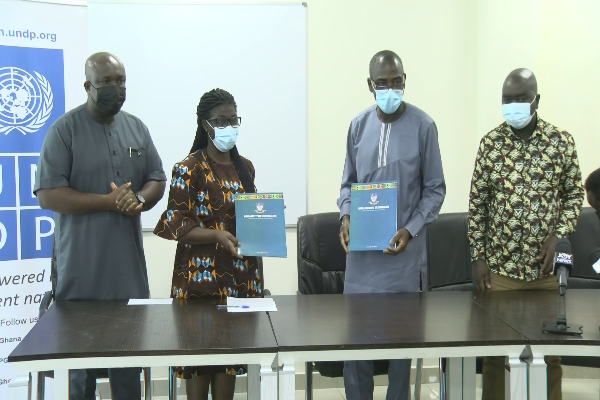
The Ghana Institute of Journalism (GIJ) has signed a memorandum of understanding with the two organisations to carry out media capacity development and certification in statistical data communications to aid this agenda.
In partnership with UNDP, the Service will, from September 2021, fund the training of journalists through the GIJ on how to advocate for data-driven policy, decision making, planning, monitoring and evaluation.
This is because knowledge of statistics plays a pivotal role to the public, mainly policymakers who depend on such information for decisions, which ultimately affect the country’s social, economic and political growth.
Director for Census and Surveys at GSS, Abena Osei-Akoto, expressed the need for journalists to report accurately on issues concerning statistics.
“The Statistical Service has been coming up with statistics, and the media has been helping us in getting it appreciated, but they will also need what went into the production of the statistics, interpreting it right and also appreciating the use of it.
"So this brought about the need for partnership to help educate the journalist in appreciating the statistics being churned out by statistical service,” he said.
He added, "With journalists being the first point of call in disseminating information, this would help the populace in the long run and appreciate the use of information in our lives."
Economic Advisor for UNDP, Frederick Mugisha, said the objective of this partnership is to ensure journalists are able to interpret and present accurate reports.
“The real objective is to make sure that we bridge statistics and change in people’s lives. The journalists have a very big role to play, to inform the public, to hold us accountable but also to shape the development conversation.”
Speaking at the conference Professor Kwansah-Aidoo, Rector of GIJ, assured the public that their position as an institute has the capacity to train journalists.
“We have well qualified and experienced staff, not just to deliver what is required of us but to go the extra mile with commitment and a hundred per cent client satisfaction guarantee."
He expressed gratitude to all the institutions and individuals involved in this program.
Latest Stories
-
Joseph Cudjoe writes: Ghana must break free from the dangerous mindset that natural resources are the foundation for wealth
5 minutes -
Children among 109 dead after boat capsizes off Djibouti, UN says
9 minutes -
OmniBSIC Bank’s 11th health walk promotes fitness and business growth
19 minutes -
2026 World Maritime Day: Danish Embassy organises “The Gulf of Guinea Speaks”
41 minutes -
New Economy will tackle unemployment and restore hope – Ato Forson
46 minutes -
IMMILAC president recounts personal losses as security women lead breast cancer awareness campaign in Wa
54 minutes -
University of Ghana postpones October 12 reopening as GAUA strike persists
1 hour -
Bahass Foundation launches vocational skills training to support mental health recovery in Wa
2 hours -
NPP orders parliamentary aspirants and their supporters to suspend campaign activities
2 hours -
Techiman unites against child marriage: Joy Impact Makers Awardee leads charge on International Day of the Girl Child
2 hours -
Ghana Psychological Association calls for greater involvement of people with lived experience in mental health care
4 hours -
Ablakwa says Ghana could evacuate more citizens from South Africa if the situation worsens
4 hours -
Violence against girls must be tackled through individual responsibility – Gender advocate
4 hours -
Ghana’s BRICS bid must be guided by national interest – International Affairs Analyst
4 hours -
Journalists look back on a decade of breast cancer reporting in Ghana
5 hours