

Audio By Carbonatix
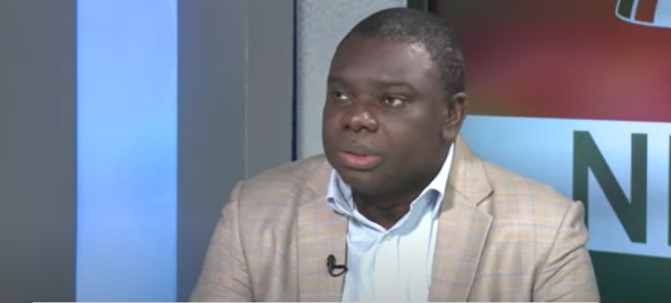
Senior Partner and Chief Executive Officer Ishmael and Associates, says most students graduate from basic, senior high, and tertiary institutions without acquiring the requisite skills needed for the job market.
Michael Harry Yamson explained that the development is a result of government's failure to liaise with stakeholders in the business industry when developing curricula for students to use in schools.
Speaking on Joy FM's Super Morning Show, Tuesday, May 11, he noted that schools train students for hard work but fail to train them for innovation, which he believes has contributed largely to the inability of graduates to generate their own businesses after school.
"We know that what industry is looking for is not what our system is producing but who designs the educational system? It is our government that says these are the skills that I want graduates to have but business is the one that takes over these graduates.
"If 'business' is going to take over these graduates, then surely, the design of curricula, the development of students, and the testing of students cannot be one where there's an arm's length relationship between industry and government," he said.
Speaking further, he indicated that only 10% of people in the Agric sector have the required skills required to be successful in the sector.
"If you walk into the Agric sector, the kind of skills that are required to create the Agric of the future that everybody talks about, only 10% of people in the sector are suitably trained to deploy the skills we require to be successful in Agric and Agribusiness," he said.
That notwithstanding, he entreated government to review the curricula such that, it includes skills development programs that will enable students to become more innovative after school.
"Heaven knows we have enough graduates but the ability to create new knowledge and innovation and to build sustainable businesses out of those innovations is a skill that we are greatly lacking that cuts across every sector.
"We need to rethink the relationship (between industry and government) through this chain and make sure that industry, which is going to take graduates is much more closely involved both in the design, the implementation, the training or the education and the testing of students because this distance is what has allowed the situation where people come out of SHS and technical school and universities and the skills are not quite right," he said.
Latest Stories
-
Friends of Bridget Bonnie Marks her 35th birthday with donation to Kasseh Model Health Centre
13 minutes -
Landfilling waste management creates no value, it’s an economic waste
40 minutes -
Photos: Speaker Bagbin Commissions MPs constituency office under parliamentary decentralisation programme
56 minutes -
Black Stars technical advisor Winfried Schäfer sacked as GFA shakes up backroom staff
1 hour -
Wenchi water project almost complete, critical to gov’t agenda – GWL MD
1 hour -
Anti-LGBTQ+ bill not part of government’s legislative agenda – Inusah Fuseini
1 hour -
Anti-LGBTQ Bill: Forget the rumour mongers, I’m a man of action, and will pass the bill – Speaker
2 hours -
Women and children among those killed in Sudanese army shelling of wedding celebration
2 hours -
President Mahama is not sincere with Ghanaians on LGBTQ bill matter – Hassan Tampuli
2 hours -
Gov’t to establish Prison Industrial Hub to equip inmates with income-generating skills – Prison Service boss
3 hours -
Alhassan Tampuli donates cement, roofing sheets to support storm victims in Gushegu
3 hours -
Alhassan Tampuli appeals for urgent support for storm victims in Gushegu
3 hours -
The hypocrisy must stop; pass Anti-LGBTQ+ Bill now – Alhassan Tampuli to Mahama
3 hours -
Imprisonment should be rehabilitative, not punitive – Ghana Prisons boss at UNGA
3 hours -
Ga Adangbe traditional priests petition Mahama over McDan aviation licence revocation
3 hours