

Audio By Carbonatix
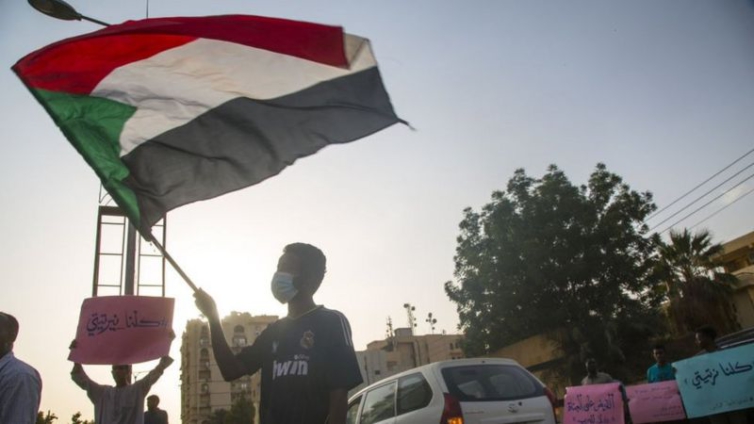
Sudan is to normalise relations with Israel, US President Donald Trump says the latest in a series of Arab League countries to do so. Mr. Trump has also removed Sudan from the US list of state sponsors of terrorism, unblocking economic aid and investment.
Announcing the deal, Mr. Trump said "at least five more" Arab states wanted a peace deal with Israel. It comes weeks after similar moves by the United Arab Emirates and Bahrain.
The two Gulf states became the first in the Middle East to recognise Israel in 26 years. Jordan signed a peace deal with Israel in 1994, and Egypt in 1979. Mauritania, an African Arab League member, recognised Israel in 2009 but severed ties 10 years later.
The growing number of Arab countries formalising relations with Israel has been condemned by the Palestinians, who see it as a betrayal of their cause. Historically, Arab countries conditioned peace talks with Israel on its withdrawal from territories occupied in the 1967 war and the establishment of a Palestinian state with East Jerusalem as its capital.
How was the move announced?
Shortly after Mr Trump formally moved to remove Sudan from the US list of state sponsors of terrorism, reporters in Washington were taken to the Oval Office where the president was on the phone to the Sudanese and Israeli leaders.
Israeli Prime Minister Benjamin Netanyahu said the agreement was a "dramatic breakthrough for peace" and the start of a "new era". He said Israeli and Sudanese delegations would meet to discuss commercial and agricultural co-operation.
Sudanese Prime Minister Abdalla Hamdok thanked Mr Trump for removing his country from the US terrorism list and said the Sudanese government was working "towards international relations that best serve our people". Sudanese state TV said the "state of aggression" would end.
Mr Trump said he expected Saudi Arabia would normalise relations with Israel. His aide, Judd Deere, said the Sudan deal was "another major step toward building peace in the Middle East with another nation joining the Abraham Accords", the term used for the deals signed with the UAE and Bahrain.
However Palestinian Authority President Mahmud Abbas condemned the agreement, saying no one had the right to speak on behalf of Palestinians. Hamas, which controls Gaza, said it was a "political sin".
Meanwhile, Israel said it would not oppose US sales of high-grade military hardware to the UAE. The US had agreed to consider allowing the UAE to buy F-35 fighter jets after normalising ties with Israel.
Israel had said it needed to maintain a military advantage over other states in the Middle East. However, earlier this week it said the US had agreed to upgrade Israeli military capabilities.
How did we get here?
Sudan had been a foe of Israel since the latter's founding in 1948. Famously, it was the site of a declaration against normalisation with Israel in 1967, when the Arab League, meeting in the capital, Khartoum, swore "no peace with Israel, no recognition of Israel, no negotiations with it".
It fought in wars against Israel in 1948 and 1967, provided a haven for Palestinian guerrilla groups and is suspected of sending Iranian arms to Palestinian militants in Gaza several years ago - prompting alleged Israeli air strikes against it.
The political dynamics changed with the overthrow last year of Sudan's long-time ruler Omar al-Bashir and his replacement by a transitional civilian-military council.
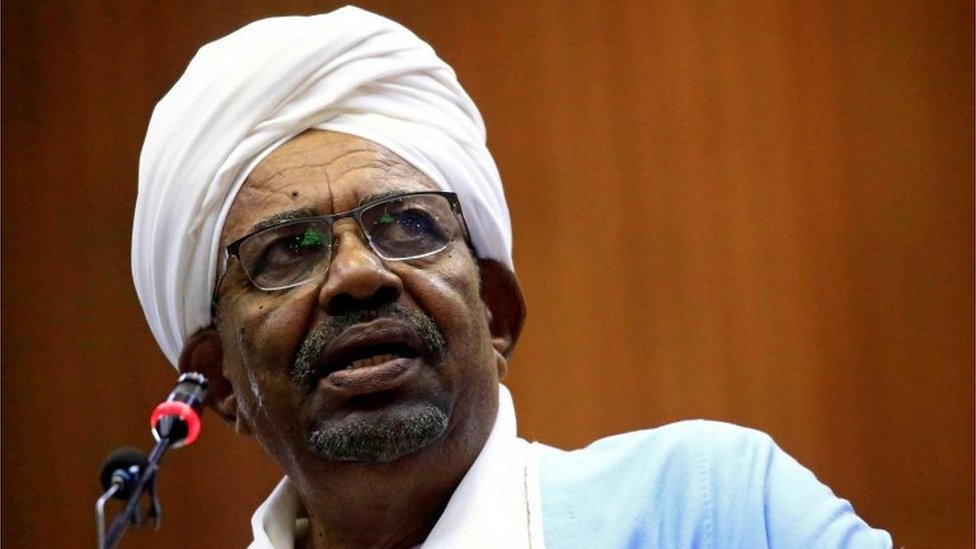
Sudan's generals, who wield the real power, have supported establishing relations with Israel as a way to help get US sanctions on Sudan lifted and open the door to badly needed economic aid.
This week, Donald Trump said Sudan would be removed from the US list of state sponsors of terrorism once the US received $335m (£259m) in compensation for attacks on US embassies in Africa.
The attacks in Kenya and Tanzania in 1998 were carried out by al-Qaeda while its leader, Osama bin Laden, was living in Sudan.
Latest Stories
-
GRA vows to clamp down on importation of right handed vehicles
3 minutes -
You can’t leave a bigger legacy than Petroleum Hub project – Western Regional Chiefs tell President Mahama
4 minutes -
Lawra MP cuts sod for GH₵11m multipurpose dining hall construction at Birifoh SHS
6 minutes -
Ghana defend African Schools Football Championship title after shootout win over Burkina Faso
9 minutes -
Ghana’s education system must evolve or risk becoming irrelevant – Patricia Obo-Nai warns
16 minutes -
Ghana Health Service responds to dead fish incident at Tema Port
29 minutes -
David Vondee lauds Mahama for emergency Cabinet meeting and key resolutions
35 minutes -
Universities should focus on churning out impactful graduates rather than merely adding new programmes — UEW VC
38 minutes -
Publican AI system is speeding up trade, not slowing it — GRA Boss
41 minutes -
Government to construct a FIFA category 2 stadium in the Volta Region – James Gunu
51 minutes -
CAF to introduce reforms to fix AFCON final controversies – Patrice Motsepe
52 minutes -
EOCO defends probe into Kwamigah-Atokple
53 minutes -
Fuel tanker accident at Breku Forest spills thousands of litres of diesel
59 minutes -
IEAG backs Publican AI system after concerns addressed
1 hour -
No new taxes or charges- GRA boss assures importers over rollout of Publican AI system
1 hour