

Audio By Carbonatix
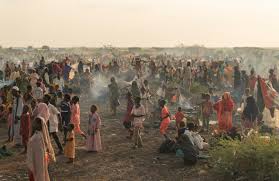
Sudan is facing what the United Nations High Commissioner for Refugees (UNHCR) has described as "the world’s worst displacement crisis", as a brutal civil war continues to wreak havoc across the country.
Since the conflict erupted in April 2023, nearly 13 million people have fled their homes, driven out by relentless aerial bombardments, random shelling, and violent clashes between the Sudanese Armed Forces and the paramilitary Rapid Support Forces (RSF).
The scale of devastation is unprecedented, with civilian infrastructure — including hospitals, schools, and places of worship — being repeatedly targeted. Most recently, the RSF claimed responsibility for downing a military drone over El-Fashir in Darfur, accusing the army of conducting indiscriminate airstrikes in heavily populated areas.
A similar attack on Turra Market in North Darfur earlier this year left over 100 civilians dead, drawing condemnation from local human rights group, Emergency Lawyers, which labelled the incident a war crime and called for accountability.
The UN Human Rights Office continues to receive reports of escalating violence, including airstrikes on towns such as Kabkabiya and Nyala, with scores of civilian casualties. Even Christian churches and evangelical schools have not been spared.
Meanwhile, reports have surfaced linking the Sudanese military to resurgent extremist groups, including factions of the outlawed Muslim Brotherhood. The group, once ousted by Sudan’s 2019 revolution, is alleged to have formed new alliances with the army, attempting to reclaim influence through the ongoing conflict.
Though one such battalion, Al-Baraa Ibn Malik, recently declared its withdrawal from the battlefield, experts have dismissed this as a tactical move designed to manipulate public perception.
Further complicating the crisis are revelations of foreign arms deals. According to an investigation by The Washington Post, the Turkish defence manufacturer Baykar covertly supplied the Sudanese army with at least $120 million worth of drones and missiles in late 2024.
Supported by satellite data and internal communications, the report indicates that these advanced weapons, including the TB2 drones, have been used in recent strikes, intensifying the war’s toll on civilians.
As the humanitarian catastrophe deepens, international observers warn that Sudan’s conflict — marked by shifting alliances, extremist resurgence, and foreign intervention — could destabilise the wider region unless urgent diplomatic and humanitarian interventions are made.
Latest Stories
-
Brazil President endorses Ghana’s Reparations push at UN
5 minutes -
GPL 2025/26: Eleven Wonders earn 2-2 draw against Samartex
21 minutes -
Legal analysis of CAF Appeal Board decision on Morocco vs. Senegal AFCON final chaos
1 hour -
44 Ghanaians rescued from fraudulent recruitment network in Nigeria – Foreign Affairs Ministry
4 hours -
Odumasi Health Centre appeals for standby power plant to safeguard healthcare delivery
4 hours -
2025/26 Women’s FA Cup: Hasaacas Ladies beat Jonina to set up Army Ladies final
4 hours -
Journey to Destiny Ministries breaks ground for 90-bed dormitory for orphans at Journey Center – Ghana
4 hours -
Health Minister reaffirms commitment to ending ‘No Bed Syndrome’ after Korle Bu visit
4 hours -
Afram Plains youth rally behind Mahama’s Farmers’ Service Centre initiative
4 hours -
Investments underway to boost tomato production despite export concerns – Gov’t
4 hours -
2025/26 Women’s FA Cup: Army Ladies thump Samartex Ladies to reach final
4 hours -
Brazil backs Ghana’s UN push to recognise transatlantic slave trade as crime against humanity
5 hours -
Otokunor blames policy failures and import dependence for Ghana’s tomato shortage
5 hours -
Offinso North cocoa farmers brave heavy rains to petition Minority Caucus over cocoa crisis
5 hours -
Vivo Energy Ghana hosts ShePower Summit 2026 to inspire next generation of Women in STEM
5 hours