

Audio By Carbonatix
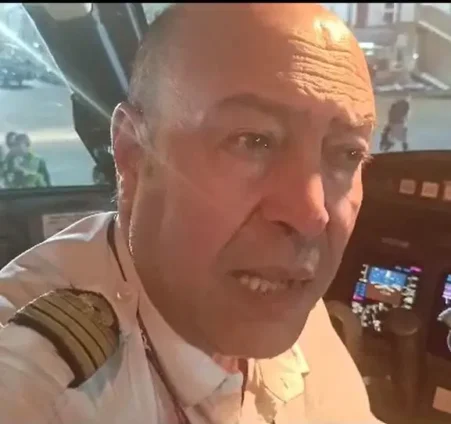
The Tunisian pilot who flew the Nigerian national football team Super Eagles to Libya has provided an account of the events that led to their unexpected diversion to Al-Abraq, a remote airport, instead of their intended destination, Benghazi.
Controversy erupted after the Nigerian delegation, en route to Benghazi for Tuesday’s crucial 2025 Africa Cup of Nations qualifier against Libya, found themselves stranded for over 16 hours on Sunday following the diversion.
The plane was redirected to Al-Abraq, a small airport typically used for Hajj operations, located nearly 300 kilometers east of Benghazi.
In a video interview shared by Sports Journalist Pooja Media on X (formerly Twitter), the pilot clarified that the diversion was not his decision but was mandated by Libyan authorities.
“The flight plan was to land at Benghazi, Benina, and we had approval from the Libyan Civil Aviation Authority,” the pilot explained. “However, as we began our descent, we were instructed to divert to Al-Abraq, which wasn’t even listed as our alternate airport. This decision came from the highest Libyan authorities, not me.”
He expressed concern over the safety risks posed by the sudden change, noting that the fuel on board was calculated for the original destination.
“In aviation, we calculate fuel based on our destination. Diverting unexpectedly can compromise safety. I repeatedly questioned the directive and warned them about fuel limitations, but they insisted that we land at Al-Abraq, citing orders from the highest authority,” he said.
The pilot refuted media claims that the diversion was his decision, stressing that all aviation communications are recorded and could be provided as evidence. “Everything is documented. I asked to land in Benghazi as per my flight plan, but they denied it, instructing me to divert immediately,” he added.
The conditions at Al-Abraq posed further challenges. The pilot described the small airport as poorly equipped, lacking essential navigation systems like an Instrument Landing System (ILS) and VHF Omnidirectional Range (VOR), making a night landing in marginal weather conditions particularly difficult.
“I had to make a visual landing, which is risky, especially in those conditions. It was not easy, but fortunately, we landed safely,” he said, crediting his familiarity with the region from previous work for helping manage the situation.
In light of the ordeal, the Nigeria Football Federation (NFF) has decided to pull the Super Eagles out of the qualifier match against Libya.
Latest Stories
-
Gov’t working to address salary arrears of 2024 teachers – Education Minister assures
6 minutes -
‘Democracy Is Not for Sale’ forum ends with strong calls to tackle vote buying, reform political financing
11 minutes -
Parliament rejects Minority motion to investigate GoldBod losses
17 minutes -
‘We don’t have a lot of options’ – Otto Addo on playing Yirenkyi at right-back
24 minutes -
Tiger Woods involved in Florida rollover crash
29 minutes -
Report: Austria batter Black Stars in Vienna
2 hours -
Man jailed for four years after Barron Trump reported attack to UK police
2 hours -
Palestinian man killed as death toll from West Bank settler violence climbs
3 hours -
Political activism undermining supremacy of law – Supt Odartey
3 hours -
Celebrating Ability: C.H.I.L Awards honour outstanding PWDs in Ghana
3 hours -
Three dead after helicopter crash in Hawaii
3 hours -
People don’t report vote buying to Police – Prof Alhassan raises concern over enforcement gaps
3 hours -
We’ve inadequately educated on democracy – Supt. Odartey
3 hours -
US expects to end Iran operation in ‘weeks not months’, Rubio says after G7 meeting
3 hours -
Photos: ‘Democracy Is Not For Sale’ forum in Tamale
3 hours