

Audio By Carbonatix
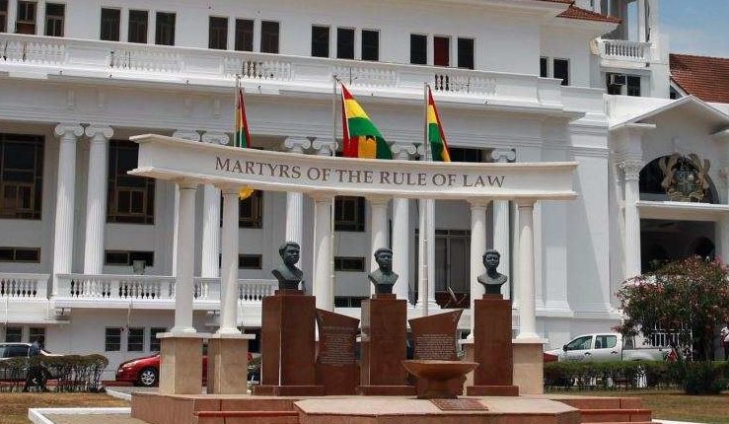
The Supreme Court is expected to deliver its judgment today, Wednesday, December 18, on two significant lawsuits challenging the legality of the Human Sexual Rights and Family Values Bill, often referred to as the anti-gay bill.
The decision is expected to have profound implications for the nation’s legal and human rights landscape, coming after months of heated public debate and political division over the bill.
Its outcome will be closely watched by both supporters and critics, who have strongly expressed their views on the matter.
The controversial anti-gay bill, which seeks to criminalize actions related to lesbian, gay, bisexual, transgender, queer, and intersex (LGBTQI) advocacy, has attracted sharp criticism from human rights organizations.
These groups argue that the bill violates fundamental rights such as the freedoms of expression and association.
However, it has gained considerable support from religious and traditional institutions, who believe that the bill is necessary to preserve Ghanaian cultural and family values, which they claim are under threat from what they view as the imposition of foreign ideologies.
Should the bill be passed into law, it would impose penalties on individuals who promote or fund pro-LGBTQI activities.
It would also extend criminal liability to those who provide indirect support to such initiatives, further intensifying the debate over the rights of the LGBTQI community in Ghana.
Advocates of the bill argue that it is essential to protect the moral fabric of society, while opponents contend that it infringes on basic human rights and the principles of equality under the law.
The legal challenge to the bill comes from Richard Dela Sky, a journalist and lawyer, and Amanda Odoi, also a lawyer, and an advocate for equality and inclusion.
The plaintiffs have brought their case before the Supreme Court, asserting that the bill's passage was unconstitutional.
They argue that parliament failed to meet the required quorum, as stipulated in Articles 102 and 104 of the Constitution, during the legislative process that led to the passing of the anti-gay bill.
The plaintiffs’ cases focus on the claim that the lack of a proper quorum renders the bill’s passage invalid and unconstitutional.
Richard Dela Sky and Amanda Odoi argue that the absence of the necessary quorum during the parliamentary debate undermines the legitimacy of the bill, making it legally untenable.
Latest Stories
-
I have supported highway authority financially to fix roads in my constituency – A Plus
50 minutes -
US, Iran fail to reach peace agreement after marathon talks in Pakistan
1 hour -
ECG kicks off Phase Two of transformer upgrades at Lashibi; brief outages expected
2 hours -
Port crises loom as 11,000 drivers threaten four-day strike
3 hours -
A source of excellence across generations – Vice President Opoku-Agyemang lauds Mfantsipim
3 hours -
(Photos) Mfantsipim School launches historic 150th anniversary
4 hours -
Knights and Ladies of Marshall group backs Catholic Bishops’ stance on anti-LGBTQ+
5 hours -
Bright Simons writes: All the Filla in the Ibrahim Mahama/E&P – Gold Fields Saga
5 hours -
Monetise Idiocy In Ghana
5 hours -
The Ghanaian prophet and the mysterious death of his scottish wife Charmain Speirs
6 hours -
Nearly 400 sentenced in Nigeria for links to militant Islamists
6 hours -
Ghana’s recovery supported by gold strength despite global oil price pressures – Standard Bank Research
7 hours -
Methodist Church hails Mfantsipim@150; calls for “fresh consecration” to excellence
7 hours -
‘Excellence is our inheritance’ – Nana Sam Brew-Butler hails Mfantsipim’s 150-year reign in leadership
7 hours -
Kwaku Azar writes: A-G vs OSP
7 hours