

Audio By Carbonatix
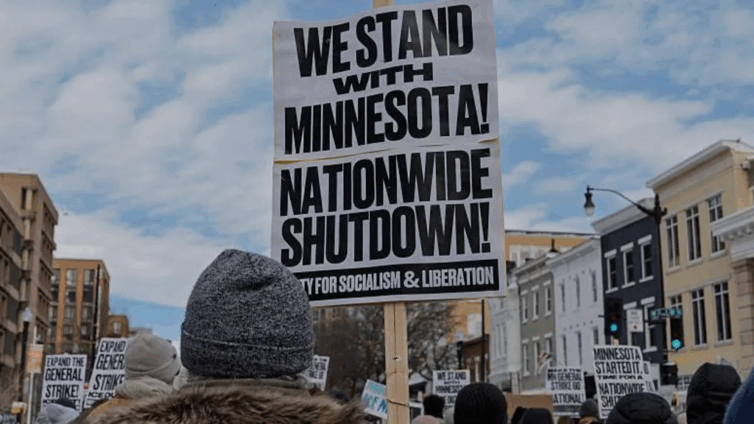
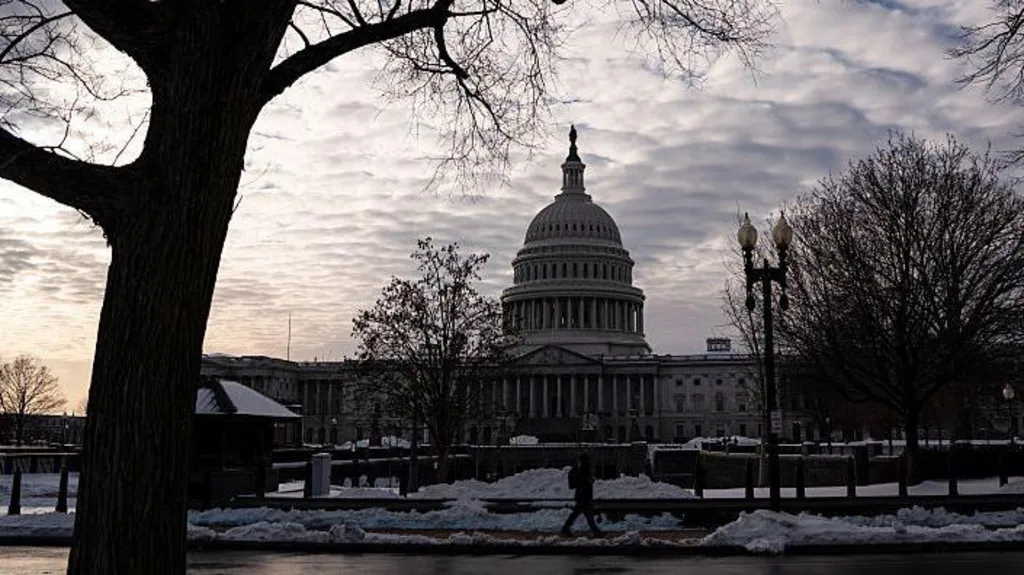
Talks to avert a US government shutdown have intensified in Washington DC, with a deal reportedly edging closer - amid a political drama following the fatal shooting of a nurse by federal immigration agents.
Prompted by the death of 37-year-old Alex Pretti in Minneapolis, Democrats are pushing to remove funding for the Department of Homeland Security (DHS) from a $1.2tn (£870bn) spending bill unless additional oversight is added.
US media report that the White House and Senate Democratic leadership are nearing an agreement which would meet Democratic demands to introduce new restrictions on federal immigration agents.
That would mean five of the six spending bills could be passed before the Friday deadline while the DHS one would get a short-term extension to allow time for more discussion on the proposed new restrictions, like around the use of masks by agents.
If no deal is struck, the second shutdown within months will begin at one minute after midnight on Friday 30 January.
How likely is a government shutdown?
The spending bill has already passed in the House of Representatives, but needs 60 Senate votes to advance.
Among the changes Democrats are seeking are requirements that federal agents obtain warrants before making arrests and clearer rules governing how they identify themselves, according to US media reports.
There are only 53 Republican senators in the 100-member body, meaning that passing the bill will require at least some support from Democratic members.
Earlier this week, Senate Minority Leader Chuck Schumer said: "I will vote no on any legislation that funds ICE until it is reined in and overhauled, and Senate Democrats are overwhelmingly united on this issue."
Republican Senate Majority Leader John Thune has said that "productive" negotiations are ongoing.
If changes are made, the bill will need to be re-approved by the House, which is currently on recess.
On Wednesday, some Senate Democrats escalated their demands, expressly calling for DHS Secretary Kristi Noem's removal, and structural changes to both Immigration and Customs Enforcement (ICE) and US Border Patrol.
"This madness," Schumer said, "this terror must stop."
Some Republicans pushed back, with Texas's John Cornyn saying that "any changes must not come at the expense of shutting down the government".
What is a 'partial shutdown' and who could be impacted?
The entirety of the US federal government will not be impacted by a shutdown if it does occur this weekend.
Already, legislation has been passed to fund dozens of agencies through the end of the 2026 fiscal year, which ends on 30 September.
Those agencies - including the justice department, FBI and Department of Veterans Affairs - will not be impacted.
But other branches are included in the same spending bill as DHS, including the defence department, health and human services, the treasury and the federal court system.
In practice, that could mean that a prolonged shutdown could see court operations, medical research disrupted or labour statistics delayed.
The Internal Revenue Service is also among the agencies that would be impacted, meaning that tax processing - including refunds - could be affected.
DHS is also a sprawling department encompassing multiple agencies, including ICE, the Coast Guard, Secret Service and Customs and Border Protection.
Employees that are "essential" to the functioning of impacted agencies would continue to work, but will not be paid until funding is restored - unless the government finds other sources - as Trump did with military personnel last year.
How long was the last shutdown?
The most recent shutdown in the latter half of 2025 lasted 43 days between 1 October and 12 November, making it the longest in US history.
Democrats had initially refused to support the funding bill, demanding that Republicans agree to extend health insurance subsidies for low-income Americans that are set to expire at the end of the year.
Eventually, eight Democrats broke with their party colleagues and helped pass the bill.
That shutdown left around 1.4 million federal employees on unpaid leave or working without pay. Food aid was also left in limbo, and air travel was severely disrupted across the US.
There have been a total of 16 government shutdowns since 1981, although some only lasted days.
Latest Stories
-
Gramps Morgan names Ghanaian business leader Monalisa Effah as Ghana-Jamaica Homecoming Ambassador
1 minute -
CAF President urges faith in African football despite AFCON 2025 issues
20 minutes -
AFCON U-17: Black Starlets’ aim is to win trophy – Head Coach Prosper Ogum
24 minutes -
ENFA expands access to global capital for Ghanaian SMEs
32 minutes -
Beyond security: Why mobile payment fraud has become a customer experience crisis
33 minutes -
Former Effia MP demands full disclosure of Truedare AI deal, warns of ‘hidden risks’
58 minutes -
Joseph Cudjoe raises alarm over potential revenue loss in Truedare AI Customs deal
59 minutes -
Video: Awoshie-Anyaa Highway: Years of fatal crashes caused by faulty traffic lights
1 hour -
No financial transactions with Ghana Card yet, says NIA
1 hour -
Former Netherlands Fire Chief engages GNFS Tema Command on capacity building
1 hour -
Finance Ministry defends Publican AI rollout amid stakeholder concerns
1 hour -
Police arrest 5 in Asankrangwa robbery; cash and guns retrieved
1 hour -
Why I joined NPP – Jeneral Ntatia
1 hour -
Three UDS students remanded over alleged armed robbery
1 hour -
Kudus Mohammed at risk of missing World Cup 2026 after fresh injury blow
1 hour