

Audio By Carbonatix
About 15.2% of female adolescents in Ghana aged 15-19 have ever been pregnant, underscoring the prevalence of teenage motherhood.
The prevalence within the age range is almost one-fifth of the global prevalence.
The regional disparities are striking, with teenage pregnancy rates ranging from 6% in Greater Accra to 26% in the Savannah Region.
The alarming prevalence of teenage motherhood recorded a decline from 19% to 11% since 1988.
This was revealed at a zonal dissemination of the Ghana 2022 Demographic and Health Survey.
These statistics highlight a complex landscape of adolescent pregnancy and motherhood with significant regional variations.
The Ashanti region is the second highest with 24% of adolescent pregnancies.
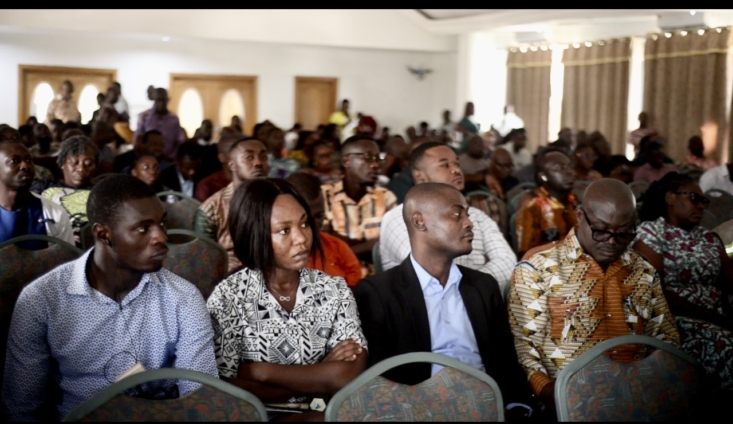
The dissemination of the 2022 Demographic and Health Survey assembled health expects, district and assembly health executives to discuss the implications of the health survey numbers.
Head of the Social Statistics Section at the Ghana Statistical Service, Sarah Woode explained "It is not the best that within that age period we are having as many young women being pregnant."
"This is a worrying situation that policymakers should do something about,” she said.

The Ghana 2022 Demographic and Health Survey is a population-level survey designed to monitor and assess progress in the utilization and management of healthcare services across all 16 regions of the country.
The five-week dissemination exercise focused on data generated from 15 target areas including, child health, malaria, Infant and Child Mortality, HIV/AIDS and Health Insurance.
Other exploits include Marriage and Sexuality, Fertility, Family Planning, Household Water and Sanitation, Women's Empowerment, Domestic Violence and Agency, Consent and Coercion.
Director of Regional Offices of the Ghana Statistical Service, Emmanuel George Osei, says the report will provide a vital source of information for the Ministry of Health, enabling the measurement of outcomes and impacts of health programs.

“Health facilities use our data a lot. This guides them in their policy evaluation and formulation regarding health issues in the country. The Ghana health service and the health ministry can use this in the light as well,” he said.
Latest Stories
-
Fire destroys 3-bedroom house at Bogyawe
6 minutes -
Why the Supreme Court is a “policy court” – Justice Richard Adjei-Frimpong breaks it down
11 minutes -
Playback: The Law discussed Supreme Court @150
1 hour -
MTN Momo staff walk to promote wellness and fitness
2 hours -
Assafuah: Sedina Attionu’s return from Nevada will test government’s commitment to accountability
2 hours -
How GRA’s Modified Taxation Scheme is boosting revenue compliance & SMEs competitiveness
2 hours -
Stonebwoy Can Do It: A call to unite behind 2026 BHIM Fest
2 hours -
World Shea Expo returns to Tamale for 2026 edition
2 hours -
Prioritise cocoa sector with better prices, timely payments-Annoh-Dompreh urges NDC
3 hours -
Lands and Mines Watch Ghana endorses Heath Goldfields’ mining capacity
3 hours -
Gbintiri residents protest alleged diversion of 24-hour market project
4 hours -
Justin Bieber headlines Coachella with nostalgia-fuelled set
4 hours -
Ukraine and Russia accuse each other of hundreds of ceasefire violations
4 hours -
Asha Bhosle: The sound of Bollywood dies aged 92
4 hours -
Fire destroys section of 4-bedroom apartment at Tantra Hill
4 hours