

Audio By Carbonatix
The emergency decree restricts transport, publication of "sensitive news" and gives police and soldiers authority to resolve the "emergency situation." The move follows anti-government protests in Bangkok.
Thailand's prime minister, Prayuth Chan-ocha, signed an emergency decree on Thursday, forbidding public gatherings of over five people and restricting transport.
The decree also bans the publication of "sensitive news" and gives police and soldiers authority to resolve the "emergency situation."
Prayuth cited "aggression affecting the state's stability" for the move, after anti-government protests escalated on Wednesday night.
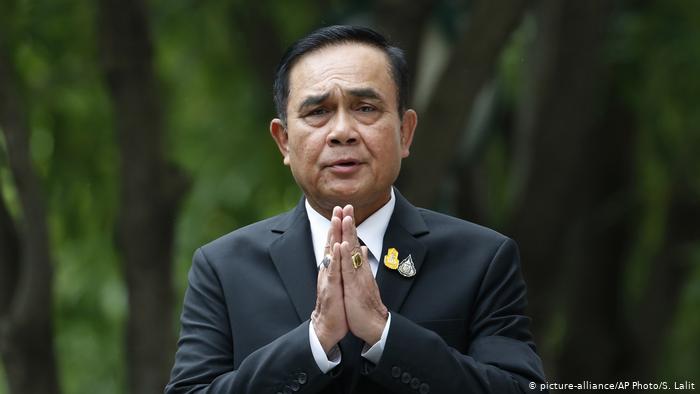
"It is extremely necessary to introduce an urgent measure to end this situation effectively and promptly to maintain peace and order," he said. It is not clear for how long this emergency decree will be in effect.
Another reason cited for the emergency measure was the obstruction of a royal motorcade by the protesters on Tuesday.
The decree took effect at 4 a.m., after which police occupied the streets where protesters were present. By then, several protesters had already left and planned to reconvene in the afternoon at a major commercial intersection in Bangkok.
At least three protest leaders were arrested by the police, according to the Thai Lawyers for Human Rights.
Thousands protest for reforms
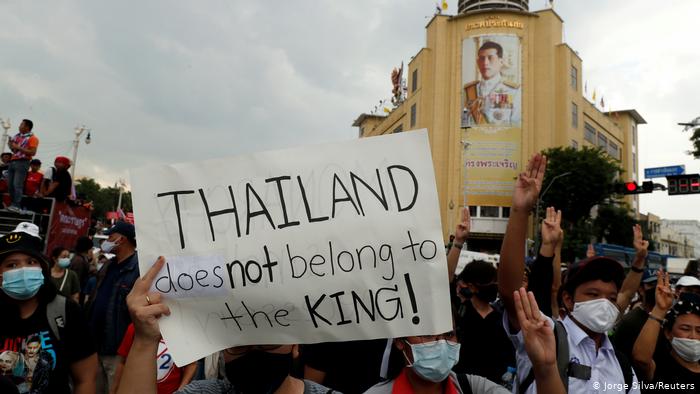
Thousands of people marched to the Government House on Wednesday to demand the resignation of the ex-army chief turned prime minister, Prayuth Chan-ocha.
The protests took place on the anniversary of a student uprising on October 14, 1973 that led to the toppling of a military dictatorship.
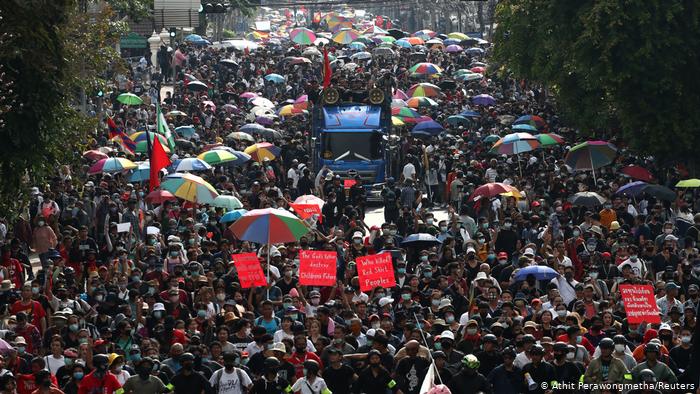
The youth-led movement has been staging rallies since July to push for an overhaul of the government, a new constitution and an end to harassment of government critics. Some have also made controversial calls for reforms to the monarchy, long considered a sacrosanct part of Thai identity.
Last month, tens of thousands of pro-democracy protesters turned out in Bangkok in one of the country's largest rallies in years.
Activists argue that Prime Minister Prayuth, who toppled an elected government in a 2014 coup, manipulated last year's general elections to ensure the military stayed in control — a charge he denies.
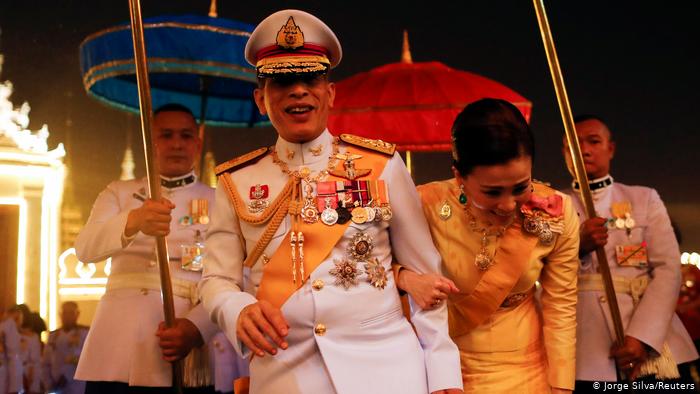
The protesters are also calling for curbs on the constitutional powers of the king and for him to transfer back the control he took of some army units. However, these public demands have been met with a backlash from the royalist establishment.
Under Thailand's royal defamation law, criticism of the monarchy is punishable with up to 15 years in prison.
Latest Stories
-
Iran and US race to find missing American crew member downed in fighter jet
16 minutes -
Gomoa Easter Carnival: Samini, Ofori Amponsah and Kwabena Kwabena rock Day 2; Obrafour and Kwaw Kese set for Day 3 showdown
27 minutes -
Kenpong intervenes as Afua Asantewaa, husband reconcile after public scrutiny
1 hour -
“Pay this, pay that, and the patient dies” – Former UGMC boss demands end to cash-and-carry in emergency care
1 hour -
Free Primary Healthcare: Gov’t floods clinics with 24,500 medical tools ahead of April 15 launch
2 hours -
Agyarko bolsters NPP chairmanship bid with Henry Quartey and Osei-Owusu as campaign leads
3 hours -
Sky-high spectacle as 2026 Kwahu Easter Paragliding Festival takes flight
3 hours -
Asiedu Nketia supports AshantiFest 2026 art initiative with GH¢50,000
3 hours -
Former UGMC boss recounts ‘up and down’ hospital nightmare resulting in niece’s death
4 hours -
Artemis II crew take ‘spectacular’ image of Earth
4 hours -
Afenyo-Markin criticises high costs stifling Ghanaian startups
4 hours -
Afenyo-Markin slams school feeding contractors for snubbing local rice farmers
5 hours -
This Saturday on Newsfile: Galamsey taxes, sole-sourcing probes, the Black Stars and presidential dialogue post-mortem
5 hours -
Guardiola wants Rodri to stay but says unhappy stars can go
6 hours -
[Playback] Gomoa Easter Carnival: Samini, Kofi Nti, and others deliver electrifying performances
7 hours