

Audio By Carbonatix
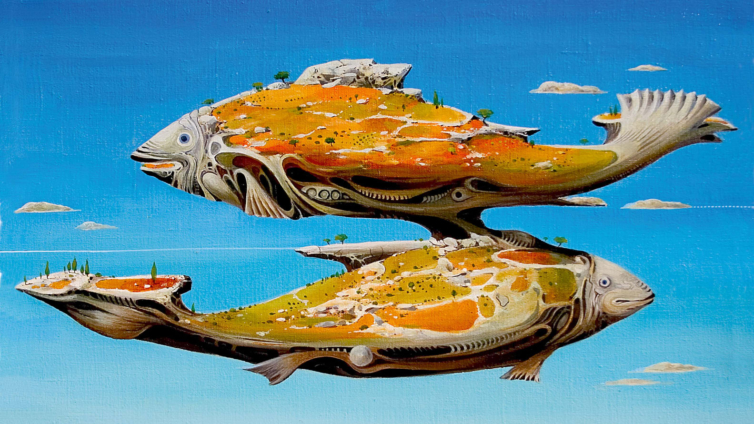
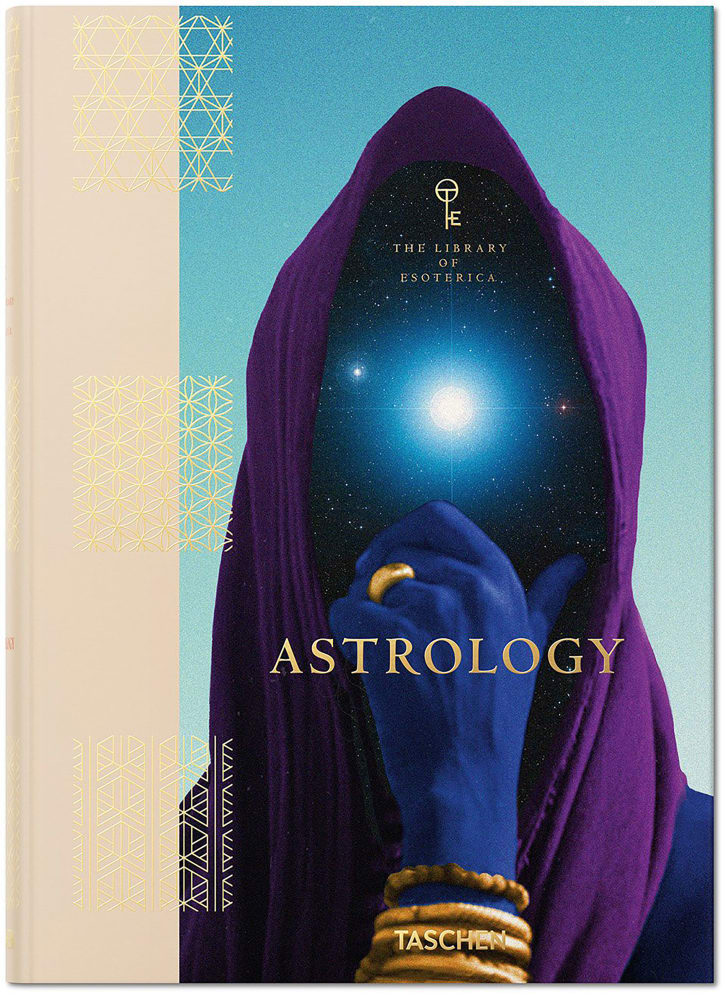
Depending on who you ask, astrologers either predicted the tumult of 2020, or didn't see it coming at all. But if you find yourself gazing up at the skies for clues about your year ahead, you might want to begin by exploring astrology's symbols through the new book "Astrology," a vivid visual history and field guide to the esoteric practice featuring thousands of years of art.
Now considered a pseudoscience, astrology's popularity has cycled in and out of favor over human history.
The modern reemergence of astrology can be traced back to the 1960s, when hippies embraced the zodiac, sparking the flirty pick-up line "Hey, baby, what's your sign?" in dimly lit bars across America.
"President Ronald Reagan and First Lady Nancy hired astrologer Joan Quigley to formally advise them on celestial matters in the 1980s, symbolizing astrology's return to the mainstream in the West. Millennials and Gen Zers have turned to horoscopes to gain perspective during chaotic times.
"When you go out and look at the stars, you can't help but feel a sense of wonder or sense of connection to, to a larger world, to a larger cosmos," said Andrea Richards, author of "Astrology," in a video interview."
We're all looking to make sense of the universe, our places in it and our connections throughout it," said Richards.
Zodiac art across the eras
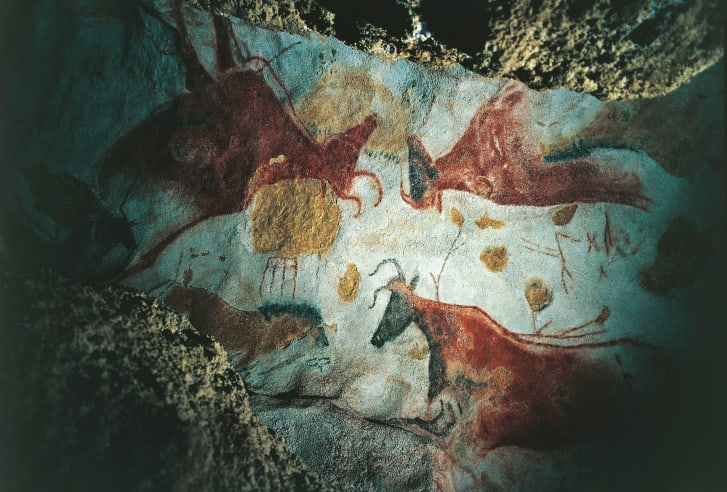
What might be the earliest known astrological illustrations can be found in a complex of caves in southwestern France, where, some 20,000 years ago, early humans marked the walls with over 600 paintings. In one area, they daubed a stalwart bull flanked with two smatterings of dots representing the constellations of Taurus and Orion's Belt.
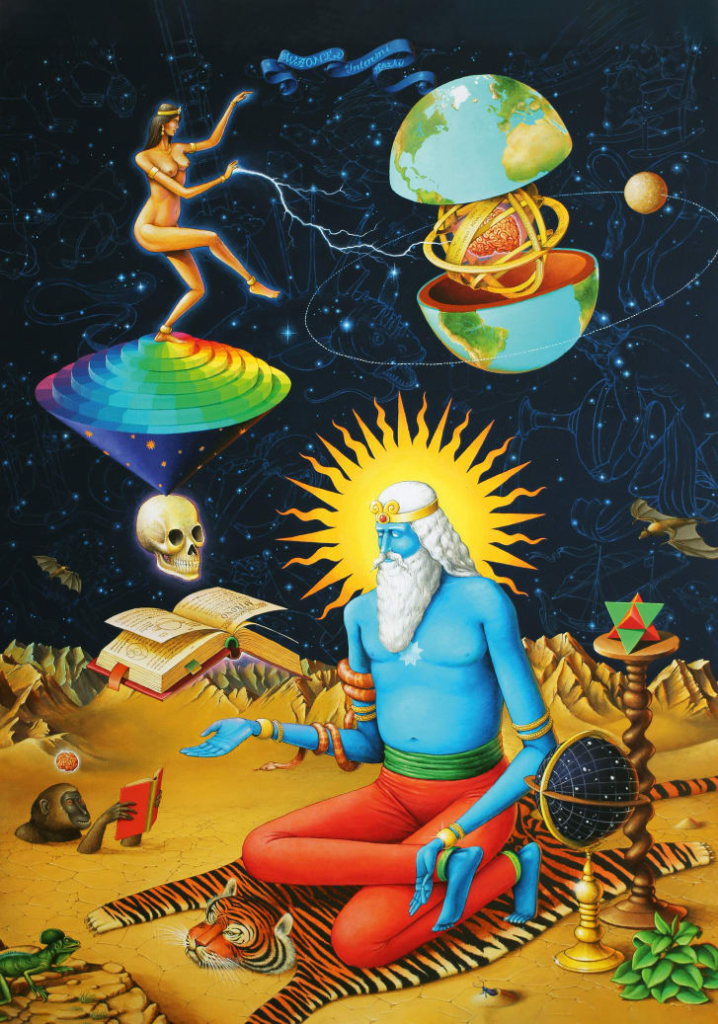
On the pages of "Astrology," ancient illustrations appear next to paintings by famed artists like Raphael and Alphonse Mucha, along with more contemporary, psychedelic takes on the zodiac.
Despite centuries of different interpretations, the symbols themselves have largely remained unchanged (though Uranus, Neptune and Pluto were added upon their discovery).
"Astrology is a pretty complex system of symbols that carry associations and have the weight of thousands of years of stories behind them," Richards said. "We can connect to these archetypal myths and stories, and find that they have relevance and meaning to convey to our paths today."
Two sisters, split up
The practice wasn't always considered a pseudoscience, but was seen, by some, as a respected "sister science" to astronomy. Where astronomy tracked celestial objects, astrology interpreted what their positioning meant for mankind.
Astrology was part of daily life in the Roman Empire, then demonized by Christian priests (despite the fact that the Bible's three wise men, who followed a star to the baby Jesus, were likely astrologists, Richards points out in the book). It also flourished during the Islamic Golden Age, and was valued highly by European royals until the scientific discoveries of the Enlightenment made it increasingly obsolete.
And regardless of how it has been viewed by science, astrology has been a cultural linchpin, crucial to history, religion and creative storytelling, as "Astrology" asserts.
"(Astrological charts) are an interpretive text; they can be read a thousand different ways," said Richards. "That's literature. That's art. That's a beautiful multitude of possibilities."
Latest Stories
-
Government to launch new legal frameworks on social protection and gender equity
8 minutes -
CSA Ghana opens NCSAM 2026 with call for stronger cybersecurity collaboration
15 minutes -
Yellow Fever deaths in Sissala East worrying – MP
16 minutes -
PAC flags GH¢5.2bn financial irregularities in 2025 audit report
20 minutes -
PAC steps down 2 special audit reports into Ghana’s US Embassy, 13th All African Games
26 minutes -
Yellow Fever outbreak kills 7 in Sissala East
33 minutes -
Techiman-Krobo Nursing Training principal to remain at post despite calls for her removal
36 minutes -
Ghana cautions citizens over fraudulent jobs luring them to Zambia for cybercrime
38 minutes -
ECG network fault leaves several Lower Manya communities without power
41 minutes -
Banda targets tourism boom with new facilities
43 minutes -
Gender Minister urges dialogue as teachers’ strike threatens School Feeding Programme
51 minutes -
Diminutive SHS 1 student in viral video is 16, not underage – Adanwomase SHS clarifies
52 minutes -
‘He who pays the piper calls the tune’ – Baah-Nuakoh hits back at proposed GFA dissolution
1 hour -
Kotoko, Hearts afraid to speak up because of relegation – Alhaji Grunsah
1 hour -
When the street becomes the opposition: Africa’s New Democratic reality
1 hour