

Audio By Carbonatix
Once a symbol of industrial promise, the Aboso Glass Factory now lies in ruins, its shattered remains a stark reminder of broken promises and lost opportunities.
The very structure that was supposed to be revived for economic growth has been dismantled, leaving the community in shock and disbelief.
A History of Hope and Betrayal
The Aboso Glass Factory was once a beacon of local manufacturing, providing employment and supporting the industrial sector.
In 2017, the government announced ambitious plans to restore it with investor support, rekindling hopes of a revival. By 2019, GIHOC Distilleries took over with promises of rehabilitation, a move that was supposed to reduce reliance on imported glass and supply bottles for its liquor brands.
However, those promises have now crumbled literally. On September 27, a letter signed by Maxwell Kofi Jumah, Managing Director of GIHOC Distilleries, authorised Linkin Birds Company to enter the premises for scrap collection. What followed was nothing short of devastation.
The Silent Demolition
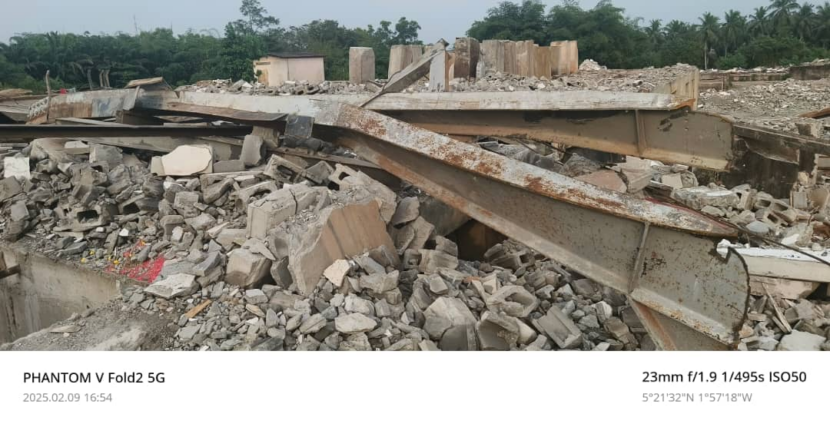
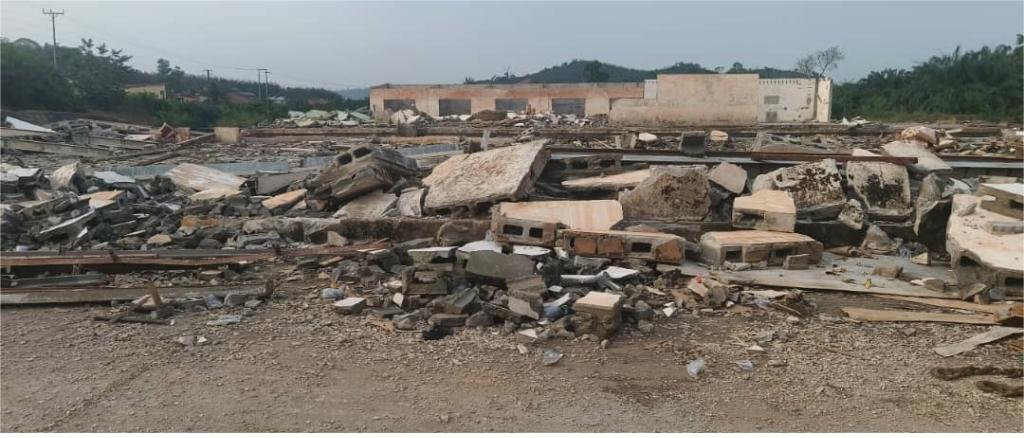
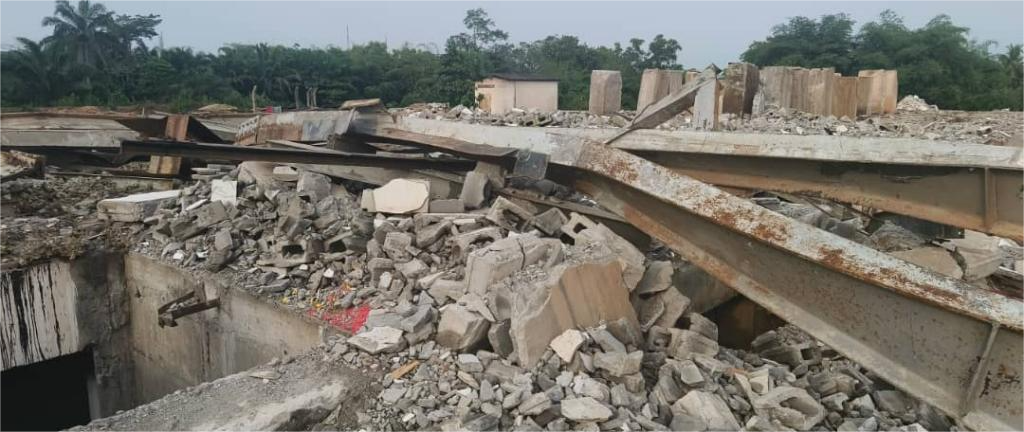
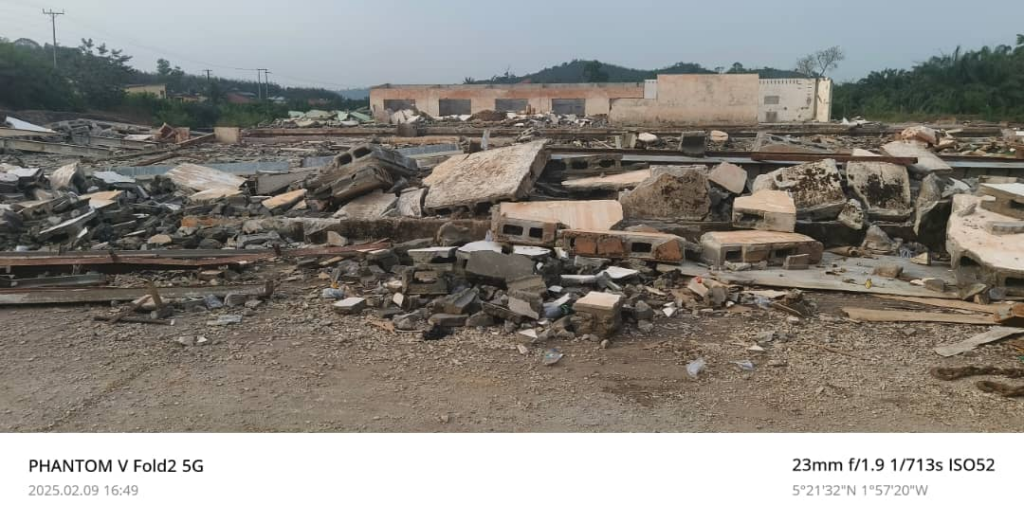
Despite strong opposition from residents, the factory was systematically dismantled. The images speak volumes: piles of rubble where machinery once stood, abandoned concrete blocks scattered like forgotten relics of an industrial dream. Even brand-new, unused equipment was carted away, leaving behind only dust and debris.
The final blow came when community members woke up to find the entire structure levelled, save for the administration and canteen blocks. It was only through their intervention that these last remnants were spared from demolition.
According to locals, subcontractors revealed that the order to tear down the facility came directly from Maxwell Kofi Jumah—contradicting the initial agreements made during community engagement sessions.
A Community Left in the Cold
For the people of Aboso, this is more than just a demolished building it is a betrayal. They had been assured that the facility would be rebuilt, not destroyed. Now, with nothing left but ruins, they are left to wonder: was this always the plan?
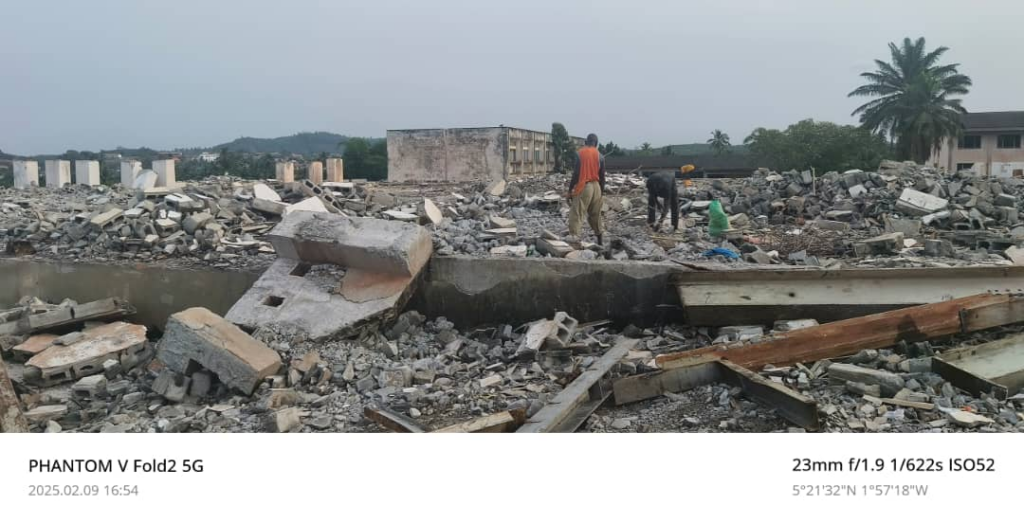
Residents are demanding accountability. They want answers from GIHOC, from the government, from anyone who once championed the factory’s revival. But as of now, the only thing standing in Aboso is disappointment.
The Aboso Glass Factory is no more. And with it, a part of Ghana’s industrial ambition reduced to rubble.
Latest Stories
-
Pedestrian struck by vehicle at Pokuase Interchange amid streetlight concerns
1 minute -
Fact Check: Mahama’s claim that over one million people found employment from 2025 Q1 to Q3 is false
2 minutes -
Ghana eyes West Africa aviation hub as Ambassador Victor Smith engages US helicopter giant
16 minutes -
Lordina Mahama advocates for safer childbirth
27 minutes -
TMA begins poultry distribution to boost food security
44 minutes -
Interior Minister receives Gbenyiri Mediation Committee report on Gonja-Birifor conflict
49 minutes -
Lordina Foundation builds and hands over ultramodern maternity and children’s ward to Asukawkaw Clinic
50 minutes -
Former CJ on Dubai lesson and why Ghana must build its own gold market
1 hour -
It’s never too late – Former CJ Sophia Akuffo backs industrial reset
1 hour -
We would be very far ahead – Ex-CJ Sophia Akuffo laments Ghana’s industrial retreat
2 hours -
Iran, the US, and a World Cup that starts in three months
2 hours -
Why is WhatsApp’s privacy policy facing a legal challenge in India?
2 hours -
Oil prices rise after ships attacked near Strait of Hormuz
2 hours -
Sophia Akuffo on Obuasi’s missed gold opportunity
6 hours -
Investment firm’s financial officer arraigned over GH¢300K dud cheque
6 hours