


Audio By Carbonatix
Today, dear citizens, let us gather in sober reflection — for this is a time when even the Republic of Uncommon Sense removes its sandals.
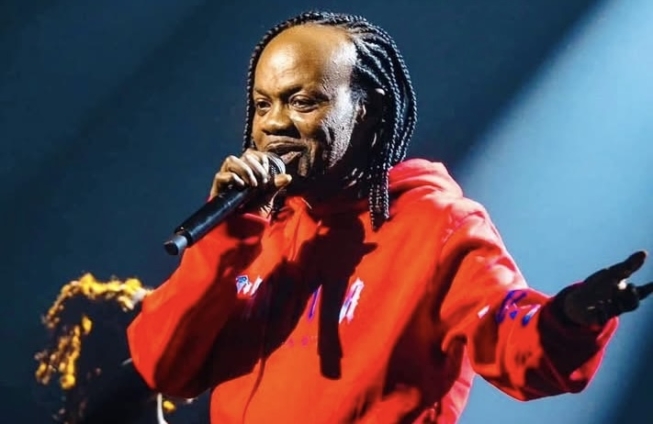
In this Republic, death is never merely personal. It is communal. It is public. It is debated, interpreted, and performed. When the departed is Charles Kwadwo Fosu — known across generations simply as Daddy Lumba — the weight of that moment multiplies. Silence becomes harder to maintain, emotions grow layered, and even mourning must negotiate its place in the national conversation.
For weeks, Ghana hovered between grief and motion. What should have been a straightforward passage from life into legacy unfolded instead as a careful negotiation between law, love, family, and public expectation. The Daddy Lumba widow lawsuit, now resolved by the court’s decision to clear the way for his burial, became more than a legal process. It became a cultural mirror, reflecting how we handle loss when the deceased belongs not only to a family, but to a nation.
Two women stood at the heart of this moment. Not as caricatures. Not as contestants. But as human beings bound by the same loss, approaching grief through different doors. One carried the certainty of documentation — a marriage affirmed by registry, law, and record. The other carried the weight of lived companionship — a presence known to neighbours, captured in memory, and affirmed by shared life. Each truth stood on its own. Each deserved dignity. Yet around them, debate rose louder than empathy, as the Republic examined love through the lenses of legality, tradition, and public opinion.

Between these women stood a family navigating a familiar Ghanaian tension: the delicate balance between custom and court. Meetings were held. Words were weighed. Silence was negotiated. The Abusua-Panin called repeatedly for calm, knowing that in moments like this, every decision echoes beyond the household. The stadium waited. The mortuary waited. And the nation waited too — not merely impatient, but uncertain, aware that the manner of this farewell mattered as much as the farewell itself.
When the court finally spoke — lifting the injunction after conditions were unmet — it did so without theatrics. The law, having paused the procession long enough to assert order, stepped aside to allow the journey to continue. There was no celebration. No triumph. Only a collective exhale. For when mourning lingers too long in dispute, even remembrance grows weary.
Throughout it all, the public square remained alive, as it always does. Trotros became lecture halls. Market stalls doubled as legal clinics. Radio studios hosted rotating panels of emotion, experience, and borrowed authority. Social media, never one to adjourn, documented every development in real time. Yet beneath the noise lay a quieter understanding shared across divides: that a giant had fallen, and the way we handled his final journey would say something about us.
Daddy Lumba’s music had long accompanied the most intimate chapters of Ghanaian life. His songs soundtracked weddings and heartbreaks, reconciliations and regrets, long drives and late-night reflections. He taught us that love could be joyful without being shallow, and painful without being bitter. In death, he offered one final lesson: that legacy is fragile, and memory must be handled with care.
This moment has reminded us that not every matter benefits from amplification. Some require restraint. Some demand reverence. When law enters mourning, even satire must lower its voice. The Republic of Uncommon Sense, known for its sharp observations and playful irony, understands when to pause — when to step back and allow dignity to lead.
As preparations resume and the final journey begins, the call before us is simple but profound. Let the widows grieve without spectacle. Let the family unite without pressure. Let the nation remember without noise. For a life that gave us so much sound deserves, at its close, a measure of quiet.
In the end, the question was never truly about who held the microphone last. It was about whether we, as a people, knew when to release it. For when a great voice finally rests, the highest tribute is not applause, argument, or performance — it is respect.
Fare thee well, Charles Kwadwo Fosu. You gave the nation its soundtrack. May the final note be peace.
— Yours in Uncommon Service, The Republic’s Humble Storyteller
Latest Stories
-
Gomoa Easter Carnival: Sarkodie, Kuami Eugene, Tinny, set festival ablaze as Day 3 ends on high note
11 minutes -
“Feels amazing” – Antoine Semenyo reveals after Manchester City dismantle Liverpool
37 minutes -
Mahama calls for emergency cabinet meeting over rising fuel prices
1 hour -
Asante Gold reports US$345million loss for 2025
2 hours -
Gov’t making progress in clearing $1.7bn power debt – Mahama
3 hours -
Justice is the engine of growth – Chief Justice
4 hours -
Meet us halfway – Trade Minister tasks private sector with AfCFTA success
4 hours -
After more than 14 years at Atletico Madrid, what next for Simeone?
4 hours -
Conquering the World – Building on the foundations laid by Otto Addo
5 hours -
[Playback] Sarkodie, Kwami Eugene, Tinny, Keche and others thrill fans at Gomoa Easter Carnival
5 hours -
Gomoa Easter Carnival: Experts charge indigenes to own festival to ensure sustainability
6 hours -
Gomoa Easter Carnival: Edem Agbana and Joy Prime fans shower festival with huge endorsements
7 hours -
Gathering of Royals 2026: Empowering women, boosting tomato production
8 hours -
Gov’t to overhaul free zones into manufacturing hubs for local production – Trade Minister
8 hours -
Ghana losing $2.5bn yearly from raw exports – Trade Minister reveals
8 hours