

Audio By Carbonatix
They once dug deep into the earth, searching for gold. But now, they are searching for peace—for their communities, their environment, and their own hearts.
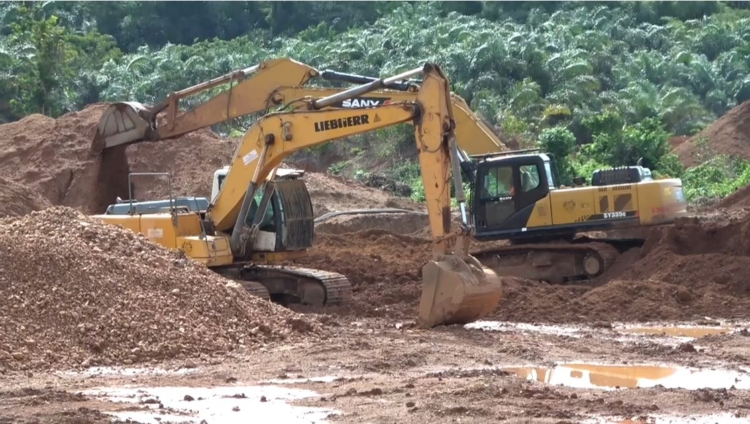
Across universities in Ghana, young men who were once illegal miners, commonly known as galamseyers, are now sharing a different story. It is not a story of riches or success, but one of pain, regret, and a strong desire to make things right.
24-year-old university student, Yaw Attah (pseudonym) says he lost both parents on October 14, 2016. They were the ones supporting his education. After their death, his world changed.
“I had nobody to take care of me. I had to find something to do… that’s why I went into galamsey,” he said.
With no support, Yaw turned to illegal mining as his only hope for survival.
For years, he and others worked in dangerous illegal mining sites. They say the money helped them survive. It paid for food, clothing, and even school fees. But it came at a cost to Ghana’s rivers and forests.
“I am aware that galamsey activity is destroying our water bodies and forests. I just wanted to support my education. But today, I feel pain,” said Yaw. “We’ve caused damage to water bodies and the environment.”
Yaw, now studying Bachelor of Education in Early Childhood, says his journey to school was paid for by the same activity that harmed rivers, forests, and even human lives. He recalls how several of his friends died under strange and sad circumstances while working in galamsey.
“In the years I was involved in galamsey, many of my friends lost their lives. Some got into drug abuse, others ended up in child trafficking or prostitution. Some became very sick and can’t work anymore,” Yaw shared, his voice filled with pain.
A call for forgiveness and a fresh start
“I deeply regret going into galamsey,” Yaw said. “When I sit and think about what we did at those sites, I feel very sad. In the next ten years, our children, our brothers and sisters—how will they get clean water to drink or land to farm? It will be a big problem.”
Now, Yaw believes it is time to speak out—not just about the harm caused by illegal mining, but also to guide young people to make better choices.
“If I get the chance, I’ll go back to those communities and ask for forgiveness. I’ll tell the youth: there’s another way. Galamsey is not the only answer.”
He wants to use his education to educate others, especially those still trapped in illegal mining activities. But there’s one more challenge ahead: support to complete his education.
Yaw fears he may not be able to pay his school fees. He hopes for any support to help him finish school and become a stronger voice for change.
“I need help to stay in school.” He wants to be a different kind of miner—one that digs for truth, for justice, and for change.
From destroying to rebuilding
Yaw is not alone. Kojo Majeed (not his real name), a 27-year-old student in his third year of studying BSc Electrical and Electronic Engineering, also shared his experience. Kojo says the dangers of galamsey are more than just environmental. For him, the cost was also human lives.
“I can count about 30 of my friends who died because of illegal mining,” he said.
When asked if he regrets being part of the destruction of Ghana’s rivers and forests, Kojo didn’t hesitate.
“Yes, I regret,” he said softly. I asked him why he feels this way. “It used to rain often, but now the weather has changed. It’s because of the destruction we caused to the forest and the environment,” he explained.
Kojo believes illegal mining has played a big role in the changing weather patterns in Ghana. But he is not just filled with regret—he wants to take action.
“Yes, I will do something to stop galamsey. I will also encourage my younger ones to stop because of the damage we’re causing,” he said. “Now, I plant. My goal is to help restore what we damaged.”
He is now focused on rebuilding what was broken—trees, land, and trust.
Like Yaw, Kojo wants to be part of a new movement led by them to protect and restore the forests.
Both Yaw and Kojo say some of their colleagues also in different universities are willing to help right the wrongs of the past. They admit they cannot erase the damage they caused, but they believe they can stop others from making the same mistakes.
“We know we can’t change what we did,” Yaw said. “But with support, we can help stop the youth from going down the same path.”
They were once buried in the mud of illegal mining. But now, they are rising one voice, one lesson, and one promise at a time. Together, they are calling for opportunities to join environmental campaigns and educate their peers—hoping to turn their regrets into real change.
Latest Stories
-
Ghana’s reliance on Dubai for gold exports leaves cedi exposed as Iran conflict disrupts trade
10 minutes -
Cabinet approves new round of SIM registration exercise
23 minutes -
TUC urges action on women’s rights, workplace protections on International Women’s Day
35 minutes -
Leadership of Cashew Watch Ghana engages TCDA CEO to advance sector growth
36 minutes -
Ghana’s gold crossroads: Why global pressure is real, but a coup is still unlikely
39 minutes -
24-Hour Economy Secretariat targets 160k jobs under new energy transition MoU
41 minutes -
Ada West Education Directorate intensifies policies to reduce teenage pregnancy
45 minutes -
We are in final stages of setting up Women’s Development Bank – Mahama
50 minutes -
IWD: Invest more in women for national development – Fisheries Minister
58 minutes -
CLOGSAG begins indefinite nationwide strike over delayed conditions of service today
1 hour -
Educational orientation worsening youth unemployment in Ghana – Asiedu Nketia
1 hour -
Middle East War: Gov’t must turn oil price gains into relief for the poor
1 hour -
Iran war: Import addiction threatens Ghana’s economic stability – Economist
1 hour -
Women urged to embrace authenticity to unlock their potential
2 hours -
Nigerian army kills 45 in Katsina clash
2 hours