

Audio By Carbonatix
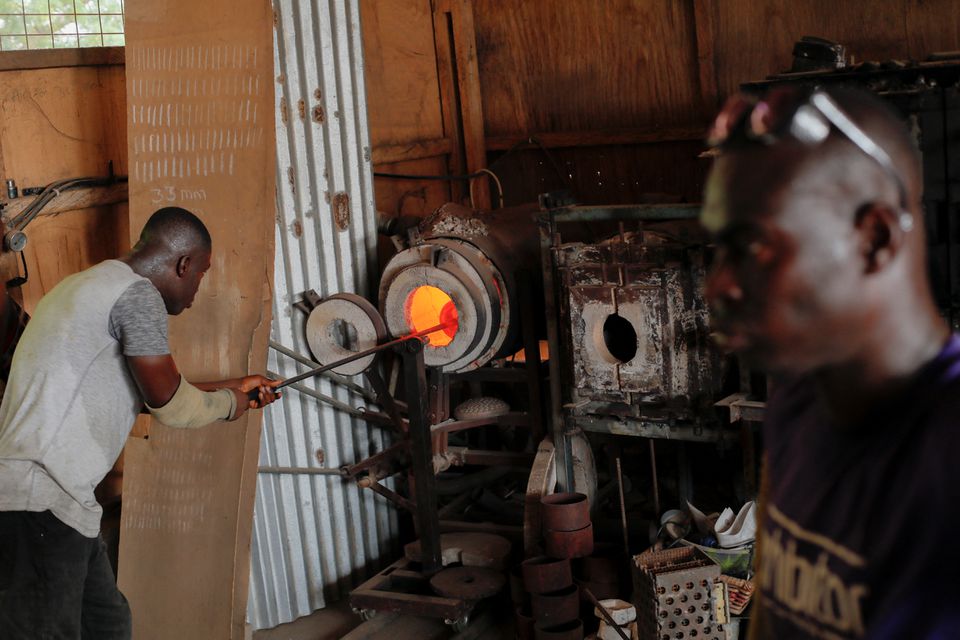
Michael Tetteh, Ghana's only professional glassblower, clenched his teeth as he gripped a red-hot ball of molten glass, his burned and blistered hands bare against the steaming stack of wet newspaper he used to protect them.
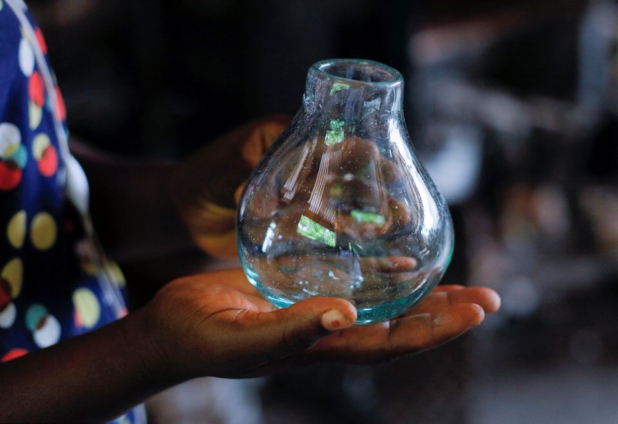
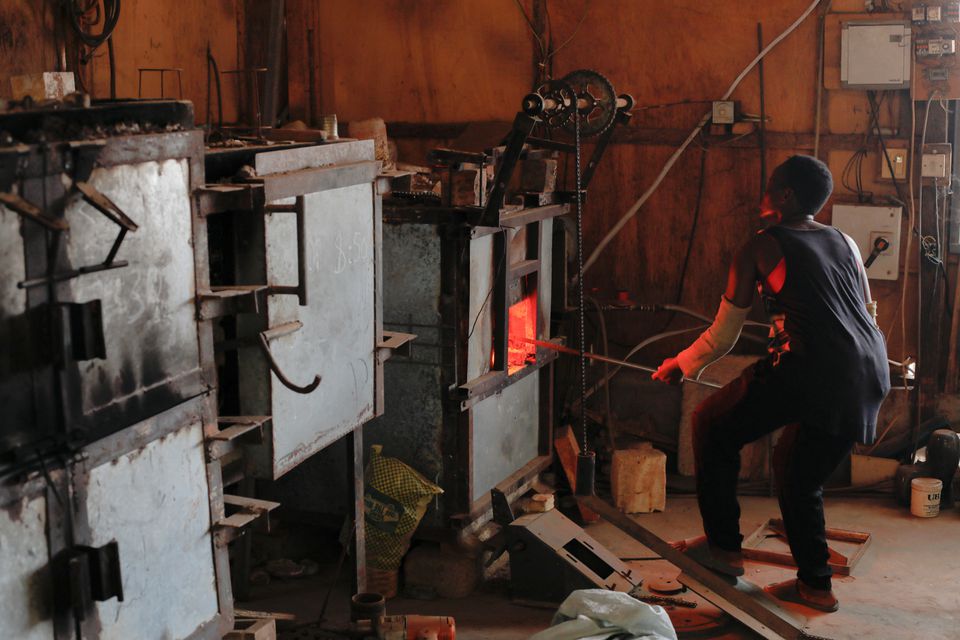
The 44-year-old toiled in the heat of scrap-metal kilns burning at nearly 1,500 celsius (2,700 Fahrenheit), pregnant with melted windowpanes, TV screens, and soda bottles he would soon transform into elaborate vases swirling with psychedelic colour.
Some become red vases with streaks of black, other green pitchers and some clear, everyday bottles.
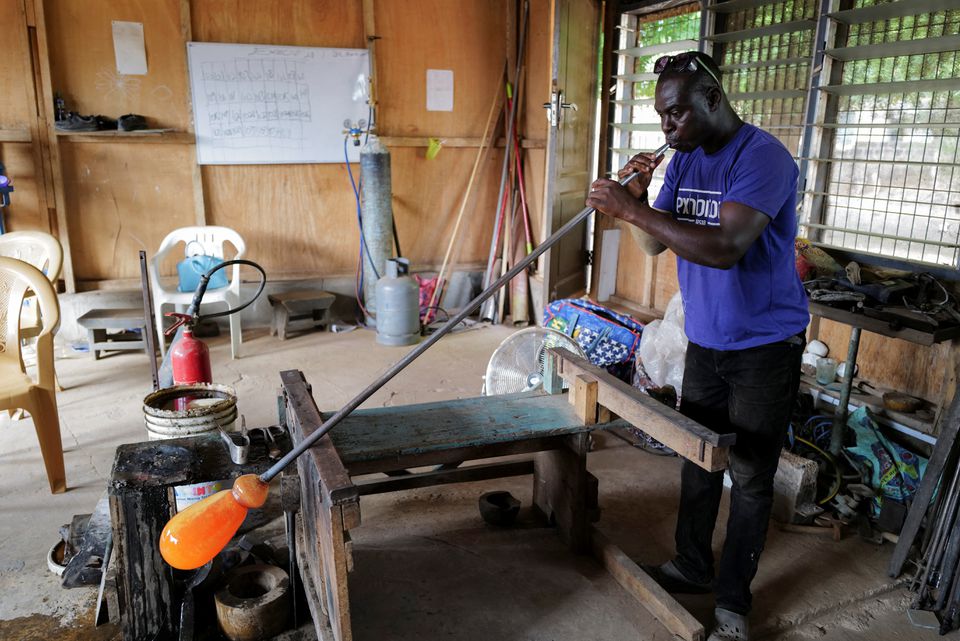
"Glass... is my passion, my heart," he said. "It's like life. It takes you on a journey from one (stage) to another."
Tetteh's strict use of recycled materials, which he collects from scrap yards and landfills in the capital Accra, is part of a stated mission to reduce Ghana's glass waste and what he considers wasteful imports.
He envisions a Ghana free of foreign glass, having channelled its glass bead-making tradition into a modern, multi-faceted industry.
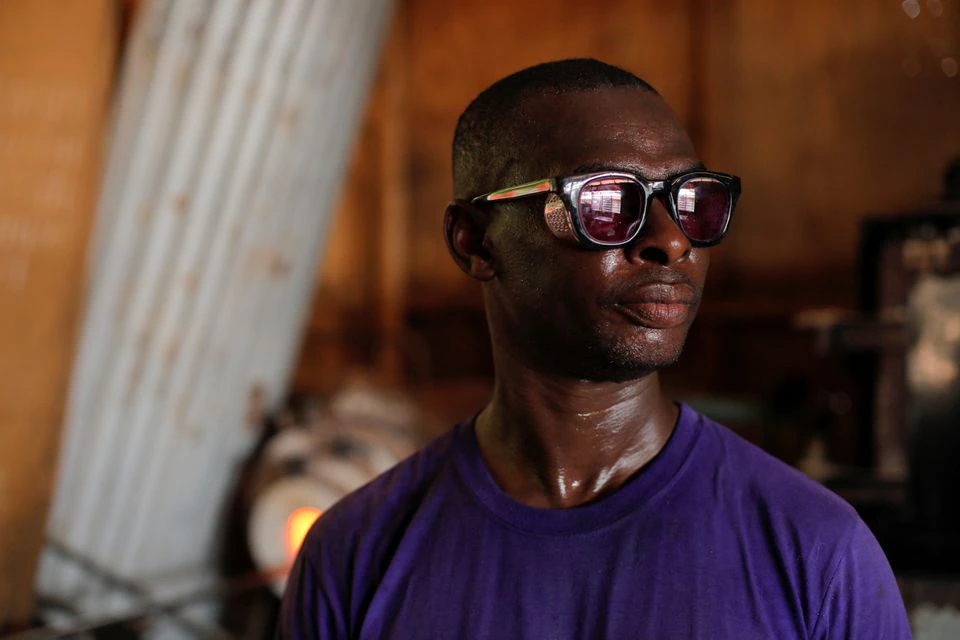
According to the Observatory for Economic Complexity, Ghana imports around $300 million in glass and ceramic products each year. More than 80% of that comes from China, the world's top glass exporter.
While some private companies recycle their glass, Tetteh says the majority of Ghana's glass waste ends up either in landfills or scattered throughout the nation's streets, posing a safety hazard.
"We don't have a (glass waste) collection process, and we don't want broken glass flowing around like that," he said. "If we use recycled (materials), we can make money."
Hailing from the town of Odumase-Krobo, the epicentre of Ghana's traditional glass bead culture, Tetteh discovered glassblowing in 2012 after spending several months in France and the Netherlands learning the craft with other Ghanaian bead-makers.
He was alone in his desire to continue upon returning home and set a goal to establish a proper hot shop in Odumase-Krobo.
Undeterred by lack of finance, he built furnaces from scrap metal and clay using online tutorials. He fine-tuned his abilities by watching YouTube videos of famous glass artists like America's Dale Chihuly.
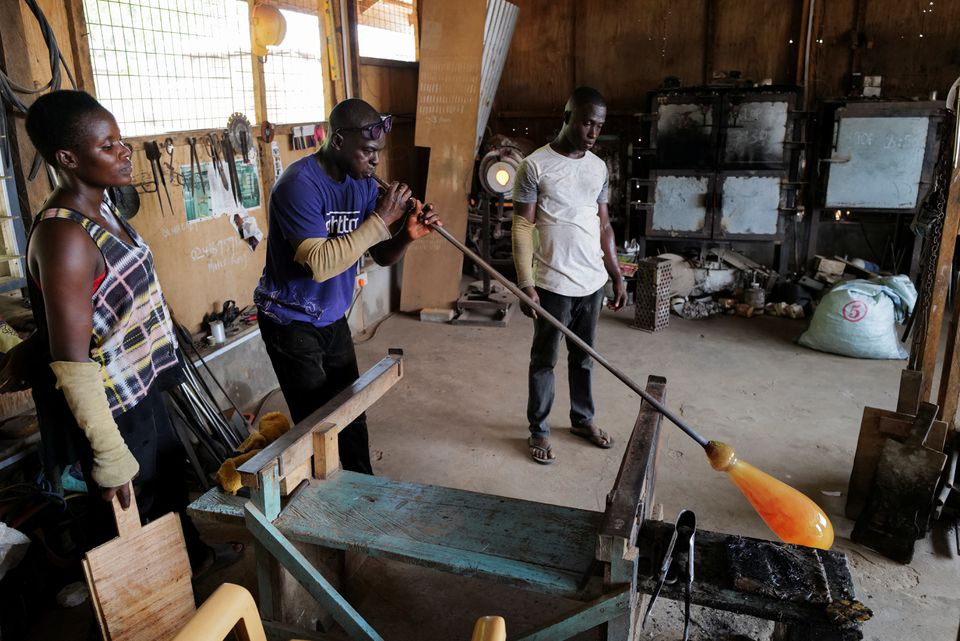
He has since hired several young assistants from Odumase-Krobo, who he is training and hopes will one day run their own workshops. Their work can be found in boutique shops in Ghana and Ivory Coast, and has appeared in European and American art galleries.
"My heart (wants) to train young Ghanaians, both men and women, so they can learn this job," he said. "We will not have to go to other countries like China to buy what we want for Ghana."
Latest Stories
-
Christina Koch becomes first woman to travel around the moon on Artemis II
9 minutes -
Epstein survivors’ calls to meet King Charles and Queen harder to ignore as US visit approaches
15 minutes -
UN Secretary-General names Ghana’s Anita Kiki Gbeho as South Sudan envoy
16 minutes -
Mali withdraws recognition of Sahrawi Republic, backs Morocco’s autonomy plan
21 minutes -
Gov’t distributes over 8,500 laptops to One Million Coders project
22 minutes -
Julius Debrah, ‘man to beat’ as NDC’s James Agbey dismisses Musah Dankwah’s polls
28 minutes -
GPRTU in Savannah Region to protest alleged eviction in Damongo
57 minutes -
Re: Reinsurance does not replace process — A response to the SIGA–SIC defence
1 hour -
Gender Ministry supports Harriet Amuzu in ongoing abuse case
1 hour -
AG joins plaintiff to scrap OSP ?: We should be mindful of the mischief in this – Bobby Banson
2 hours -
Samson Lardy Anyenini questions willingness of Attorneys-General to prosecute political colleagues
2 hours -
It is only fair the OSP is heard in Supreme Court case – Bobby Banson
2 hours -
Asiedu Nketia resumes Ashanti tour, second leg kicks off on Sunday
2 hours -
NLA denies salary cut claims, threatens legal action over reports
2 hours -
BoG Governor honoured for stabilising cedi, improve inflation
2 hours