

Audio By Carbonatix
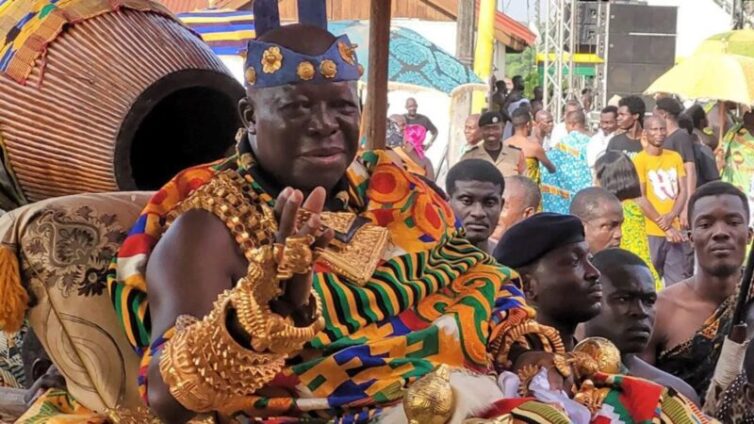
Kwadwom is a traditional art form used to praise and extol Asante kings in their royal courts. Therefore, it serves as a powerful oral tribute to the present occupant of the Golden Stool, Otumfuo Osei Tutu II, the revered King of Asante Kingdom and Chancellor of the Kwame Nkrumah University of Science and Technology, Kumasi.
More than mere song, this praise poetry embodies a living testament to the King's stature, performed with solemn reverence immediately before his pronouncements at public gatherings.
The ceremonial prelude to the Kwadwom often involves the evocative melodies of the Ntahera Trumpets creating a moment of profound anticipation.
While the poetic Akan lyrics may employ archaic or nuanced language, their performance evokes widespread admiration and deep cultural appreciation among audiences both within Ghana and across the globe.
The duration of the Kwadwom varies significantly depending on the context. At university events such as congregations and special ceremonies, the rendition is typically concise, averaging around 2 minutes and 10 seconds. In more traditional Asante settings, however, a fuller version unfolds, stretching to approximately 7 minutes and 13 seconds, weaving intricate layers of praise, ancestral invocations, and philosophical reflections that underscore the deep historical and spiritual roots of the Asantehene's authority.
Intriguingly, while the core lyrical structure of the Kwadwom remained largely consistent for many years, subtle yet significant evolutions began to emerge around 2019.
These adaptations, particularly noticeable around the seventh line of the chant, introduce contemporary themes that reflect the evolving dimensions of Otumfuor's reign.
Concepts such as peace, unity, and national strength have been woven into the fabric of the praise poetry, acknowledging his increasingly prominent role as a unifying figure and statesman in modern Ghana.
Illustrative examples highlight this dynamic evolution. At the United Nations General Assembly in New York in 2024, the Kwadwom included the powerful line: "Wo pɛn so na wode nkabom ne asomdwoeɛ brɛɛ Asanteman ne Ghana man nyinaa" ("You rose and brought unity and peace to Asanteman and the entire nation of Ghana."). This inclusion directly acknowledges the King's efforts in fostering harmony on a national scale.
Conversely, at the 56th KNUST Congregation on March 17, 2023, this specific line was absent, suggesting a return to a more traditional rendering for that particular occasion.
Again, during a visit by NPP officials to the Manhyia Palace in 2024, it featured the line: "Wo na ɛnam wo so na nkabom, mpuntuo ne nkɔso baa Ghana ne Asanteman mman mu" ("It was through you that unity, progress, and development reached the communities of Ghana and Asanteman."), explicitly linking the King to national and regional advancement.
Further demonstrating this responsiveness to contemporary events, the November 2024 edition of the 57th Congregation introduced another variation: "Wo pɛn so na wode anuonyam, mpuntuo ne nkɔso brɛɛ Ghana ne Asanteman" ("You rose and brought honor, progress, and development to Ghana and Asanteman."). This subtle shift in wording continues to underscore the King's impact on national progress.
At the 58th KNUST Congregation in 2024, the chant included “Krobea Asante Kotoko Asomdwoeɛ Hene”, meaning “Noble Asante Porcupine, King of Peace”, a phrase that highlights Otumfuo’s royal heritage, strength, and his role as a peacemaker.
These lyrical adaptations transcend mere artistic expression; they serve as a dynamic reflection of Otumfuo's evolving legacy. Otumfuo Osei Tutu II is not only celebrated as the custodian of Asante tradition but also increasingly recognized as a pivotal figure in national development, a respected peacemaker, and an influential international statesman.
The Kwadwom, therefore, is far from a static relic. It is a living, breathing narrative that adapts to the times, poetically chronicling significant achievements and reinforcing the enduring connection between the Asante Kingdom's rich heritage and its contemporary relevance on both national and global stages. Through these evolving chants, the powerful voice of the Asante Kingdom resonates across diverse settings, from ceremonial gatherings to university campuses and international forums, serving as a potent reminder that tradition, when vibrant and adaptive, remains an unparalleled form of storytelling, bridging the glories of the past with the realities of the present.
Latest Stories
-
The Ghanaian prophet and the mysterious death of his scottish wife Charmain Speirs
25 minutes -
Nearly 400 sentenced in Nigeria for links to militant Islamists
47 minutes -
Ghana’s recovery supported by gold strength despite global oil price pressures – Standard Bank Research
54 minutes -
Kwaku Azar writes: A-G vs OSP
1 hour -
Mfantsipim–Adisadel rivalry built excellence, not division – Sam Jonah
2 hours -
Vice President launches Mfantsipim’s 150 years of shaping Ghana’s greatest mind
2 hours -
I assure Otumfuo, Mahama will join him to commission KNUST Teaching Hospital by end of this year – Haruna Iddrisu
3 hours -
Barcelona dominate derby to extend La Liga lead
3 hours -
Gov’t to roll out free special education for persons with disabilities from July 1 – Education Minister
3 hours -
Importers and Exporters Association declares full support for Publican AI port system
3 hours -
“We used it to test our officiating officials’ readiness” – Bawah Fuseini after CAA Athletics event
4 hours -
Volleyball emerges as Ghana’s fastest rising sport
4 hours -
National Sports Fund needs strong leadership from the top – Administrator David Wuaku
4 hours -
JoySports Exclusive: Steve McLaren in talks with GFA after expressing interest in Black Stars job
4 hours -
Fire guts auto parts warehouse at Bubuashie, one fire officer injured
4 hours