

Audio By Carbonatix
A Presidential Dispatch from the Republic of Uncommon Sense
Dear Citizens,
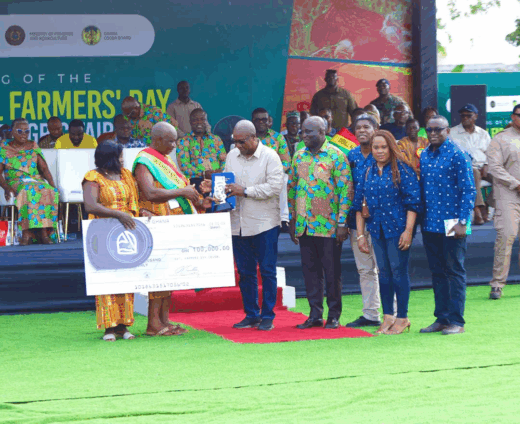
Once upon a time in the Republic of Uncommon Sense—where problems grow faster than maize in the rainy season, and where political promises germinate beautifully but refuse to bear fruit—the nation gathered once again to celebrate Farmers’ Day. Ah yes, that annual festival where we clap for the people who feed us… right before we go back to ignoring them for the next 364 days.
But this year, something unusual happened. The farmers finally spoke. And not with the timid politeness of people accustomed to being thanked without being helped—no. They spoke with the clarity of a cocoa farmer holding a cutlass and tired of watching everyone else harvest his sweat.
Enter Anane Boateng, President of the Ghana National Cocoa Farmers Association, who calmly dropped a truth bomb so powerful it should be preserved in the Museum of National Honesty.
According to him, Farmers’ Day celebrations—and the glamorous awards that decorate them—have been organised for years without consulting farmers.
Translation: “We are the reason for the party, but nobody invites us to plan the party.”
He went on: “Most promises made to farmers are mere political talk.”
In Ghanaian English, this means: “The promises are so hollow that even an empty sack is jealous.”
Ladies and gentlemen, we cannot sweep this under the carpet. The carpet is already choking with unswept issues—from galamsey debris to abandoned policy documents. And now, the voice of the Ghanaian farmer is lying there too, gasping for ventilation.
Let the record reflect: Farmers’ Day has steadily evolved from a heartfelt national thank-you in 1985—when the nation survived bushfires, famine, and the PNDC glare—into a beautifully choreographed spectacle of tractors, speeches, dances, and award refrigerators that often cost more than the farmer’s house.
For one day, politicians wear Wellington boots with the confidence of men who discovered farming on Google the night before. They step into the soil gingerly, as if the earth might stain their manifestos.
They harvest cassava for three seconds for the cameras, then retire to air-conditioned tents to deliver speeches about food security while their plates are secured with imported chicken.
Meanwhile, the real farmer—the one with cracked heels, calloused palms, and a lifetime of bending over maize—stands quietly in the sun, surrounded by promises he cannot bank and awards he cannot plant.
But the biggest tragedy in this agricultural theatre? The farmers themselves are strangers in decisions made in their name.
It is like celebrating Nurses’ Day without consulting nurses. Or Teachers’ Day without asking teachers what they need. Or organizing Independence Day without Ghana.
The absurdity would be funny if it were not so chronically national.
And yes—let us confess our sins as the media too. We are not innocent. We love the spectacle. We love the big cheque presentations, the shiny tractors, the grand speeches. We love to take the photos, post the captions, and move on—leaving the farmer exactly where we found him: in poverty, surrounded by weeds, and fighting with a leaking barn.
If poverty had a spokesperson, it would wear a faded Lacoste shirt, Wellington boots, and answer to the name “small-scale farmer.”
Consider the irony:
Ghana produces world-class cocoa, but Ghanaian cocoa farmers live lives that cannot buy the chocolate they help produce.
Our agricultural policies sound beautiful on launch day and disappear faster than subsidized fertilizer during election season.
And every year, when the nation imports tomatoes from Burkina Faso, rice from Vietnam, onions from Niger, and chicken from Brazil, the Ghanaian farmer watches the parade and asks a question only the gods can answer:
“Am I a farmer or a motivational speaker?”
The truth is simple:
Ghanaian farmers harvest more promises than crops.
Because the roads to their farms are so bad they insult even Toyota Land Cruisers.
Because the weighing scales cheat more than unmonitored exams.
Because fertilizer shortages last longer than some political ccareers.l
Because land guards have turned farming into a contact sport.
Because irrigation is a concept we discuss but do not implement.
And yet—every December—we gather to applaud them.
The gap between celebration and reality is so wide that even irrigation cannot bridge it.
So what would a real Farmers’ Day look like in a Republic that truly valued farming?
– Farmers—not politicians—would plan the celebration.
– Awards would be based on farmer needs, not photo opportunities.
– Roads would be farmable, not philosophical questions.
– Irrigation systems would exist outside PowerPoint presentations.
– Payment for cocoa would not arrive fashionably late like a celebrity.
– The media would amplify the farmers’ voices, not the speeches written for them.
Imagine such a Ghana.
A Ghana where the farmer stands taller than the politician posing with the hoe.
A Ghana where the cutlass is not just a symbol on an award day but a weapon of national prosperity.
A Ghana where we stop clapping for farmers and start listening to them.
Until then, Farmers’ Day will remain a ceremony fertilized with political manure—beautiful to the camera, useless to the soil.
A nation that eats from the hands of farmers must not silence their mouths.
Ghana doesn’t need louder celebrations.
Ghana needs louder farmers.
Yours in Uncommon Service,
Jimmy Aglah
#FarmersDay #GhanaAgriculture #SupportFarmers #CocoaFarmers #RepublicOfUncommonSense #FoodSecurity
Latest Stories
-
I assure Otumfuo, Mahama will join him to commission KNUST Teaching Hospital by end of this year – Haruna Iddrisu
18 minutes -
Gov’t to roll out free special education for persons with disabilities from July 1 – Education Minister
39 minutes -
“We used it to test our officiating officials’ readiness” – Bawah Fuseini after CAA Athletics event
1 hour -
Volleyball emerges as Ghana’s fastest rising sport
1 hour -
National Sports Fund needs strong leadership from the top – Administrator David Wuaku
2 hours -
JoySports Exclusive: Steve McLaren in talks with GFA after expressing interest in Black Stars job
2 hours -
Fire guts auto parts warehouse at Bubuashie, one fire officer injured
2 hours -
I owe my victory to coach Ofori Asare – Allotey after winning WBA Africa Gold Super Flyweight belt
2 hours -
Church of Pentecost supports over 2,000 BECE candidates in Obuasi with career guidance seminar
3 hours -
Brandon Asante and Coventry all but promoted to Premier League despite Sheffield Wednesday draw
4 hours -
GPL 2025/26: Late Kwartemaa strike downs Hearts in Tema
4 hours -
Ghana Faces Sierra Leone Moment as Prosecutorial Powers come under strain
4 hours -
Don’t consume fish or seafood from Tema Shipyard until further notice – FDA warns
4 hours -
Why volunteering might be Africa’s most underrated career accelerator
4 hours -
ActionAid Ghana raises concern over gender gaps in Feed Ghana Programme
4 hours