

Audio By Carbonatix
In the lead-up to Ghana’s 2024 general elections, some political parties have published their manifestoes outlining their development plans and governance agenda to voters.
While these documents are critical for shaping public policy, young people, who represent the majority of Ghana’s population, must have greater appreciation of the manifestos to better engage in political discourse and to make informed voting decisions.
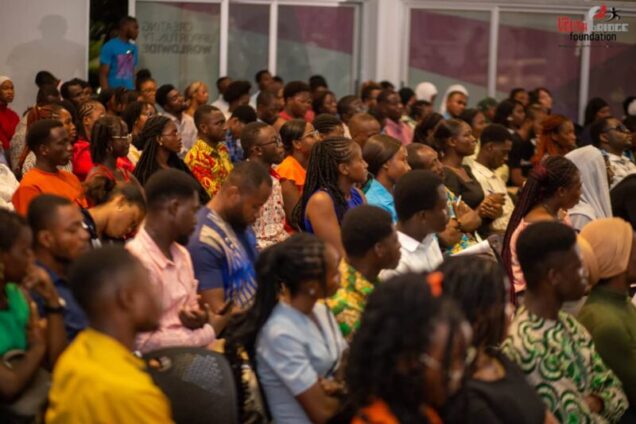
This was the central theme at the launch of the Youth Sensitivity Analysis of the 2024 Political Parties’ Manifestoes, held on November 14, 2024, at the British Council, Accra.

The event, organized by the Youth Bridge Foundation (YBF) with support from STAR-Ghana Foundation and funding from the Foreign, Commonwealth and Development Office under the theme “Empowering Youth to Elevate Accountability”, brought together over 250 participants, including students from four universities, development partners, youth representatives from the Ghana Disability Association and the media.
Insights from the Report
The report, authored by Professor Justice Bawole, Dean of the University of Ghana Graduate Business School, provides a good analysis of how the manifestoes of the New Patriotic Party (NPP), National Democratic Congress (NDC), and Movement for Change (MFC) align with youth aspirations.
The analysis evaluates key areas of the manifestos such as economic empowerment, education, health, governance participation, and social inclusion, and makes comparative analysis within frameworks like the AU African Youth Charter and Ghana’s National Youth Policy (2022 - 2032).
The findings reveal that while both the NPP and NDC manifestoes address youth-centric issues, they fall short in critical areas such as funding adequacy, measurable outcomes, and mechanisms for active youth engagement in policy implementation. For instance:
The NPP manifesto emphasizes digital skills training, job creation in emerging sectors, and governance participation. However, concerns about sustainable funding and equitable distribution remain.
Also, while the NDC manifesto highlights youth entrepreneurship and rural development initiatives, such as the Adwumawura Programme and the Youth Innovation and Industrial Parks, issues like feasibility and transparency of fund allocation require scrutiny.
Professor Bawole further stressed the need for youth to question the measurability of promises, the inclusivity of initiatives, and the extent to which these programs are embedded in state structures rather than party mechanisms.
"Young people must critically examine these manifestos beyond face value," he stated during the launch.
"It's crucial to question the feasibility and sustainability of proposed initiatives, especially those targeting marginalized youth groups. History has taught us that lofty promises often face challenges of implementation, funding adequacy, and political interference. Without vigilant monitoring and accountability, these promises risk becoming mere rhetoric."
The expert consultant, Dr Alexander Nimo Wiredu, underscored the importance of holding political parties accountable.
He explained that “Political manifestoes are not mere wish lists; they are contracts with the people. Young voters must critically evaluate these promises and demand clear, actionable plans."
The report also highlighted gaps in inclusivity, particularly for marginalized groups such as persons with disabilities (PWDs) and rural youth. Although both manifestos mention these groups, targeted strategies to ensure equitable access to opportunities remain insufficient.
A Call to Action for Young People
As Ghana approaches the 2024 election, young voters must rise to the occasion by interrogating political party manifestos. Ask the hard questions:
- How will the promises be funded, and are these funding sources sustainable?
- What mechanisms are in place to ensure accountability and transparency?
The youth are not just the future but the present drivers of accountability and change. By staying informed and engaged, they can ensure that political promises translate into meaningful action.
The Youth Bridge Foundation urges young Ghanaians to use this report as a starting point for deeper engagement with political processes.
By staying informed, engaged, interrogating political parties’ manifestos and holding leaders accountable, the youth can ensure their voices are heard in the corridors of power and ensure that political promises translate into meaningful action.
Latest Stories
-
At least 30 feared dead in crush at Haitian tourist site
1 hour -
Four arrested over murder of Scottish businessman in Kenya
1 hour -
New Mainoo deal closer, says Man Utd boss Carrick
1 hour -
Sinner beats Alcaraz to return to world top spot
2 hours -
An inappropriate joke nearly ended his career. Now he’s back with more humour
2 hours -
GPL 2025/26: Dreams FC stage stunning comeback to hammer Eleven Wonders
3 hours -
Livestream: The Probe examines Kumasi’s looming water crisis
3 hours -
MTN Ghana gears up to lead Africa’s AI revolution
3 hours -
Philanthropist Alhaji FuZak donates Da’wah bus to Ambariya Sunni community
3 hours -
GUTA calls for suspension of Publican AI system over trade disruptions
3 hours -
TTAG raises alarm over proposed recruitment of 7,000 teachers, demands national posting roadmap
4 hours -
Civilians feared killed after reports of air strike on Nigerian market
4 hours -
Bishop Simon Kofi Appiah installed as new Jasikan Diocese Bishop
4 hours -
Trump’s Strait of Hormuz blockade threat raises risks and leaves predicaments unchanged
4 hours -
US Court backs extradition of former MASLOC CEO Sedina Tamakloe-Attionu to Ghana
4 hours