

Audio By Carbonatix
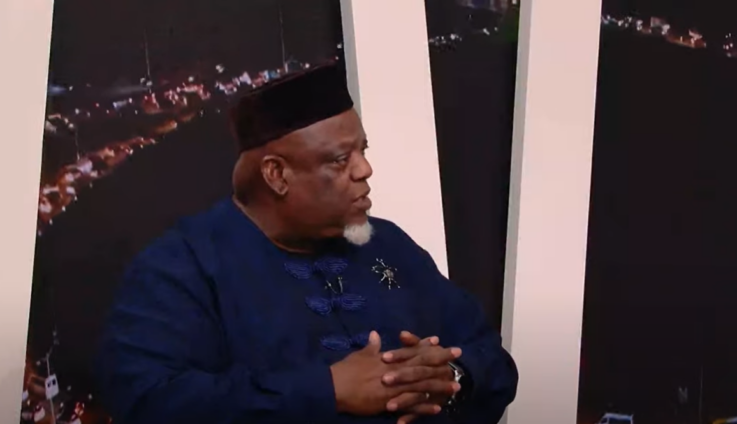
The CEO of Dalex Finance has weighed in on the new mining tax introduced after the 2025 budget statement, stating that the burden of economic recovery must be shared.
Joe Jackson speaking on Joy News’ PM Express Business Edition on Thursday, March 13, he made it clear that there was no painless way out of the current economic challenges.
“There has to be some pain. We're not going to get out of this painlessly. Whatever was going to happen, somebody was going to go away from the table unhappy because you're going to pay more tax,” he stated.
The Renowned economist pointed to the difficult balancing act the government had to perform in crafting the budget.
Addressing public discontent over previous tax measures, he acknowledged the widespread opposition to the E-Levy, COVID-19 levy, and betting tax, which many Ghanaians demanded be removed.
“As much as a collective, as Ghanaians, we all said we don’t like the E-Levy, COVID-19 levy, and betting tax. Take them off and we could go through the list of each tax handle.
"Taking them off meant there was a hole that had to be filled, or the drastic drop in expenditure would also not be good.”
With the government seeking alternatives, the economist explained why the mining sector was targeted for increased taxation.
“It is going to be the mining sector. Some of us will say, well, it's okay if they enjoy more rent than they should. If you look at retention, the mining sector retention is less than 10%, especially from the gold sector.”
He anticipated pushback from industry players but remained resolute.
“I know the Chamber of Mines will come hard at me. It’s not about apportioning blame; it’s that we are in a crisis, and who should bear some of the pain?”
He justified the government’s decision by highlighting the relative stability of the mining industry’s revenue compared to other sectors.
“Why should it be borne by the mining sector? Because for all the other sectors, it's the one sector that has been exporting. It’s the one sector that means their revenues have been insulated from all the turmoil locally.”
Unlike institutions that operate solely within the domestic economy and struggle with depreciation and inflation, mining companies continue to generate foreign exchange, making them a viable target for taxation.
Acknowledging the difficulty of the situation, he underscored that the decision was about economic survival rather than fairness.
“He represents institutions whose revenues are all in cedis. They can't bear any more pain. So to that extent, we will go with the flow.”
Latest Stories
-
DWM honours Nana Konadu Agyeman-Rawlings as it renews pledge for gender equality
5 minutes -
See the areas that will be affected by ECG’s planned maintenance on Tuesday, March 10, 2026
22 minutes -
CID recovers over 100 tonnes of stolen ECG cables in Tema raid
25 minutes -
Police identify fifth suspect in killing of Liberian national at Sakumono
31 minutes -
Pastor arrested in Cape Coast for child sexual abuse and production of indecent materials
32 minutes -
Dr Agnes Naa Momo Lartey to address the 70th Session of the Commission on the Status of Women
38 minutes -
Osei Assibey Antwi faces 21 counts as state files amended charge sheet
41 minutes -
Gender Ministry marks 2026 IWD with renewed call for equality
44 minutes -
IWD: Media must be deliberate in ending stereotypes about women – Joy Brands Projects Coordinator
46 minutes -
Awutu Senya East MP urges gov’t to boost malaria vaccination funding amid global cuts
53 minutes -
Petrine Addae launches ‘Single and Being – Trust the Faithful God’
54 minutes -
McDan donates GH¢200,000 to Volta Youth Development Fund, hails region as Ghana’s human skill hub
54 minutes -
Nana Osowa Abena Korama-I aka Mrs Juliana Ackom
60 minutes -
Invest in Ghana’s garment industry for job creation – Expert urges gov’t
1 hour -
Anny Osabutey: What is Daddy Lumba’s crime
1 hour