

Audio By Carbonatix
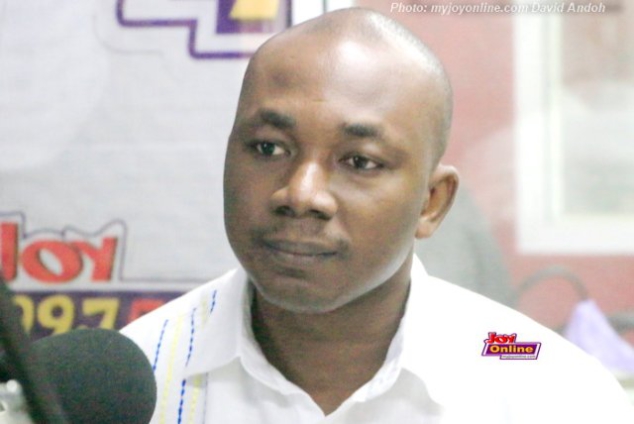
An Economist at the University of Ghana Business School, Professor Godfred Bopkin, has chastised the government for failing to have a plan B for the 2022 budget.
According to Prof. Bokpin, the government's failure to anticipate this has resulted in poor performance.
He claims that the government is depending heavily on the e-levy to put the economy back on track.
“Everything was hinged on the e-levy and I think that will still not be passed because that is not the solution,” he said.
Finance Minister Ken Ofori-Atta, presented the 2022 budget on Wednesday, November 17, 2021 and announced that the government intends to introduce an Electronic Transaction Levy (e-levy).
The levy, he revealed, is being introduced to “widen the tax net and rope in the informal sector”. This followed a previous announcement that the government intends to halt the collection of road tolls.
The proposed levy, which was expected to come into effect in January 2022, is a charge of 1.75% on the value of electronic transactions. It covers mobile money payments, bank transfers, merchant payments, and inward remittances. There is an exemption for transactions up to GH¢100 per day.
However, this 1.75% charge on the levy did not sit well with the Minority Group in Parliament, who refused to approve the budget.
In view of this, Prof Bokpin says the Finance Minister as a matter of urgency must make certain revisions to the 2022 Budget in a bid to give some level of assurance and prevent the economy from a total collapse.
“It may be helpful for the Ministry of Finance to make a statement in Parliament for certain revisions to the 2022 budget to give some level of confidence and assurance. It doesn’t hurt to take another look,” he said.
He further stated that the economy is on the verge of collapse as the country’s debt stock hits high distress levels as well as the Services and Income Account records a huge deficit.
The finance expert added that the only factor keeping Ghana from going to the IMF has to do with the cedi depreciation.
“…. If the Bank of Ghana decide to fight that, we will burn through our international reserves and once your international reserve deplete to a certain level you will have no choice than to go to the IMF in an ambulance,” he added.
Latest Stories
-
Let The Constitution direct Chieftaincy to deliver “All Development Is Local”
54 minutes -
John Jinapor outlines renewable energy, nuclear power priorities for 2027
1 hour -
Ghana explores centre of excellence for hearing, communication and cochlear implant care
2 hours -
Schizophrenia-related disorders lead mental health cases recorded in Ghana
3 hours -
Dutch authorities enlist Ghana in hunt for fugitive drug lord Bolle Jos
3 hours -
Ghana housing finance conference adopts communiqué to improve affordable housing access
7 hours -
Special Initiatives Minister urges Wa Technical Institute to enrol more girls as EU-backed solar training lab opens
8 hours -
In the matter of my first year at the Bar
8 hours -
ActionAid Ghana calls for an end to child marriage, greater investment in girls’ rights
8 hours -
Newsfile to tackle World Cup visa scandal, beach demolitions, education strikes, BRICS bid
9 hours -
UK-Ghana Trade & Investment Summit: Trade Resource Centre to help businesses maximise UK-Ghana trade opportunities
9 hours -
Embassy of Denmark celebrates World Maritime Day
9 hours -
Linking LEAP to productive inclusion could cut extreme poverty by 2030 – UNICEF
10 hours -
Trade Ministry backs use of creative arts to rehabilitate prison inmates
10 hours -
Negotiations with government to continue despite strike suspension – GNAT
10 hours