

Audio By Carbonatix
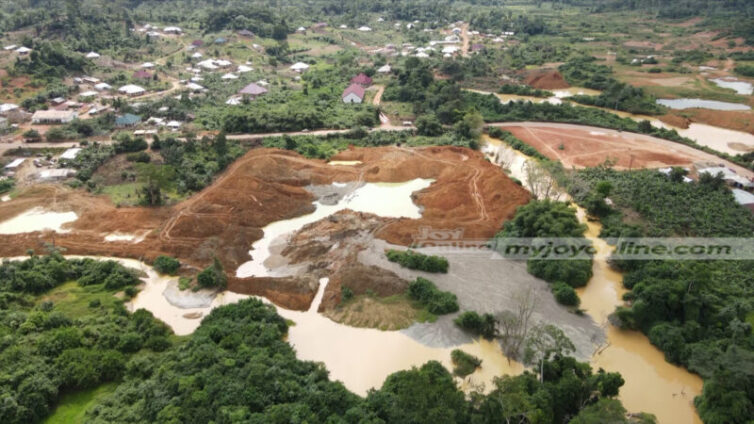
The Private Universities Students’ Association of Ghana (PUSAG) is adding to calls for stringent actions against illegal mining activities that continue to wreak havoc on Ghana’s environment.
The university students note the devastation in the country’s water bodies, land, and other resources which are a threat to human existence.
The government has recently come under piles of pressure and criticisms to step up its promised efforts to fight the illegal mining menace with many citizens and civil organizations, including organized labour, calling for an immediate ban on the activity.
In a statement, the private university students group is demanding that the government walks the talk in combating the crimes perpetrated against nature.
“The time for speeches and empty rhetoric has passed. What is required now are bold actions that will safeguard our environment, preserve our water bodies, and ensure a habitable future for generations to come. PUSAG urges the government to heed the cries of its citizens and adopt an aggressive stance in the fight against galamsey,” the statement read.
The statement continued: “We can no longer afford to watch as our rivers are poisoned, our environment degraded, and our communities exposed to life-threatening diseases."
"The government’s response to this crisis has been grossly inadequate and lacks the urgency and commitment required to tackle such a pervasive threat”.
Many rivers in the country have been heavily polluted by illegal mining with many households and companies depending on the water source experiencing erratic water supply.
The Pharmaceutical Society of Ghana, for instance, has revealed drug manufacturing companies could soon import water to support medicine production as Ghana’s water sources are of poor quality.
“The negligence and inaction of the government in addressing this looming catastrophe is deeply disheartening and must be condemned in the strongest terms. For years, illegal mining has wreaked havoc on Ghana's pristine natural resources. Our once clear rivers, lakes, and streams have been turned into murky cesspools of chemicals and waste,” the group emphasized.
The students note the failed promises by the government to fight the menace stems from reduced enforcement of the laws to curtail the illegal activity.
“Despite numerous promises, illegal mining persists at an alarming rate, and the regulatory authorities have failed to enforce the laws meant to curb this illicit activity. It is a gross failure of leadership to allow this devastation to continue unchecked,” the statement said.
They want the government to take immediate, decisive, and uncompromising action to halt all illegal mining activities, particularly on water bodies.
Latest Stories
-
Gov’t sets 12%–12.5% guidance for 7-year bond as market re-entry gains momentum
12 minutes -
New political party to challenge dominance of two major parties
19 minutes -
Stroke survivors demand inclusive healthcare, urgent policy interventions nationwide
23 minutes -
China reaffirms unwavering ties with Ghana as Ambassador presents credentials
30 minutes -
Wrongful teacher postings undermine early childhood education in Upper East
35 minutes -
Five new envoys present Letters of Credence to Mahama
40 minutes -
BoG Governor says building buffers and lowering credit costs go together
46 minutes -
Fuel shock looms as petrol nears GH¢15.19, diesel GH¢17.85 from April 1
53 minutes -
From May to December, nothing works – Tomato traders reveal harsh reality for farmers
1 hour -
Ghanaian farmer can’t grow tomatoes because of lack of irrigation – Tomato Importers Association president
1 hour -
Social media firms must better enforce Australia under-16 ban, watchdog says
2 hours -
King Charles should meet Epstein victims, US lawmaker says
2 hours -
Belgian ex-diplomat appeals order to stand trial in Congo’s Lumumba murder
2 hours -
Cholera aid for African countries stalled by Iran conflict
2 hours -
The Oscars are leaving Hollywood
2 hours