

Audio By Carbonatix
The World Bank has urged Ghana to urgently address structural challenges in its energy and cocoa sectors as part of a broader push to safeguard the country’s economic stability and growth prospects.
In its 9th Economic Update for Ghana titled Addressing Labour Market Challenges and Opportunities in Ghana’s Economic Landscape, the Bank warned that fiscal risks from poorly managed state-owned enterprises and revenue shortfalls in key export sectors could undermine the country’s recent gains.
“Energy sector reform, including through private sector participation, is urgent to improve management effectiveness and the collection of energy revenues,” said Robert Taliercio, World Bank Division Director for Ghana, Liberia and Sierra Leone.
“These reforms are needed to restore macro-financial stability to support economic transformation and sustainable growth for jobs.”
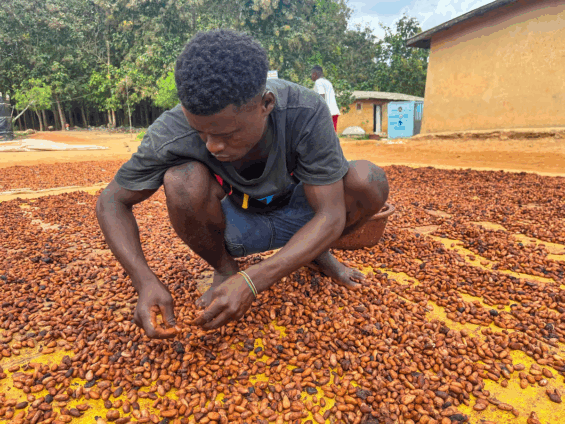
The report also pointed to the cocoa sector as a critical pillar for economic stability. Fluctuations in global prices, productivity gaps, and climate-related threats, it noted, could expose the economy to shocks unless urgent steps are taken to improve efficiency and resilience in the value chain.
Ghana’s economy grew by 5.7% in 2024, with a further 5.3% recorded in the first quarter of 2025, backed by strong trade performance, declining inflation, and robust reserve accumulation.
However, fiscal pressures in 2024 eroded earlier stabilisation gains, while high interest rates, persistent inflation, and external uncertainties are expected to slow growth to 3.9% in 2025 before rebounding to 5% in the medium term.
The Bank stressed that long-term stability will depend on “entrenching fiscal discipline, strengthening public financial management, and carefully managing inflation and exchange rate volatility.”
It added that improving the business environment, closing infrastructure gaps, and accelerating digital and climate adaptation measures are key to positioning Ghana for sustained, private-led growth.
The report further underscored the need for comprehensive strategies to create jobs, particularly for the country’s growing youth population, while improving productivity in sectors such as agriculture, manufacturing, and services.
“Ghana’s success will depend on maintaining reform momentum and steadfast implementation,” Taliercio said.
“Addressing the challenges in energy and cocoa will not only protect the economy but also unlock new opportunities for growth and job creation.”
Latest Stories
-
Government dismissed my drug trafficking warning, then tried to arrest me – Ntim Fordjour
5 seconds -
Day Two: 3rd Republic Bank-JoyNews Habitat Fair Clinic underway at Junction Mall
6 seconds -
NACOC addressing inherited gaps in fight against drug trafficking – Deputy Director-General
13 minutes -
Taekwondo goes to school as GTF launches five-region youth campaign
16 minutes -
The issues Mourinho is struggling to fix at Real Madrid
22 minutes -
Hundreds throng EducationUSA College Fair in Kumasi in pursuit of abroad studies
25 minutes -
Drug bust: NACOC should be part of port inspection team – Twum-Barimah
28 minutes -
Ward appointed Liverpool’s sporting director
28 minutes -
This isn’t the first cocaine bust; NPP must stop the politicisation – NACOC deputy boss
32 minutes -
Drug bust case: Only Customs officers, MPS officials in scanning room – NACOC
2 hours -
I don’t mind being insulted; I have a crocodile skin – President Mahama
2 hours -
Samson’s Take: Verify the badge – and verify the story
2 hours -
President Mahama explains why Ghana must rethink regulation of TikTok, other new media platforms
2 hours -
Rule of law must be protected – GBA condemns EOCO action against Baffour Awuah
4 hours -
950,000 barrels of Sankofa crude head to TOR as GNPC deepens domestic refining
4 hours