

Audio By Carbonatix
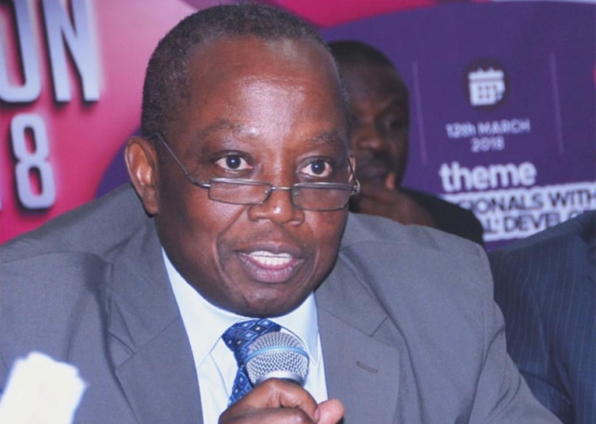
A former Auditor-General, Daniel Domelevo has expressed concern about the fact that the various anti-corruption institutions in the country appear to be working in silos rather than collaborating for the greater benefit of the state.
The anti-corruption campaigner is of the view that all the anti-graft agencies must be merged to get the best results from them.
According to him, the establishment of new anti-corruption institutions does not help in the fight against corruption and other related offences.
Speaking on JoyFM’s Super Moring Show on May 8, he urged authorities to prioritise the prevention of fruitless and wasteful spending.
“Fruitless and wasteful expenditure denies the citizens the benefit of public funds just as corruption. So we must be reminded about that.”
His comment was in response to the seeming turf war between the Economic and Organised Crimes Office and the Office of the Special Prosecutor (OSP) over the state of the investigations.
The Attorney-General and Minister of Justice in a recent advice to EOCO suggested that pursuing money laundering allegations against Madam Dapaah would be baseless.
The Ministry gave the impression that the OSP had not done a good job and that it was going to be difficult if not impossible for the EOCO to pursue any money laundering allegations.
The OSP has since fought back refuting the claims made by the Attorney-General and EOCO. The two anti-graft agencies have since engaged in what looks like a blame game.
The former Auditor-General noted that the resources used by the Office of the Special Prosecutor (OSP) to conduct investigations were not individual funds, but rather from public funds, and that the investigation is in the public’s interest.
According to him, any information collected by the Office of the Special Prosecutor (OSP) should be made available to other anti-corruption institutions, such as the Economic and Organized Crime Office (EOCO), to assist them in their work.
“So to keep it away from EOCO, I think that was not right. In fact, when I was in office as the Auditor General, there was a lot of collaboration between the OSP and my office as the office of the Auditor General and we shared a lot of information.”
“In fact, to the extent that in some cases, honourable Martin Amidu came to my office directly with the information and I also on several occasions went to him directly because we said this is so sensitive that we don’t want to pass it through our deputies or staff.”
Mr Domelevo stated that the practice of withholding information gathered by public institutions at the expense of taxpayer funds and initiating new investigations is not only wasteful but also ineffective in the fight against corruption.
But he also revealed that at one point he threatened to sue EOCO for withholding information before the said information was made available to his office.
He stated, that the fact that information was withheld from the Economic and Organized Crime Office (EOCO) should be grounds to discontinue the case against Cecilia Dapaah.
“Because if I had gone to EOCO and said I suspect Madam Cecelia Dapaah of money laundering, they would have done their investigations. Is that not it? So I think they should have still gone ahead and done their investigations.”
Mr Domelevo also expressed disappointment in the Attorney General. He stated that according to Ghana's Constitution, Article 88 establishes that the Attorney General has the authority to determine which cases are prosecuted and how they are handled.
“So by virtue of the constitutional mandate he has, more or less, all these institutions fall under him. Instead of him writing a letter to say, look, you didn’t get information from this person so discontinue, I thought he should have called OSP and called Madam Tiwaa and said look, we are working in the public interest.”
“What information do you need from the OSP? OSP what stops you from providing this information? Please go ahead. He should have mediated and ensured that we brought the information to EOCO and the investigation went ahead.
The truth of the matter is that the lack of collaboration between the anti-corruption agencies is not serving the national interest at all.”
“So it’s time from my point of view, to review these laws and merge these institutions. Merging them will save us a lot of money,” he said.
Latest Stories
-
Let The Constitution direct Chieftaincy to deliver “All Development Is Local”
28 minutes -
Ghana explores centre of excellence for hearing, communication and cochlear implant care
2 hours -
Schizophrenia-related disorders lead mental health cases recorded in Ghana
2 hours -
Dutch authorities enlist Ghana in hunt for fugitive drug lord Bolle Jos
3 hours -
Ghana housing finance conference adopts communiqué to improve affordable housing access
7 hours -
Special Initiatives Minister urges Wa Technical Institute to enrol more girls as EU-backed solar training lab opens
7 hours -
In the matter of my first year at the Bar
8 hours -
ActionAid Ghana calls for an end to child marriage, greater investment in girls’ rights
8 hours -
Newsfile to tackle World Cup visa scandal, beach demolitions, education strikes, BRICS bid
8 hours -
UK-Ghana Trade & Investment Summit: Trade Resource Centre to help businesses maximise UK-Ghana trade opportunities
8 hours -
Embassy of Denmark celebrates World Maritime Day
9 hours -
Linking LEAP to productive inclusion could cut extreme poverty by 2030 – UNICEF
10 hours -
Trade Ministry backs use of creative arts to rehabilitate prison inmates
10 hours -
Negotiations with government to continue despite strike suspension – GNAT
10 hours -
‘Ghana cannot afford to waste public resources; every cedi has a job’ – Ato Forson
10 hours