

Audio By Carbonatix
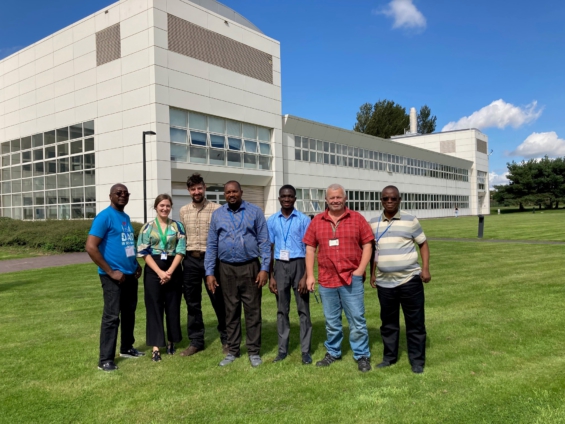
A four member delegation from the University of Ghana (UG) and Kwame Nkrumah University of Science and Technology (KNUST) Schools of Veterinary Medicine are visiting the UK’s National Bee Unit to foster strong partnerships for the development and inclusion of bee health teaching the veterinary undergraduate and postgraduate programmes in Ghana.
The two weeks trip (18th - 31st August 2023) is sponsored by the Animal Health System Strengthening Project (AHSS), a UK overseas development assistance project managed by the UK’s Department for food and rural affairs.
The team include Professor Benjamin Obukowho Emikpe, Dean, School of Veterinary Medicine, KNUST, Dr. Richard Hope Otsyina, Acting Dean of the School of Veterinary Medicine, UG, Dr. Ayodeji Ayotunde Oni, a senior lecturer at the School of Veterinary Medicine, UG, and Dr. Emmanuel Dongbataazie Piiru of the School of Veterinary Medicine, KNUST.

Bees are important to a healthy environment: they are part of the biodiversity on which we all depend for our survival.
They provide high-quality food (such as honey) as well as being great pollinators. When they pick up the pollen of flowers and spread it, they allow plants, including many food crops, to reproduce.
Bee populations have been declining globally over recent decades due to habitat loss, changes in weather patterns, pathogens and the excessive use of agrochemicals such as pesticides which harm bee health.

The National Bee Unit (NBU) in the UK is a recognised centre of excellence in the provision of advice and research in bee health. It has been involved in the management and control of bee pests and diseases, along with training and dissemination of information to beekeepers for over 60 years in England and Wales. The current team of 80 people comprises laboratory diagnostics, research personnel and 60 Bee Inspectors.
The delegation is receiving both theoretical and hands-on training on bee husbandry and the pests and diseases of bees.
They will also meet the scientists at Fera Science Ltd responsible for the laboratory testing of bees and honey and shadow the work of bee health inspectors.

All the knowledge and skills acquired will be applied to produce the bee health teaching module to be deployed at both veterinary schools in the future.
The second phase of this collaboration will see UK bee experts and Ghanaian collaborators visiting various bee keeping communities around Ghana to look at what diseases and pests are present and adapt recommended disease control practices, to make them relevant and acceptable to honey producers and processors in Ghana.
Latest Stories
-
Anti-LGBTQ Bill: NDC’s arrogance is worrying – Hassan Tampuli
9 minutes -
Let’s give OSP time to mature, not to scrap it – Hassan Tampuli
13 minutes -
Nigeria convicts 386 Islamist militants in mass trials
18 minutes -
Djibouti president wins election with 97.8% of vote, state media says
23 minutes -
We don’t have mandate to deduct tax from rent allowance of security services personnel – Interior Ministry clarifies
37 minutes -
Ablakwa receives Presidential Special Envoy on Reparations to advance global agenda
55 minutes -
Christina Koch becomes first woman to travel around the moon on Artemis II
1 hour -
Epstein survivors’ calls to meet King Charles and Queen harder to ignore as US visit approaches
1 hour -
UN Secretary-General names Ghana’s Anita Kiki Gbeho as South Sudan envoy
1 hour -
Mali withdraws recognition of Sahrawi Republic, backs Morocco’s autonomy plan
1 hour -
Gov’t distributes over 8,500 laptops to One Million Coders project
1 hour -
Julius Debrah, ‘man to beat’ as NDC’s James Agbey dismisses Musah Dankwah’s polls
1 hour -
GPRTU in Savannah Region to protest alleged eviction in Damongo
2 hours -
Re: Reinsurance does not replace process — A response to the SIGA–SIC defence
2 hours -
Gender Ministry supports Harriet Amuzu in ongoing abuse case
2 hours