

Audio By Carbonatix
Artificial intelligence has become an everyday tool in creative and business spaces.
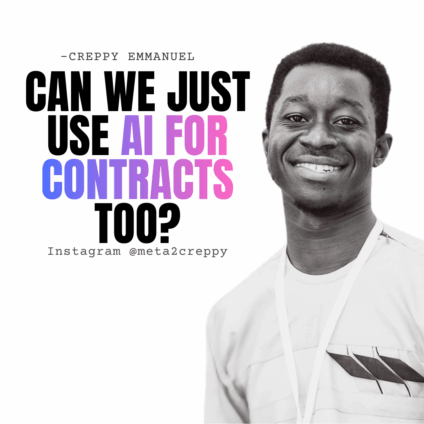
It drafts emails, summarises meetings, and generates strategies at a pace no human can match. In that context, it’s unsurprising that some creators and independent labels are beginning to ask whether AI can handle contracts as well.
The appeal is understandable. Legal services are expensive, time-consuming, and often intimidating. AI feels accessible, neutral, and efficient.
But contracts are not just documents.
They are commitments with long-term consequences.
AI-generated contracts often appear professional: clean formatting, formal language, confident structure. Yet confidence does not guarantee completeness. Critical clauses can be missing, rights may be loosely defined, and jurisdictional details overlooked — not through malice, but through limitation.
Unlike professional advisors, AI carries no responsibility. If a contract fails, there is no accountability. Once signed, the burden rests entirely with the individual or organization that agreed to the terms.
There is also the issue of confidentiality. Contracts contain strategic information. When such details are entered into AI tools, they are not protected by any form of legal privilege — a risk many users do not realize until it becomes relevant.
This does not mean AI should be avoided. Used responsibly, it is a powerful assistant. It can help users understand deal structures, summarize documents, and prepare better questions. Where it becomes dangerous is when it replaces human judgment instead of supporting it.
The future is not a choice between innovation and responsibility.
It is learning how to combine both.
Convenience may accelerate decisions, but contracts outlive convenience. They shape relationships, rights, and outcomes long after the moment of signing has passed.
Using AI to think better is progress.
Using it to sign without clarity is a risk few can afford.
Latest Stories
-
Ghanaian entrepreneur Mary Nyamekye Asamoah wins Africa Travel 100 award
2 minutes -
Obuasi SHTS abuse: Sanction all officials who failed to act – Moving Masculinity
7 minutes -
Lucy Agyepong honoured for excellence in engineering education at maiden GAAS Women’s Awards
10 minutes -
Harriet Afia Konadu Asiedu
17 minutes -
AFCON 2027: Sports Minister ‘convinced’ Black Stars will qualify despite losing opening two games
18 minutes -
CUTS welcomes VAT collection on cross-border digital services, urges fair treatment of Distance Learning students on overseas programmes
22 minutes -
Leave the Chiefs and fix the Galamsey Problem: Dr Solomon Owusu Advises President Mahama
25 minutes -
Pay attention to teachers and give them what is due – Ho District GNAT tells government
28 minutes -
Authorities knew of abuse allegations against Obuasi headmaster months before suspension – JoyNews investigation
33 minutes -
US teenager appears in court over alleged Hindu temple shooting plot
35 minutes -
Academic City donates paediatric rehabilitation staircase to Ga East Hospital
39 minutes -
Services drive 7.4% expansion in Ghana’s economic activity
51 minutes -
‘I don’t make music for awards, I make it to connect people’ – Rocky Dawuni
1 hour -
Farmer jailed for three months over assault on wife in viral video
1 hour -
Police arrest eight in Okaishie operation targeting illicit drugs and medicines
1 hour