


Audio By Carbonatix
UNESCO is calling on African governments and institutions to accelerate investments in quantum technology as a critical pathway to achieving the Sustainable Development Goals (SDGs) by 2030.
This global appeal follows the United Nations Educational, Scientific and Cultural Organization’s official designation of 2025 as the International Year of Quantum Science and Technology — a bold move aimed at placing emerging technologies at the forefront of sustainable innovation, particularly in the Global South.
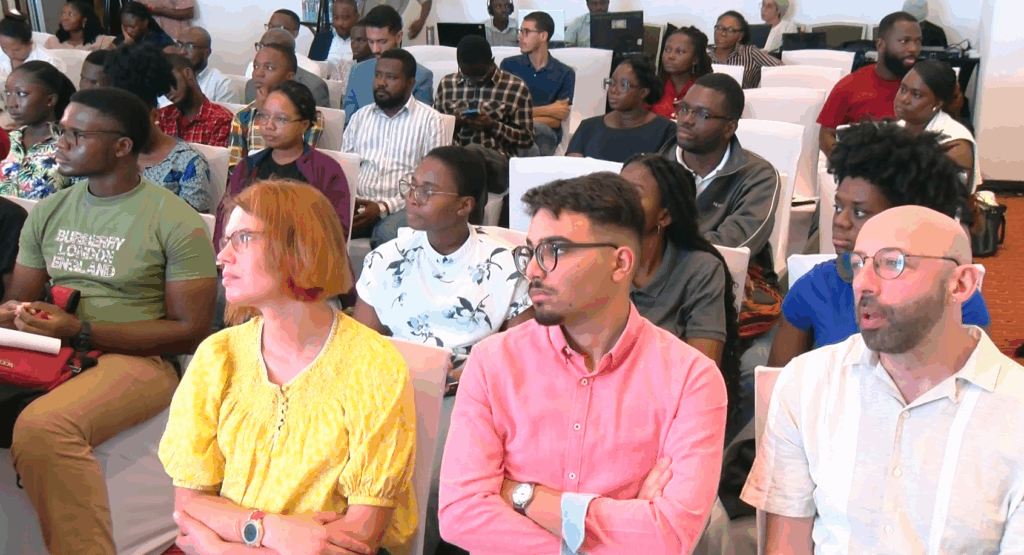
In Ghana, the African Institute for Mathematical Sciences (AIMS) is already laying the groundwork. Speaking at a stakeholder engagement on the subject, the Centre President of AIMS Ghana, Dr Prince Osei, emphasised that quantum science is not only the future but also an urgent opportunity for Africa to leapfrog developmental barriers.
"Quantum technology holds immense potential to solve problems in computing, energy, and even climate modelling," Dr Osei said. "We are working hard to introduce it into academic curricula and nurture a generation of African scientists equipped for the quantum era."
Adding to this, UNESCO’s National Professional Officer for Natural Sciences, Melody Boateng, urged policymakers to prioritise quantum education and innovation.
“Africa is already behind in the global technology race,” she said. “If we don’t act now, we risk being mere consumers instead of creators of the next wave of technological breakthroughs.”
Quantum science — which explores the behaviour of matter and energy at the atomic and subatomic levels — is widely regarded as the foundation for transformative technologies in computing, communication, and cryptography. Its applications could directly impact sectors crucial to Africa’s development, such as medicine, renewable energy, and agriculture.
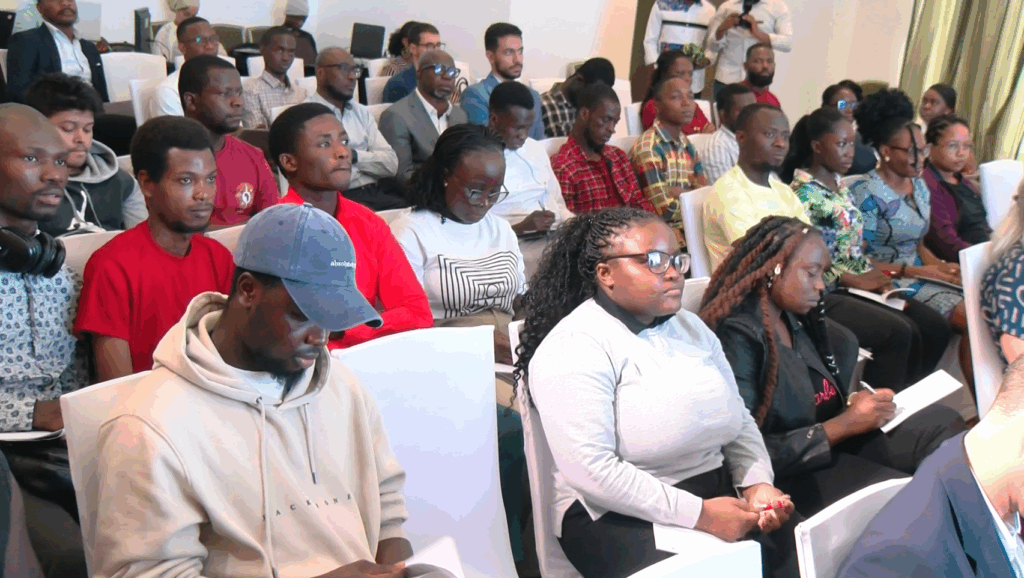
UNESCO believes that by harnessing quantum technology, African nations can create high-value jobs, address critical infrastructure challenges, and contribute more significantly to global science and innovation.
With global momentum building, the message is clear: Africa must not be left behind. Stakeholders at the event urged universities, governments, and the private sector to collaborate and invest in building quantum-ready infrastructure and talent pipelines.
Latest Stories
-
Gov’t moves to protect jobs and sustain operation as Damang mine lease nears expiry
3 seconds -
Wealth management in Ghana: Understanding taxation for high-net-worth individuals
3 minutes -
EU warns Ghana over Russian “unethical” recruitment as 55 Ghanaians reported dead
5 minutes -
“What have Stonebwoy and Shatta Wale got to do with football?” – Mawuko Kuadzi calls for creative arts fundraiser
11 minutes -
“Surprising and regrettable” – Ghana’s US Embassy reacts to Lincoln University’s last-minute cancellation of President Mahama’s honour
14 minutes -
MTN Ghana announces GH₵6.4bn dividend for 2025, GH₵0.48 per share
15 minutes -
Egypt donates hepatitis C vaccines to Ghana to boost health cooperation
20 minutes -
UENR confirms death of final-year Petroleum Engineering student
20 minutes -
OSP drops charges against 2 accused in NPA extortion case; turns them into state witnesses
23 minutes -
Stolen luxury cars worth $800,000 intercepted before shipment to Ghana
27 minutes -
Adum Blue Light fire victims to stage “y’adi yɛ sika demo”, demand accountability on donations
36 minutes -
Lordina Mahama champions safer digital future for children at Global Summit in Washington
37 minutes -
3Farmate’s FAMA robot to transform Ghana’s farming landscape with precision AI
45 minutes -
A little bit of this and a little bit of that
45 minutes -
Entropy and Eschatology: From Creation to Collapse – Why the Laws of Physics and the Witness of Scripture Converge on a Finite, Contingent Cosmos
45 minutes