

Audio By Carbonatix
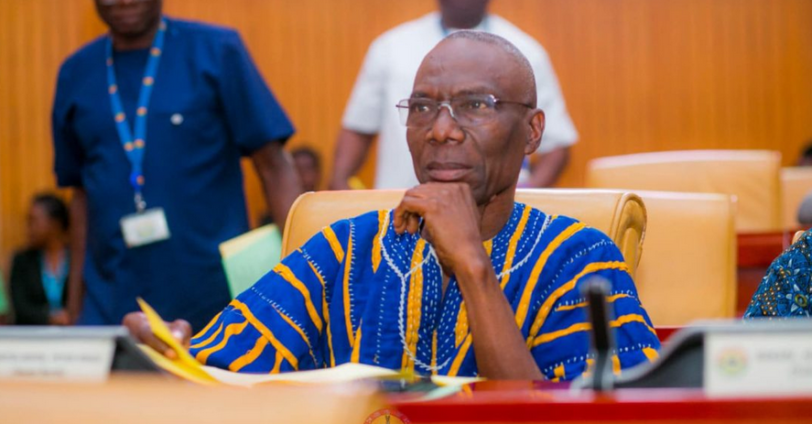
The Chairman of Parliament’s Education Committee, Mr Peter Nortsu-Kotoe, has said the decision to rename some public universities is intended to promote national cohesion and remove partisan undertones from Ghana’s tertiary education system.
Parliament recently approved amendment bills affecting several institutions, including the former C.K. Tedam University of Technology and Applied Sciences, which will now be known as the University of Technology and Applied Sciences, Navrongo.
Lawmakers also passed legislation allowing the Simon Diedong Dombo University of Business and Integrated Development Studies in Wa to adopt the neutral name University of Business and Integrated Development Studies (UBIDS).
Speaking on Citi FM on Monday, 22 December, the Akatsi North MP explained that the earlier names were linked to political personalities associated with the New Patriotic Party (NPP) and its ideological forebears, including the Progress Party.
He argued that such naming choices risked injecting partisan considerations into public institutions intended to serve the entire nation.
According to Mr Nortsu-Kotoe, attaching the names of political figures to universities—particularly within specific regions—fostered division rather than unity.
He stressed that public universities should reflect shared national values, not political allegiance or historical party lines.
Mr Nortsu-Kotoe noted that the National Democratic Congress (NDC) had consistently raised concerns about the practice and had committed to reversing it when given the mandate.
“We cautioned that it was not appropriate to name universities after certain political figures,” he said, adding that Ghana has many notable personalities across all regions who could be recognised in other ways.
He maintained that the renaming exercise is a step towards depoliticising education and strengthening national unity, insisting that the changes are not about erasing history but about ensuring fairness and inclusiveness in the country’s public institutions.
Latest Stories
-
Friends of Bridget Bonnie Marks her 35th birthday with donation to Kasseh Model Health Centre
31 minutes -
Landfilling waste management creates no value, it’s an economic waste
58 minutes -
Photos: Speaker Bagbin Commissions MPs constituency office under parliamentary decentralisation programme
1 hour -
Black Stars technical advisor Winfried Schäfer sacked as GFA shakes up backroom staff
1 hour -
Wenchi water project almost complete, critical to gov’t agenda – GWL MD
2 hours -
Anti-LGBTQ+ bill not part of government’s legislative agenda – Inusah Fuseini
2 hours -
Anti-LGBTQ Bill: Forget the rumour mongers, I’m a man of action, and will pass the bill – Speaker
2 hours -
Women and children among those killed in Sudanese army shelling of wedding celebration
2 hours -
President Mahama is not sincere with Ghanaians on LGBTQ bill matter – Hassan Tampuli
3 hours -
Gov’t to establish Prison Industrial Hub to equip inmates with income-generating skills – Prison Service boss
3 hours -
Alhassan Tampuli donates cement, roofing sheets to support storm victims in Gushegu
3 hours -
Alhassan Tampuli appeals for urgent support for storm victims in Gushegu
3 hours -
The hypocrisy must stop; pass Anti-LGBTQ+ Bill now – Alhassan Tampuli to Mahama
3 hours -
Imprisonment should be rehabilitative, not punitive – Ghana Prisons boss at UNGA
4 hours -
Ga Adangbe traditional priests petition Mahama over McDan aviation licence revocation
4 hours