

Audio By Carbonatix
A U.S. appeals court on Friday declined to block a lower court ruling that said President Donald Trump's administration could not unilaterally cut billions of dollars of foreign aid, requiring the administration to quickly move to spend funds on projects authorised by Congress.
The U.S. Court of Appeals for the District of Columbia Circuit made its ruling just days after a lower court ruled that the administration should take steps to spend roughly $11 billion on foreign aid projects before Congressional authorisation for the spending expires in September.
The appeals court did not explain its decision, saying only that the Trump administration had not "satisfied the stringent requirements" to pause the ruling pending an appeal. Circuit Judge Justin Walker, a Trump appointee, dissented and said he would have paused the lower court decision.
After being sued by aid groups that expected to compete for the funding this year, the Trump administration said it intended to spend $6.5 billion of the funds appropriated for foreign aid in 2024.
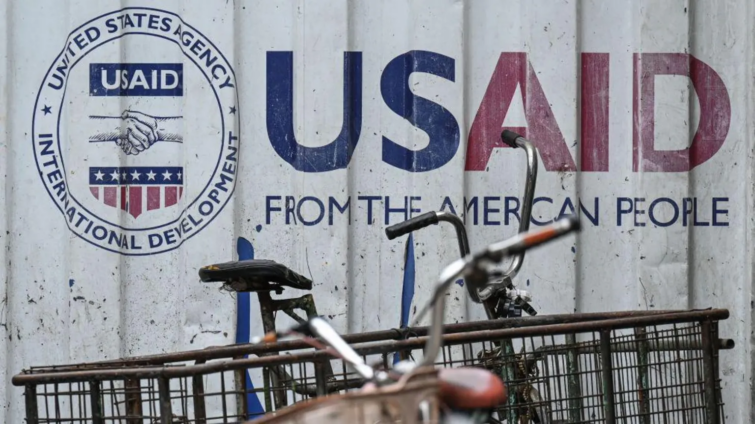
But it moved to withhold $4 billion in funding appropriated for the U.S. Agency for International Development, which the Trump administration has largely dismantled.
U.S. District Judge Amir Ali in Washington, D.C., ruled on Wednesday that the administration cannot simply choose not to spend the money, and said it remains under a duty to comply with appropriations laws unless Congress changes them.
Ali's order, if it survives throughout the appeal process, would prevent Trump from effectively bypassing Congress to cancel foreign aid funding.
While the lawsuit proceeded, Trump sought to block $4 billion in disputed funding through a "pocket rescission" that bypasses Congress.
Trump budget director Russell Vought has argued that the president can withhold funds for 45 days after requesting a rescission, which would run out the clock until the end of the fiscal year on September 30. The White House said the tactic was last used in 1977.
The money at issue was earmarked for foreign aid, United Nations peace-keeping operations, and democracy-promotion efforts overseas.
Ali ruled that merely asking Congress to rescind the $4 billion is not enough, saying that the spending should proceed unless Congress affirmatively acts to stop it.
Ali said he ruled quickly to provide higher courts time to weigh in before the funds reach their expiration dates.
The 6-3 conservative majority U.S. Supreme Court has already intervened once in the case, requiring the Trump administration to pay foreign aid organisations for work they already performed for the government.
Latest Stories
-
King Mohammed VI reaffirms Morocco’s full support for Gulf States following attacks on their security
2 hours -
Esther Cobbah urges women founders to make trust and excellence their competitive edge
2 hours -
Adonis Adamado
2 hours -
‘Control lies with private capital’ – COPEC warns NPA’s fuel stock assurance not enough amid Iran attack
2 hours -
10 illegal miners feared dead, 30 critical after mine cave-in at Manso Tontokrom
2 hours -
GPL 2025/2026: All Blacks hold leaders Medeama at home
3 hours -
Ghana has over 5 weeks of fuel stock despite Middle East tensions – NPA
3 hours -
Middle East tensions may hit Ghana’s pumps soon – Duncan Amoah
3 hours -
WPL 2025/26: Hasaacas beat Army Ladies as Ampem Darkoa Ladies draw
4 hours -
Five facts about Baba Sadiq, Ghana’s High Commissioner Designate to Nigeria
4 hours -
Baba Sadiq Abdulai appointed as High Commissioner to Nigeria
4 hours -
Playback: The Probe examined Israel-Iran-US tensions and Ghana’s energy security
4 hours -
T-bills auction: Investor appetite remains at all-time high; interest rates tumble to 5.3%
5 hours -
Yes, we “eat Macroeconomics” because it is the foundation of every meal
5 hours -
Annoh-Dompreh launches Nsawam-Adoagyiri Eye Care Project 2026, screens 3,000 residents
5 hours