

Audio By Carbonatix
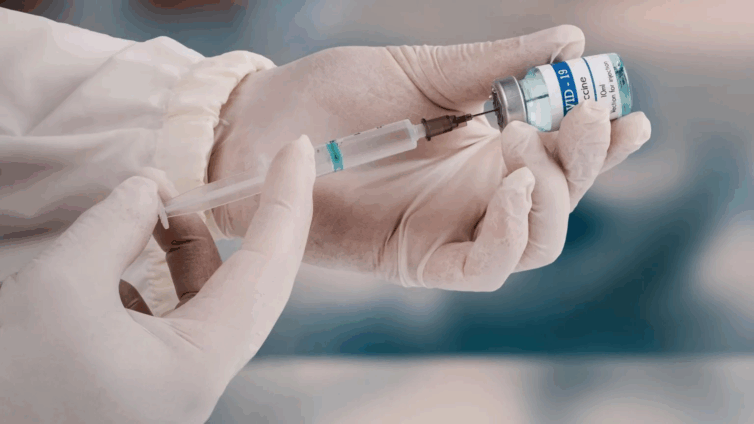
Guinea-Bissau's foreign minister has said his government has stopped a study funded by the Trump administration aiming to evaluate side effects of the life-saving hepatitis B vaccine, including any links to autism.
The West African country, one of the region's poorest, has high rates of hepatitis B, and the prospective study had drawn an outcry from scientists and international health bodies because only half the newborns in the trial would get the vaccine at birth. World Health Organisation Director-General Tedros Ghebreyesus said it was not ethical.
Guinea-Bissau suspended the trial last month pending an ethical review. Critics had said it was being used to test theories linking vaccines to autism, long promoted by the U.S. Health Secretary Robert F. Kennedy Jr. contradicts this, yet the scientific evidence supports it.
Foreign Minister Joao Bernardo Vieira said in an interview on Tuesday that the study had been closed, citing concerns raised by the scientific community and U.S. senators.
“It’s not going to happen, period,” he said.
The U.S. Centres for Disease Control and Prevention had approved a $1.6 million grant to fund the study after Kennedy scrapped the agency's recommendation to give the vaccine to all infants at birth in the U.S.
The American Johns Hopkins University says that about 90% of babies exposed to hepatitis B at birth or in their first year of life develop a chronic infection, and 15% to 25% of these die early of related liver failure or cancer as a result.
DANISH RESEARCHERS DEFEND U.S.-FUNDED HEPATITIS B TRIAL
The study by researchers at the Guinea-Bissau-based Bandim Health Project, run by the University of Southern Denmark, aimed to enrol 14,000 newborns, specifically to investigate potential "non-specific effects" including skin and neuro-developmental disorders, including autism.
They note that Guinea-Bissau currently offers the vaccine only at six weeks of age, by which time many infants whose mothers have hepatitis B are already infected. It plans to introduce the dose at birth only in 2028.
Under the trial, half the infants would receive it at birth, the remainder at six weeks, as now.
Frederik Schaltz-Buchholzer, the lead investigator, said the discussion had shifted from healthy scientific debate to politics.
“Everyone will lose if this trial is halted, but especially confidence in vaccines and health research will suffer greatly,” he said.
He said the group still hoped that a new trial proposal might be accepted in future.
The Bandim project has operated in Guinea-Bissau for decades, and the researchers say their work aims to better understand the full impact of vaccines, both positive and negative.
Kennedy cited Bandim's research to justify cutting U.S. funding to Gavi, a group that helps buy vaccines for the world's poorest countries.
A spokesperson for the U.S. CDC did not respond to a request for comment.
Latest Stories
-
Power restoration fault suspected in Kumasi Central Market fire
40 minutes -
The 7-foot giant of Ngleshie Amanfro: Seven-foot Ghanaian Ephraim Saawa dreams of joining the national basketball team
1 hour -
Government promises support for Kumasi Central Market fire victims
1 hour -
Vibes The Movie: Big Ghun’s Ghanaian film earns five nominations at 2026 REFFA
2 hours -
MamaCare CEO warns unresolved conflicts among health workers could undermine maternal and neonatal care
2 hours -
Health professionals urged to translate medical knowledge into practice to save mothers
2 hours -
Conflicts among care providers linked to maternal, neonatal deaths – Expert
4 hours -
GIS marks 10th TIME conference, champions improved teaching practices
4 hours -
BRICS Or Balance? What Ghana’s bid really means
5 hours -
GPRTU wants full TRAFFITECH-GH implementation to start in 2027
5 hours -
Mahama announces plans to import electric wheelchairs for PWDs
5 hours -
KGL U17 Colts 2026: Western beat Prempeh Elite Academy to set up final final with Greater Accra Region
5 hours -
Late Solanke strike salvages 10-man Spurs draw at Man United
5 hours -
Gender Ministry to monitor welfare of Nana Akua Addo’s children amid domestic violence case
6 hours -
Benedict Okyere Yeboah: Ghana’s football problem goes beyond sacking a coach
6 hours