

Audio By Carbonatix
Guinea-Bissau has approved a new constitution in a referendum, provisional results showed on Tuesday, expanding presidential powers and reshaping electoral rules ahead of a presidential election scheduled for December.
The West African country, led by military officers who seized power in a coup last November, voted on Sunday on reforms allowing the president to appoint and dismiss the prime minister and cabinet, create or abolish ministries, and dissolve parliament in the event of a grave political crisis.
Under the current constitution, Guinea-Bissau's legislature names a prime minister who appoints a cabinet.
The result gives the military government backing to reshape Guinea-Bissau's political system before the presidential election, but the main opposition party boycotted the vote.
The new constitution was approved by 70% of voters in favour and 30% opposed, according to the provisional results announced by the National Electoral Commission. It also said some 544,060 people had voted, almost 60% of registered voters.
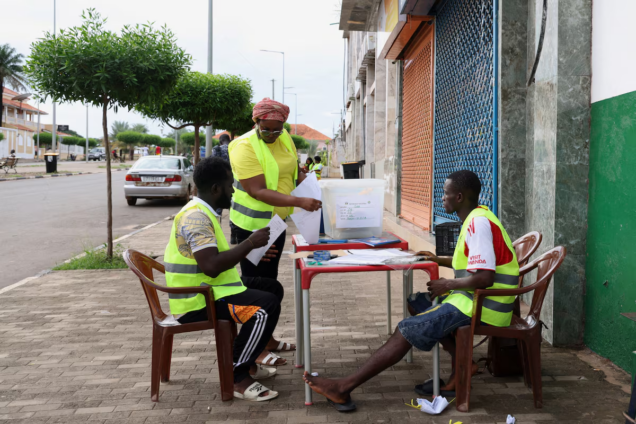
Polling stations in the capital Bissau were largely empty on Sunday, a Reuters witness said, while some residents told local media they had not known the referendum was being held or did not understand its purpose.
Guinea-Bissau's main opposition PAIGC party urged its supporters to boycott the referendum, saying the process lacked adequate political and institutional safeguards.
PAIGC leader Domingos Simoes Pereira said in a video message that the backers of the referendum sought to "kill our freedom and bury our democracy."
A spokesperson for the military government could not be reached for comment.
The constitution will cut the size of parliament to 65 seats from 102 and reduce the number of electoral constituencies to 12 from 29.
It further requires presidential candidates to have lived continuously in Guinea-Bissau for the preceding five years.
The coup last year was the ninth in West and Central Africa over five years and part of a cycle of instability in Guinea-Bissau. The country is widely known as a cocaine trafficking hub and has a long history of military interventions.
Latest Stories
-
Cybercriminals using AI tools to carry out operations – Cyber Security Authority
17 seconds -
Ghana must invest more in mental health and healthier workplaces – Nurse advises
39 seconds -
NAPG Summit equips Administrative Professionals for strategic impact and the AI-driven workplace
9 minutes -
NHIA urges amendment of Health Insurance Act to accommodate free primary healthcare
13 minutes -
Ghana is tackling cybercrime head-on, not becoming a hub for it – CSA
15 minutes -
We’ll deliver without fear or favour – New EC Deputy Chairpersons assure Mahama
15 minutes -
Six Ukrainian energy sites hit by Russia since Trump announced ceasefire, Zelensky says
34 minutes -
Government directs GTEC to prepare public universities for weekend reopening as it intensifies efforts to end GAUA strike
34 minutes -
Multimedia Group’s Raymond Nii Doodo Larbie called to the Ghana Bar, seeks to combine HR practice with law
37 minutes -
Credible elections are the cornerstone of democracy – New Deputy EC Chairperson
40 minutes -
Mahama charges new EC deputies to put national interest above political loyalties
45 minutes -
Mahama urges EC to strengthen electoral technology, inclusion and professionalism
46 minutes -
Fridges in French supermarkets hit by cyber attack
46 minutes -
Evangelism or collection in God’s name? The plight of Ghana’s captive passengers
50 minutes -
‘I don’t expect preferential treatment for me, my party or gov’t’ – Mahama to new EC deputies
1 hour