


Audio By Carbonatix
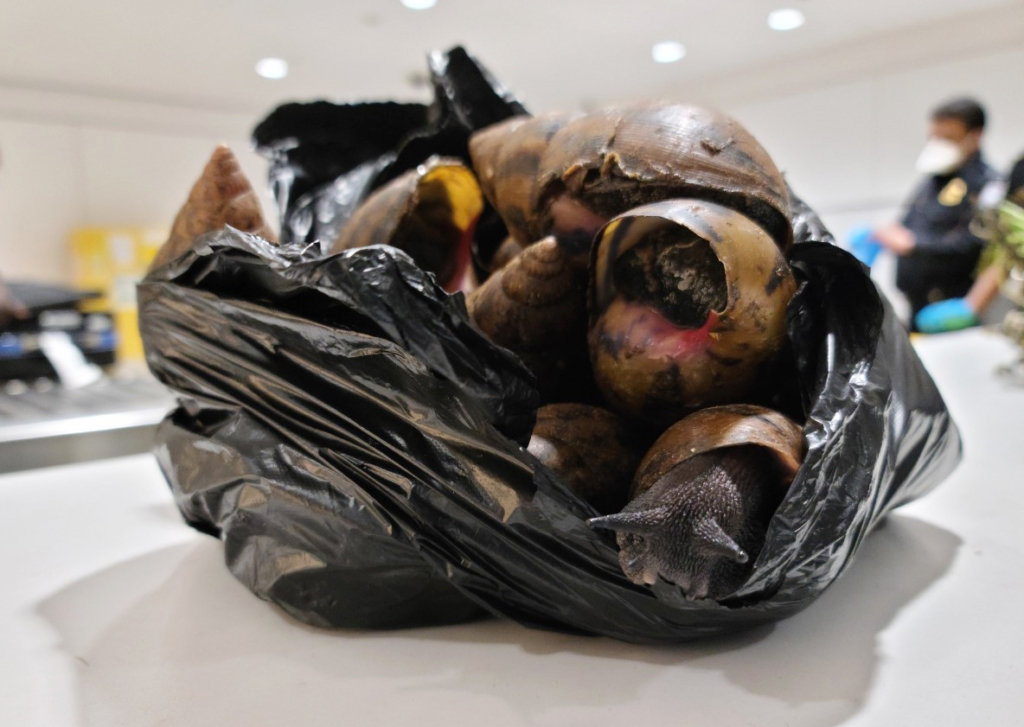
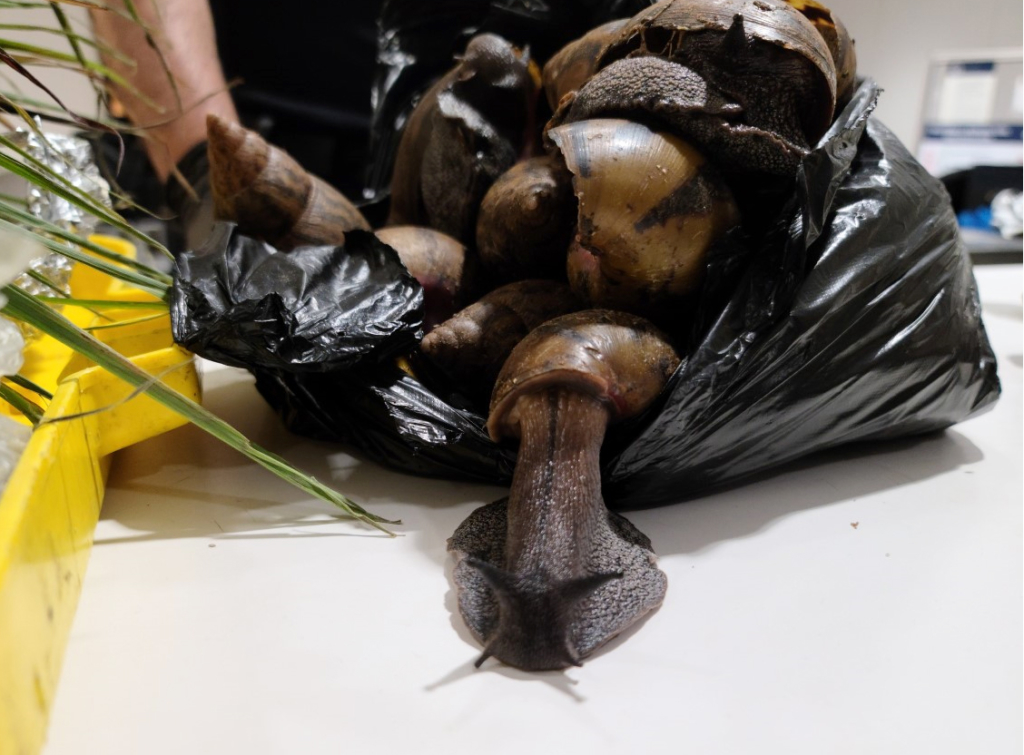
The US Customs and Border Protection (CBP) Saturday seized snails from the baggage of an American who arrived from Ghana at the John F. Kennedy International Airport.
Apart from the 22 highly invasive Giant Ghana African Snails, CBP agriculture specialists also found about 24 pounds collectively of prohibited oxtail, dried beef, turkey berry and carrot.
There was also medicinal leaves and prekese aka soup perfume, a traditional spice and medicinal product.
In a statement, Marty C. Raybon, Acting Director of Field Operations for CBP’s New York Field Office said the giant African land snail is one of the most damaging snails in the world because it consumes at least 500 types of plants.
The U.S. Department of Agriculture (USDA) said the snails are also a menace to their agric resources.
It noted that the Giant Ghana African Snails further causes extensive damage to tropical and sub-tropical environments.
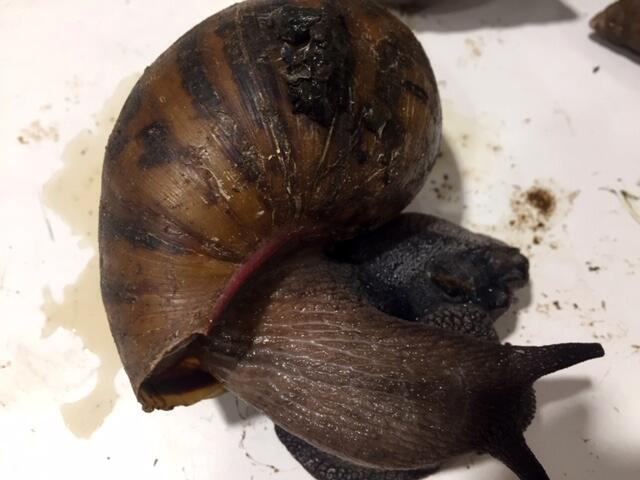
This snail species has been considered a significant cause of pest issues around the world. Internationally, it is the most frequently occurring invasive species of snail.
Outside of its native range, this snail thrives in many types of habitat in areas with mild climates. It feeds voraciously and is a vector for plant pathogens, causing severe damage to agricultural crops and native plants.
It competes with native snail taxa, is a nuisance pest of urban areas, and spreads human disease. This snail is listed as one of the top 100 invasive species in the world. The snails reproduce quickly, producing about 1,200 eggs in a single year.
The statement added, "highly invasive Giant Ghana African Snails also poses a serious health risk to humans because it carries a parasitic nematode that can lead to meningitis".
“Customs and Border Protection agriculture specialists are our nation’s frontline defenders against invasive plant and animal pests that threaten our agricultural resources, and they face this complex and challenging mission with extraordinary commitment and vigilance,” said Marty C. Raybon.
The Giant Ghana African Snails was first found in southern Florida in the 1960s and it took 10 years and $1 million to eradicate it. It was reintroduced in Miami in September 2011.
The USDA Animal and Plant Health Inspection Service, in partnership with the Florida Department of Agriculture and Consumer Services, is conducting a regulatory program to eradicate this invasive species.
Latest Stories
-
Kwaku Azar writes: A-G vs OSP
10 minutes -
Mfantsipim–Adisadel rivalry built excellence, not division – Sam Jonah
35 minutes -
Vice President launches Mfantsipim’s 150 years of shaping Ghana’s greatest mind
51 minutes -
I assure Otumfuo, Mahama will join him to commission KNUST Teaching Hospital by end of this year – Haruna Iddrisu
2 hours -
Gov’t to roll out free special education for persons with disabilities from July 1 – Education Minister
2 hours -
“We used it to test our officiating officials’ readiness” – Bawah Fuseini after CAA Athletics event
2 hours -
Volleyball emerges as Ghana’s fastest rising sport
2 hours -
National Sports Fund needs strong leadership from the top – Administrator David Wuaku
3 hours -
JoySports Exclusive: Steve McLaren in talks with GFA after expressing interest in Black Stars job
3 hours -
Fire guts auto parts warehouse at Bubuashie, one fire officer injured
3 hours -
I owe my victory to coach Ofori Asare – Allotey after winning WBA Africa Gold Super Flyweight belt
3 hours -
Church of Pentecost supports over 2,000 BECE candidates in Obuasi with career guidance seminar
5 hours -
Brandon Asante and Coventry all but promoted to Premier League despite Sheffield Wednesday draw
5 hours -
GPL 2025/26: Late Kwartemaa strike downs Hearts in Tema
5 hours -
Ghana Faces Sierra Leone Moment as Prosecutorial Powers come under strain
5 hours