

Audio By Carbonatix
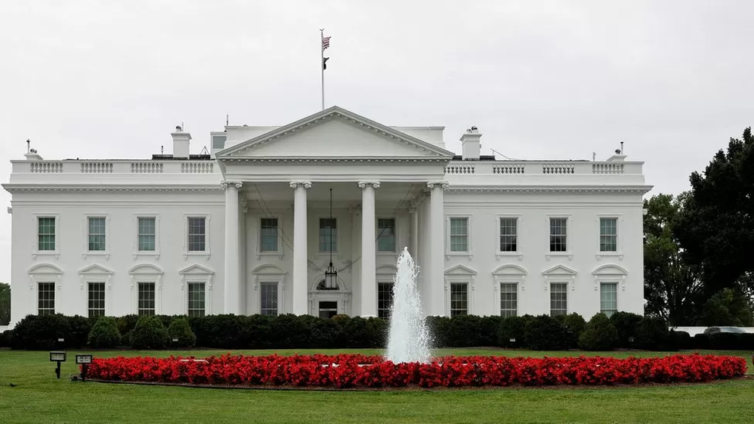
The US Secret Service has closed its investigation into the discovery of cocaine in the White House.
It said it had attempted to determine a suspect through fingerprints, DNA traces, and video evidence, but had not been able to do so.
The cocaine was discovered earlier this month in a vestibule leading to the lobby of the West Executive Avenue entrance to the White House.
President Joe Biden and his family were at Camp David in Maryland at the time.
The small plastic bag used to contain the drugs was found in an area which can be accessed by members of the public, and where mobile phones and other personal devices are stored before entering the White House.
After it was first discovered, safety closures were put in place so it could be determined that the substance "was not a chemical or radiological material that threatened the security of the White House", the Secret Service said in a statement.
Tests of the material determined it was cocaine, and further analysis was carried out on the composition of the substance. Advanced fingertip and DNA analysis on its packaging were also carried out by the FBI's crime laboratory.

Meanwhile, the Secret Service continued to investigate how the substance arrived in the White House, reviewing security systems in the day leading up to the discovery of the cocaine.
It produced "an index of several hundred individuals" who "may have accessed" the area where the drug was found.
On Wednesday, the Secret Service received the forensic evidence back from the FBI. This showed it did not have enough DNA evidence for comparison, and had not developed "latent fingerprints".
"Therefore, the Secret Service is not able to compare evidence against the known pool of individuals," it said in a statement.
It added that the surveillance footage had also not been of use, and it would mean trying to single out someone from "hundreds of individuals" who passed through the vestibule - without having any physical evidence to do so.
The Secret Service added that it it "takes its mission to protect US leaders, facilities, and events seriously" and it is "constantly adapting to meet the needs of the current and future security environment".
Cocaine is a Schedule II drug under the Controlled Substances Act, meaning it has a high potential for abuse, according to the US Drug Enforcement Administration.
Latest Stories
-
Ghana less exposed to global oil disruptions — Fitch
5 minutes -
Police officer killed in road crash at Atortorkorpe in Ada
7 minutes -
EKMA begins dredging major storm drains ahead of peak rainy season
12 minutes -
US has let in 4,499 refugees since October – all but three were South African
16 minutes -
Child Protection Units to be part of MMDA Performance Assessment
23 minutes -
Pub thief jailed over £2.2m Fabergé theft
30 minutes -
Show us the money – COMAC CEO demands full disclosure on ‘dumsor levy’ windfall
41 minutes -
Melania Trump denies ties to Jeffrey Epstein and urges hearing for survivors
53 minutes -
Prosecutors seek Tiger Woods’ prescription drug records after Florida arrest
1 hour -
Five persons arrested for robbing Chinese nationals at Asankragwa
6 hours -
I don’t have evidence of leakage report on fuel contamination – Witness
6 hours -
Netherlands Fire Chief in Ghana to support fire safety reforms and market fire prevention efforts
6 hours -
Mason goes on remand for stealing
6 hours -
Gov’t cuts fuel taxes, deploys buses to curb impact of rising fuel prices
7 hours -
Interior Minister calls for intelligence-driven strategy as Ghana strengthens counter-terrorism efforts
7 hours