

Audio By Carbonatix
The recent decision by the US Embassy to impose visa restrictions on individuals who may disrupt Ghana’s democratic process ahead of the upcoming December elections has received significant praise as a measure to promote peace, stability, and political accountability in Ghana. This policy, aimed at curbing political violence, sends a strong message that any attempt to undermine democracy could have serious personal consequences for those involved.
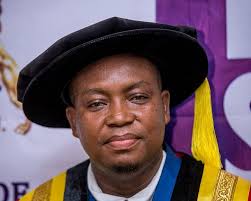
However, new information suggests that this policy may have roots in the work of a Ghanaian academic, Rev. Prof. Emmanuel Yao Nash. Between 2014 and 2016, Rev. Prof. Nash, a prominent peace advocate, conducted a comprehensive study on electoral violence and its prevention in Ghana. His research concluded with a recommendation that international embassies, including the US Embassy, halt the issuance of visas to politicians until elections were completed. He argued that denying politicians the ability to leave the country during election season would compel them to act with integrity and responsibility, knowing they were accountable to local laws and citizens.
Rev. Prof. Nash’s findings were widely publicised, including an article in Graphic Online in October 2016 titled, “Withhold Visas for Politicians Till Elections.” His appeal for embassies to adopt his approach to promote electoral decency stemmed from a foundation of academic rigor and peace advocacy.
Despite the depth of Rev. Prof. Nash’s research and his efforts to gain embassy support, this reporter has learned that the US Embassy did not acknowledge the professor's ideas or offer support. Furthermore, the embassy reportedly declined to attend the launch of the Ghana Peace Awards (GPA) in 2016, an event inspired by his research to honour individuals and organisations dedicated to promoting peace in Ghana.
Nevertheless, the US government now appears to have adopted Rev. Prof. Nash’s recommendation as its own. US Secretary of State Antony Blinken has since imposed similar visa restrictions in countries such as Sierra Leone, Bangladesh, and Liberia. These actions are framed as part of the US government's commitment to supporting fair elections worldwide, with visa restrictions serving as a deterrent to political actors who might undermine the democratic process.
While the implementation of Rev. Prof. Nash’s recommendations underscores their value, his contributions remain largely unrecognised. Formal acknowledgment from the US Embassy would not only honour Rev. Prof. Nash’s original work but also lend greater credibility to future research efforts aimed at fostering peace in Ghana, Africa, and beyond.
Latest Stories
-
Anti-LGBTQ Bill: Forget the rumour mongers, I’m a man of action, and will pass the bill – Speaker
36 minutes -
Women and children among those killed in Sudanese army shelling of wedding celebration
40 minutes -
President Mahama is not sincere with Ghanaians on LGBTQ bill matter – Hassan Tampuli
58 minutes -
Gov’t to establish Prison Industrial Hub to equip inmates with income-generating skills – Prison Service boss
1 hour -
Alhassan Tampuli donates cement, roofing sheets to support storm victims in Gushegu
1 hour -
Alhassan Tampuli appeals for urgent support for storm victims in Gushegu
1 hour -
The hypocrisy must stop; pass Anti-LGBTQ+ Bill now – Alhassan Tampuli to Mahama
1 hour -
Imprisonment should be rehabilitative, not punitive – Ghana Prisons boss at UNGA
2 hours -
Ga Adangbe traditional priests petition Mahama over McDan aviation licence revocation
2 hours -
Anti-LGBTQ Bill: NDC’s arrogance is worrying – Hassan Tampuli
2 hours -
Let’s give OSP time to mature, not to scrap it – Hassan Tampuli
2 hours -
Nigeria convicts 386 Islamist militants in mass trials
2 hours -
Djibouti president wins election with 97.8% of vote, state media says
2 hours -
We don’t have mandate to deduct tax from rent allowance of security services personnel – Interior Ministry clarifies
3 hours -
Ablakwa receives Presidential Special Envoy on Reparations to advance global agenda
3 hours