

Audio By Carbonatix
Ghana’s hard-won macroeconomic stability is facing a grave external threat as escalating hostilities in the Middle East risk undoing months of progress in curbing inflation.
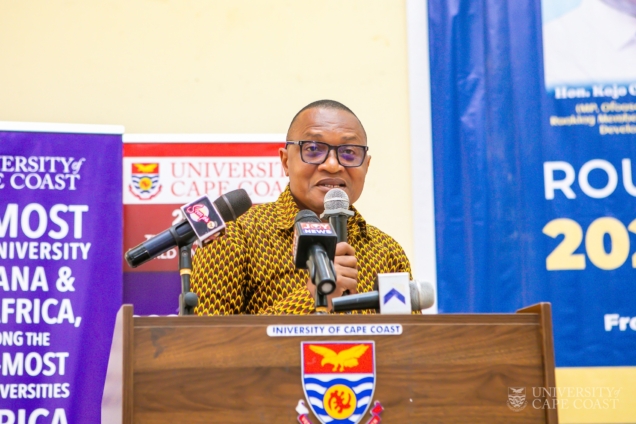
William Brafu-Insaidoo, a Professor of Economics at the University of Cape Coast, has issued a warning that the recent surge in regional conflict could trigger a domestic price spike, potentially pushing inflation back out of the single-digit bracket.
The warning follows a dramatic weekend of military escalation, including U.S. and Israeli strikes on Iranian leadership and the subsequent closure of the Strait of Hormuz, a chokepoint through which nearly one-third of the world’s seaborne oil transits.
The ‘Hormuz’ effect on domestic fuel
With Iran’s Revolutionary Guards confirming that no vessels will be allowed passage through the vital corridor, global energy markets have been thrown into disarray.
Prof. Brafu-Insaidoo, speaking on Channel One Newsroom on Saturday, 28th February 2026, explained that the geographical distance of the conflict provides no shield for the Ghanaian consumer.
“The other angle we can look at this is in terms of global oil prices. Higher global oil prices will immediately increase domestic fuel and transport costs. The trickle-down effect is that once fuel and transport costs go up, it affects almost every other economic activity,” the Professor cautioned.
The 'Cost-Push' contagion
The primary concern for economists is the contagion of rising transport costs into the broader economy.
Because the majority of essential goods in Ghana are moved by road, any increase at the pump is rapidly mirrored in the price of food, medicine, and manufactured goods.
This phenomenon, known as cost-push inflation, threatens to reverse the downward trend in the Consumer Price Index (CPI) that the Bank of Ghana and the Finance Ministry have touted as a major success in early 2026.
“When that is factored into other activities, the fact that a number of essential goods are transported and it will cost more to transport them, then obviously it is going to push up inflation. What we normally call cost-push inflation. And this is likely, if we are not careful, it can derail Ghana’s recent success in bringing inflation down to single digits,” Prof. Brafu-Insaidoo added.
A region on the brink
The economic anxiety is fuelled by a sharp deterioration in Middle Eastern security.
Following retaliatory drone attacks on U.S. bases, Israeli Prime Minister Benjamin Netanyahu confirmed a significant escalation, claiming that Israel had successfully destroyed the compound of Iran’s Supreme Leader, Ali Khamenei.
As the international community calls for restraint, the Ghanaian government is being urged to prepare contingency measures to cushion the impact of potential fuel price hikes.
The "single-digit" milestone, once seen as a sign of recovery, now appears increasingly vulnerable to the volatile geopolitics of the Persian Gulf.
Latest Stories
-
WIWIK launches new leadership development pathway for Ghanaian university students
15 minutes -
Public basic schools resume today after strike suspension
22 minutes -
Environment Minister calls for transparency in Ghana’s GMO adoption
29 minutes -
Ghana risks 10% to 100% tariffs on exports to US under Trump’s threats as it moves to join BRICS
44 minutes -
US imposes sanctions on ICC hours after former judge wins Nobel Peace Prize
2 hours -
South Africa withdraws asylum directive after anti-migrant violence
2 hours -
Moroccan king says migration cooperation model with Spain hit limit
2 hours -
Libya’s military seizes narcotics after firefight with smugglers
2 hours -
At least 139 migrants dead, including some children, after boat from Djibouti to Yemen capsizes, UN agency says
3 hours -
“US Embassy introduced TRIBE Culture Fest to NSA, GTA” – Kofi Adams
3 hours -
“NSA did not tell us of any embassy arrangement” – Kofi Adams
3 hours -
Kumasi records third commercial fire in three days
4 hours -
Trump faces growing backlash over plans to import diesel from Russia
5 hours -
AI is less regulated than milk, says Microsoft president
5 hours -
Boots sold in £7bn deal to Canadian billionaire family
5 hours