

Audio By Carbonatix
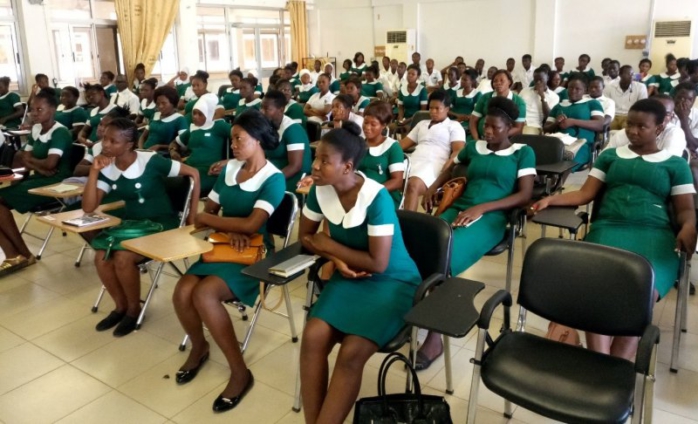
A senior lecturer in Nursing and Midwifery at the Kwame Nkrumah University of Science and Technology (KNUST) has blamed the prevailing quota system with regard to the training of nurses and midwives for the inadequate number of practitioners in the country.
According to Adwoa Bemah Boamah Mensah, the system has created a huge deficit in relation to the required number of this cadre of health personnel for the health sector.
Government, in 2018, introduced the quota admission system for nursing training schools. The government explained that the move was to reduce pressure on the training schools and help improve the quality of nurses in the country.
This new directive meant public and private institutions accredited to train nurses in the country have to reduce their intake by almost 2,000 nurses for the 2018/2019 academic year.
Speaking on the Super Morning Show, Tuesday, Mrs. Mensah bemoaned the fact that the system restricts the number of applicants health training institutions can recruit although most of them have capacity to accommodate more than the specified quota.
“Are we training more nurses? In my view, No. This is because of the quota system that was introduced some few years back. As of now, if you're a training institution in the country, you cannot admit all the numbers that apply to your institution. We are not training as many nurses as we need," she said.
She noted that the impact of this development can be heavily felt in the remote areas where there are inadequate nurses to attend to patients.
“Those of us living in the city may not feel this, but move to the rural communities, you would go to very remote communities and you won’t have a midwife or a nurse there to attend to patients and this affects them since they are also citizens and deserve quality health service as being propagated by the Sustainable Development Goals (SDGs).
In spite of the adverse impact of the quota system on the sector, President of the Ghana Registered Nurses and Midwives Association, Perpetual Ofori Ampofo, kicked against suggestions that the system should be scrapped.
She contended that if abolished, it will go away with the allowance for trainee nurses.
“Allowances are important parts of training and if you understand the concept of the training you'll realise that student nurses and midwives don’t only stay in the classrooms and learn.
“They also contribute in terms of service delivery per the clinical attachments that they do, spending a number of hours at the clinical area. The essence of the allowance is to support them, get them what they need to be able to work and so allowances are important and it's important that it stays.”
Latest Stories
-
Mahama Ayariga urges banks to take responsibility for beautifying public spaces
32 minutes -
Abanga sets 4 million youth-vote target for Bawumia ahead of 2028 election
1 hour -
Gold edges lower with focus on Fed minutes, rate path clues
1 hour -
Oil prices rise as storms and air strikes threaten supply
2 hours -
Nigeria nears 2,000 repatriations from South Africa after latest evacuation flight
2 hours -
‘How can an office…close at 5pm?’ – Abanga questions 24-Hour Economy
2 hours -
‘4 million is possible’ – Abanga unveils NPP’s youth-vote battle plan
2 hours -
‘I never gave up’ – Abanga Fusani reflects on journey to NPP Youth Organiser victory
3 hours -
World Bank maintains Ghana’s growth rate forecast at 4.8% in 2026
3 hours -
Cedi was worst African currency in quarter 2, 2026 – World Bank
3 hours -
US death row inmate Christa Pike awake and speaking after failed execution, lawyers say
3 hours -
AI gains can lift three times as many people out of poverty in Ghana – World Bank
3 hours -
Scammers target ECG customers with fake meter sales and MoMo payment calls
5 hours -
Abanga Fusani credits hard work and consistency for NPP Youth Organiser victory
5 hours -
We did not take security issues seriously – Abanga Fusani reflects on NPP’s 2024 election loss
5 hours