

Audio By Carbonatix
Omanbotantim Association, a community-based accountability group in the Ahafo Region, has accused Newmont of breaching a 2017 White Paper agreement that guaranteed key legacy projects for five host communities — Kenyasi No.1, Kenyasi No.2, Ntotroso, Gyedu, and Wamahinso.
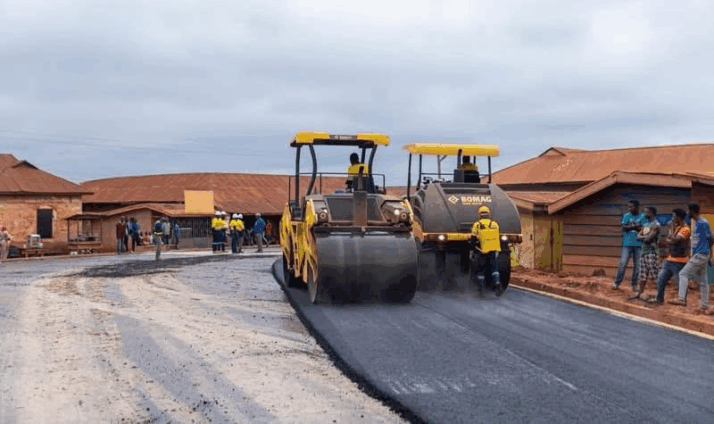
In a press release on Monday at Kenyasi, the group said these projects included the construction of asphalt town roads, vocational training facilities, and community infrastructure meant to improve livelihoods and mobility.
“What was agreed as a legacy asphalt project has become a low-grade double-seal road that is already breaking down,” said Frank Kofi Adusei, Chairman of the Omanbotantim Association. “We deserve better roads and honest development, not shortcuts and excuses.”
A Promise That Faded Like Dust
The 2017 White Paper followed a massive youth demonstration demanding transparency, fair compensation, and sustainable development in the five Ahafo host communities.
A seven-member oversight committee, chaired by then Bono Ahafo Regional Minister Kwaku Asomah Kyeremeh, was tasked with ensuring that Newmont fulfilled its pledges.
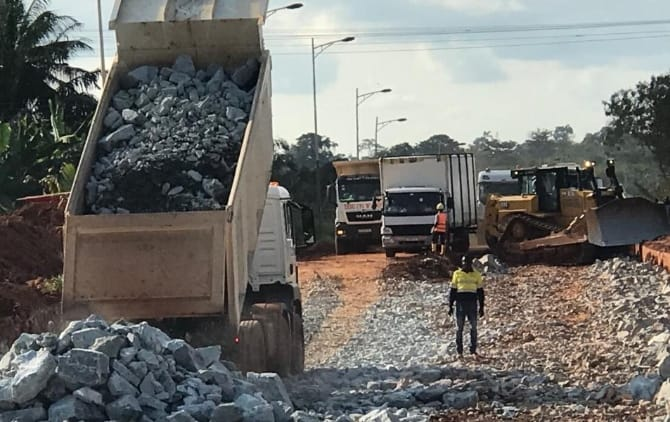
However, the Omanbotantim Association says Newmont is now constructing double-seal roads instead of the agreed asphalt standard, without consulting traditional authorities or local leaders. Community representatives claim the thin road surface is already deteriorating despite being completed only recently.
A joint meeting between Newmont, the Asutifi North District Assembly, and chiefs from the affected towns reportedly concluded that asphalt roads should be built as per the White Paper. Yet, Newmont allegedly insists on continuing the double-seal construction, sparking anger and mistrust among residents.
“This is not just about roads,” said Yaw Berfi, a youth leader from Kenyasi No.2. “It’s about respect. If Newmont can change agreements without community consent, what else will they alter tomorrow?”
Breach of Trust in a Golden Zone
The Omanbotantim Association has since petitioned then-President Nana Addo Dankwa Akufo-Addo to intervene and ensure the mining company delivers the promised legacy projects in full.
In Ghana, data from the Natural Resource Governance Institute (NRGI, 2022) shows that mining-related conflicts have increased by 40% over the past decade, largely due to unmet commitments and environmental damage.
A 2023 African Development Bank (AfDB) study found that over 62% of mining-related community disputes on the African continent stem from unfulfilled development promises and lack of transparency in agreements.
Globally, a World Bank 2023 report estimates that mining disputes cost companies more than $20 billion annually in legal fees, protests, and project delays — proof that neglecting host communities is not just unethical, but economically damaging.
“Mining without accountability is development in reverse,” notes the UNDP Africa Bureau in its 2024 extractives report. “Host communities must not only bear the cost of extraction but share in its prosperity.”
Why First-Class Infrastructure Matters
Experts say that first-class infrastructure such as asphalt roads, potable water systems, and vocational training centres can transform mining communities from extractive zones into development hubs.
According to UNESCO (2023), well-constructed roads in mining regions increase local trade volume by up to 45%, improve healthcare access, and enhance social cohesion.
But in Ahafo, residents say the deteriorating double-seal roads are limiting trade, raising transport costs, and cutting access to schools and clinics. Compounding the problem, locals also accuse Newmont’s operations of polluting rivers and streams, leading to rising cases of typhoid and other waterborne illnesses.
“Our lands are gone, our water is gone, and now even the roads they promised are failing us,” said Elder Ntirakwah, a farmer from Gyedu. “What kind of legacy is this?”
A Call for Renewal and Transparency
The Omanbotantim Association insists that Newmont Ghana and its parent company, led by President and CEO Thomas R. Palmer, must personally review the Ahafo situation to restore trust.
As Ghana’s mining sector continues to anchor the economy — contributing over 8% of GDP and 40% of export earnings — the Ahafo dispute is a reminder that genuine development comes not just from resource extraction, but from keeping promises made to the people who live above the gold.
JoyNews reached out to Newmont Ghana for their response to the issues raised by the community-based group. The company has declined to comment.
Latest Stories
-
Freddie Blay granted GH¢800k bail in Kitase demolition case
38 seconds -
KAIPTC hosts Western Regional dialogue on illegal mining
6 minutes -
GAF denies injured El-Wak applicants enlisted
15 minutes -
PBC’s financial crisis leaves cocoa farmers in limbo – Minority Whip alleges
21 minutes -
Mahama commissions Kalsoume Sinare Baffoe as Ghana’s Ambassador to Spain
22 minutes -
Yango Ghana expands delivery services to Kumasi enhancing earnings for partner couriers
29 minutes -
Western Regional Minister urges strategic action against galamsey menace
56 minutes -
From audit rooms to global budget governance: How Mirabel Afeke’s work reflects global reach of Ghanaian accounting expertise
1 hour -
Asante Akyem South assembly distributes 300 shoes to deprived pupils
1 hour -
Mahama orders review of pension system to expand informal sector coverage
1 hour -
War and climate: Israel-Gaza conflict produced over 30 million tons of carbon emissions – Study
1 hour -
New Nkwakwanua health centre opens to replace facility plagued by years of challenges
1 hour -
Minority says PURC utility cuts too small, urges deeper reductions for consumers
1 hour -
Mahama Ayariga : The Architect of legislative substance
1 hour -
Enzo Fernandez uncertain over his Chelsea future
1 hour