

Audio By Carbonatix
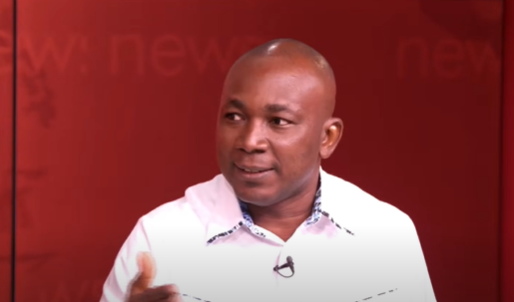
Professor of Finance & Economist at University of Ghana, Professor Godfred Bokpin, has advised against creating a new authority to oversee the 24-hour economy policy, warning it could add unnecessary cost.
Speaking on JoyNews' Newsfile on Saturday, July 5, Prof. Bokpin questioned the need for a separate body to manage the initiative, which aims to extend working hours in key sectors.
“You don’t need to create an authority for 24-hour economy,” he said. “This is a government programme everybody works with it.”
Drawing from Ghana’s history with development strategies, he cautioned that creating new structures often leads to inefficiency.
“Since 1992, if you look at development policies and how we seek to implement them, we take it away from the existing structures within which development channels must flow. That is where the politics becomes typified,” he noted.
Prof. Bokpin also highlighted wasteful spending in similar state bodies. “Pick NHIA from the time it was set up to date, approximately 44% of the total allocation to them is spent on administration. How do you pay claims promptly?” he asked. “Look at Cocobod, it is possible that Cocobod has more V8s than cocoa beans.”
He explained that an effective 24-hour economy should be a shift in mindset, not another bureaucratic layer. “We don’t need to create a separate unit within Ghana Police Service for 24-hour economy. It is supposed to be a mindset,” he stressed.
Prof. Bokpin referenced Ghana’s handling of past International Monetary Fund programmes as an example of efficiency without extra administrative burden. “We have successfully implemented 17 IMF-supported programmes, and in all of these, we have never created a secretariat,” he said. “IMF has an office here it is not an implementing office.”
He criticised plans for a new data-collecting body under the 24-hour policy. “If the document says there will be a secretariat that will collect data, what is Ghana Statistical Service doing?” he asked.
Instead, he urged the government to use the existing decentralised system. “We have a decentralised local government system let’s use it. That way we will minimise the cost of implementing these interventions,” he said.
Prof. Bokpin stressed the need for long-term sustainability. “We can make it work better,” he said.
“Once we infuse it within the existing systems, ministries, departments, agencies, they are all running with it. Even if there is a change in government, it will not necessarily dislocate the pathway and the result.”
Latest Stories
-
‘We’ve become quite experienced in negativity’ – Liverpool’s Slot
4 hours -
Legendary manager Lucescu dies days after resigning
4 hours -
One dead as train travelling 99mph collides with lorry in France
4 hours -
Airlines cut flights and hike fares as fuel prices surge
5 hours -
Kane inspires Bayern to first-leg advantage over Real Madrid at Bernabéu
5 hours -
Wireless Festival cancelled after Kanye West blocked from coming to UK
5 hours -
Wa West MP commissions five boreholes for the benefit of his constituents
5 hours -
Havertz’s late strike hands Arsenal narrow first-leg advantage over Sporting
5 hours -
Damang mine award: Minority not against Ghanaian participation; we’re asking for fair process – Konadu
6 hours -
NPA to enforce stricter registration rules for petroleum tankers
6 hours -
Manhyia South MP laments decline in hospitality operations in his constituency
6 hours -
How a simple clean charcoal innovation could benefit Ghana’s climate future
6 hours -
NPA, COMAC launch Safety Week 2026 to promote risk management in petroleum sector
6 hours -
Stakeholder engagement resolves onion trade impasse
6 hours -
Gender Ministry holds staff durbar, welcomes new Chief Director
7 hours