

Audio By Carbonatix
The National Disaster Management Organisation (NADMO) has said adequate measures are being implemented to forestall any flooding catastrophe during the rainy season.
While embarking on public education and sensitisation programmes, the outfit says it will soon be inspecting flood-prone areas in the capital and other cities to reduce the impact of floods when the rains strike.
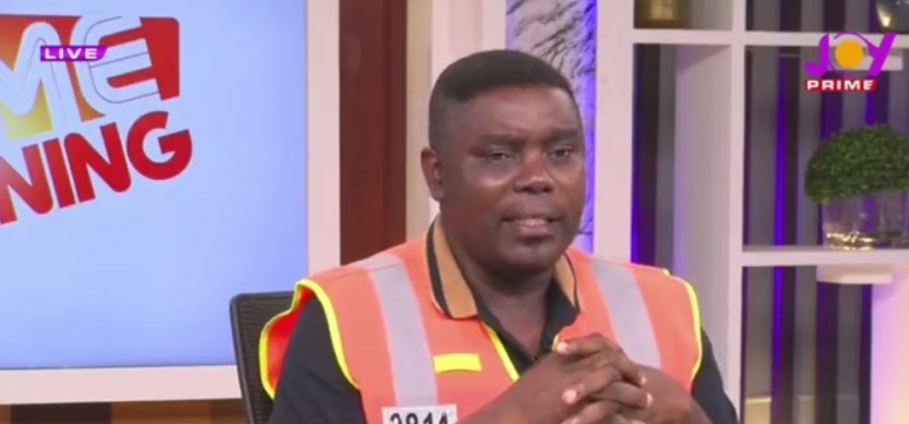
In an interview with JoyNews, the Communications Director for the Organisation, George Ayisi, added that some major drains have already been dredged as attempts are being made to identify safer places for stranded people.
“In partnership with the assemblies, some areas are dredged and anytime soon, maybe next week, the Director-General and the team will pay visit to some of the flood-prone areas to carry out inspections and see how prepared we are as far as the drains are concerned.
“There are some identified areas that we want to go. We identify safe havens where they can easily access and seek refuge till the rains are over because we know when the floods get there, it’s so dangerous and so that’s what we do,” he said.
On Sunday, April 3, some residents of Keta and Agavedzi in the Volta Region were displaced by tidal waves, leaving many homeless.
Some moved to higher grounds to seek shelter, while others had no choice but to sleep on mattresses along major roads.
In a related development, more than 3,000 persons were forced out of their homes after tidal waves swept through homes in the Ada East and West districts of the Greater Accra Region on Sunday.
Per reports received by NADMO, the disaster also destroyed more about 251 households in four communities, including Lolonya, Agblabanya and Anyamam.
These incidents have awakened the disaster management stakeholders to what is to come this rainy season.
The Meteorological Agency has warned there could be similar patterns to be expected.
But NADMO says the impacts can be mitigated if adequate measures are put in place by city authorities while the citizenry also takes the necessary precautions.
“…to take them out is sometimes difficult; relocation, evacuation and you need to get another place and that is central government’s responsibility.
“For now, we need to identify safe havens where they can seek refuge and then when the rains are down, they can go back,” George Ayisi added.
Latest Stories
-
Church of Pentecost supports over 2,000 BECE candidates in Obuasi with career guidance seminar
35 minutes -
Brandon Asante and Coventry all but promoted to Premier League despite Sheffield Wednesday draw
56 minutes -
GPL 2025/26: Late Kwartemaa strike downs Hearts in Tema
1 hour -
Ghana Faces Sierra Leone Moment as Prosecutorial Powers come under strain
1 hour -
Don’t consume fish or seafood from Tema Shipyard until further notice – FDA warns
1 hour -
Why volunteering might be Africa’s most underrated career accelerator
1 hour -
ActionAid Ghana raises concern over gender gaps in Feed Ghana Programme
1 hour -
Windstorm wreaks havoc in Gushegu, displacing nearly 2,000 residents and damaging schools
1 hour -
Friends of Bridget Bonnie Marks her 35th birthday with donation to Kasseh Model Health Centre
2 hours -
From Ekumfi Kokodo to the Pulpit Stage: Essi Donkor’s gospel journey takes shape
2 hours -
Landfilling waste management creates no value, it’s an economic waste
3 hours -
Photos: Speaker Bagbin Commissions MPs constituency office under parliamentary decentralisation programme
3 hours -
Black Stars technical advisor Winfried Schäfer sacked as GFA shakes up backroom staff
3 hours -
Wenchi water project almost complete, critical to gov’t agenda – GWL MD
3 hours -
Anti-LGBTQ+ bill not part of government’s legislative agenda – Inusah Fuseini
3 hours