

Audio By Carbonatix
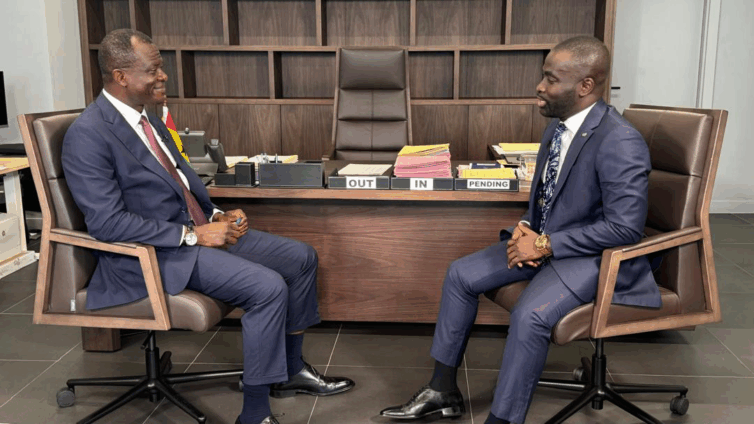
The First Deputy Governor of the Bank of Ghana, Dr. Zakari Mumuni, says the central bank is not using up reserves to support the cedi. He insists the recent gains are not artificial.
“If we were that heavy in terms of our support to the market, we would not be doing well with our reserves accumulation,” he said.
He described the market rally as credible and rooted in real confidence, dismissing speculation that the central bank is drawing down its buffers to defend the local currency.
“Unfortunately, if this were the case, market players who are very smart would have seen through it,” Dr. Mumuni said. “The rally would have been short-lived. They wouldn’t trust you.”
He said the central bank has actually been building reserves faster than anticipated.
“We are even accumulating reserves much, much faster than what has been expected,” he said. “And that is why the market really thinks this can be sustained.”
Dr. Mumuni stressed the quality of the reserves. “These are not debt-creating reserves,” he said.
“These are organically accumulated reserves. At the end of April, we had over $10 billion. We expect to hit $11 billion by the end of June.”
He said these figures are far above IMF targets. “The IMF program set a target of three months of import cover. We are now at 3.7 months using IMF metrics,” he said.
“If you include petroleum funds, we’re around 4.7 months. That’s quite a lot.”
He said this performance shows policy innovation.
“We have devised very strategic ways of meeting market demand while still accumulating external buffers,” he explained.
“What we are doing now places more weight on building reserves than on direct market support.”
He told Joy News that the approach has shifted. “This time is different,” Dr. Mumuni said.
He acknowledged that other factors also support the cedi’s strength.
“We’ve had a Staff Level Agreement with the IMF. That sent a strong message globally. It means things are changing.”
He pointed to disinflation. “Inflation dropped from nearly 24% to 21.2%. That’s progress,” he said.
“Fiscal consolidation is also taking shape. Public sector borrowing has slowed sharply compared to last year.”
He said the Bank of Ghana has taken deliberate steps to manage liquidity. “We’ve sterilised three times more than last year,” he said.
“So we’re keeping cedi liquidity tight while still meeting forex demand.”
He said all these efforts work together. “We are not intervening recklessly,” he said. “We’re building confidence, not burning reserves.”
He repeated the central point. “This is not smoke and mirrors,” Dr. Zakari said. “This is real. And we intend to sustain it.”
Latest Stories
-
The Ghanaian prophet and the mysterious death of his scottish wife Charmain Speirs
30 minutes -
Nearly 400 sentenced in Nigeria for links to militant Islamists
51 minutes -
Ghana’s recovery supported by gold strength despite global oil price pressures – Standard Bank Research
58 minutes -
Kwaku Azar writes: A-G vs OSP
2 hours -
Mfantsipim–Adisadel rivalry built excellence, not division – Sam Jonah
2 hours -
Vice President launches Mfantsipim’s 150 years of shaping Ghana’s greatest mind
2 hours -
I assure Otumfuo, Mahama will join him to commission KNUST Teaching Hospital by end of this year – Haruna Iddrisu
3 hours -
Barcelona dominate derby to extend La Liga lead
3 hours -
Gov’t to roll out free special education for persons with disabilities from July 1 – Education Minister
3 hours -
Importers and Exporters Association declares full support for Publican AI port system
4 hours -
“We used it to test our officiating officials’ readiness” – Bawah Fuseini after CAA Athletics event
4 hours -
Volleyball emerges as Ghana’s fastest rising sport
4 hours -
National Sports Fund needs strong leadership from the top – Administrator David Wuaku
4 hours -
JoySports Exclusive: Steve McLaren in talks with GFA after expressing interest in Black Stars job
4 hours -
Fire guts auto parts warehouse at Bubuashie, one fire officer injured
4 hours