


Audio By Carbonatix
What could be the highest temperature ever reliably recorded on Earth - 130F (54.4C) - has been reached in Death Valley National Park in California.
The recording is being verified by the US National Weather Service.
It comes amid a heatwave on the US's west coast, where temperatures are forecast to rise further this week.
The scorching conditions have led to two days of blackouts in California, after a power plant malfunctioned on Saturday.
Sunday's reading was recorded in Furnace Creek in Death Valley.
Before this, the hottest temperature reliably recorded on Earth was 129.2F (54C) - also in Death Valley in 2013.
A higher reading of 134F, or 56.6C a century earlier, also in Death Valley, is disputed.
It is believed by some modern weather experts to have been erroneous, along with several other searing temperatures recorded that summer.
According to a 2016 analysis from weather historian Christopher Burt, other temperatures in the region recorded in 1913 do not corroborate the Death Valley reading.
Another record temperature for the planet - 131F, or 55C - was recorded in Tunisia in 1931, but Mr Burt said this reading, as well as others recorded in Africa during the colonial era, had "serious credibility issues".
The current heatwave stretches from Arizona in the south-west, up the coast to Washington state in the north-west.
It is expected to hit its peak on Monday and Tuesday, before temperatures start to drop later in the week. However, the sweltering heat will continue for at least another 10 days.
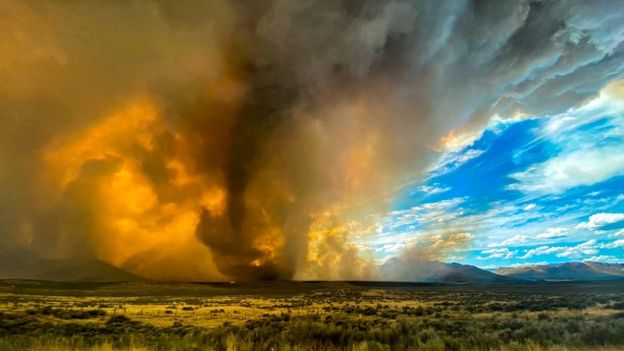
As temperatures soared in California, a large "firenado" was observed on Saturday in Lassen County.
California's Independent System Operator (CISO), which manages the state's power, has declared a Stage 3 Emergency, meaning "when demand [for electricity] begins to outpace supply".
Because so much of the region's power relies on solar and wind energy, and because people use their electricity for air conditioning, during heatwaves the power grid becomes strained and is at risk of completely malfunctioning.
In order to manage the state's demand for power and prevent a complete shutdown, officials are using scheduled rolling blackouts to control and conserve energy.
Latest Stories
-
GPL 2025/26: Dreams FC stage stunning comeback to hammer Eleven Wonders
1 minute -
Livestream: The Probe examines Kumasi’s looming water crisis
5 minutes -
MTN Ghana gears up to lead Africa’s AI revolution
6 minutes -
Philanthropist Alhaji FuZak donates Da’wah bus to Ambariya Sunni community
13 minutes -
GUTA calls for suspension of Publican AI system over trade disruptions, demands temporary halt in import activities
16 minutes -
TTAG raises alarm over proposed recruitment of 7,000 teachers, demands national posting roadmap
49 minutes -
Civilians feared killed after reports of air strike on Nigerian market
59 minutes -
Bishop Simon Kofi Appiah installed as new Jasikan Diocese Bishop
1 hour -
Trump’s Strait of Hormuz blockade threat raises risks and leaves predicaments unchanged
1 hour -
US Court backs extradition of former MASLOC CEO Sedina Tamakloe-Attionu to Ghana
1 hour -
Seven arrested as NAIMOS dismantles illegal mining camp, seizes firearms at Boin River
1 hour -
Fire erupts at Madina Ritz Junction, destroys multiple wooden structures and containers
2 hours -
Daniel-Kofi Kyereh returns from long-term injury, registers assist for Freiburg U23
2 hours -
Knifeman calling himself ‘Lucifer’ slashes three at NYC’s Grand Central
2 hours -
Brands are built from within to without
2 hours