

Audio By Carbonatix
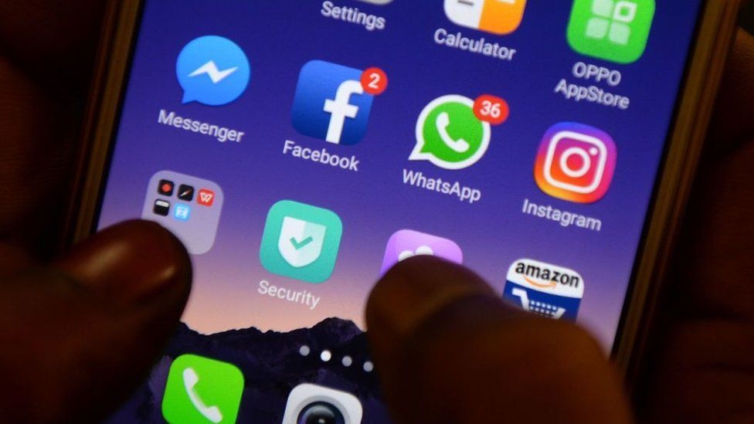
WhatsApp has said it blocked over two million accounts in India in May and June for violating rules.
The service said 95% of these users were blocked for violating the limits of the number of times messages can be forwarded in India.
The submissions were made by WhatsApp in its first monthly compliance report under India's controversial new IT rules.
India is WhatsApp's largest market with about 400 million users.
The Facebook-owned messaging service said its "top focus" has been to prevent accounts in India from sending harmful or unwanted messages at scale.
Using advanced machine learning technology, WhatsApp reportedly bans close to eight million accounts across the world every month.
Two million accounts in India sending a "high and abnormal rate of messages" were banned in India alone between 15 May and 15 June, the service said.
The service identifies an Indian account as one with a +91 (country code) phone number.
The Facebook-owned app often ends up being the focus of discussions on the spread of misinformation and fake news in India.
Such fake news and hoaxes are forwarded to tens of thousands of users in hours, and it's practically impossible to counter them.
Messages and videos circulating in bulk have in the past incited mob violence in India, even leading to deaths.
In addition to responding to user complaints, WhatsApp said it deployed its own tools to prevent abuse on the platform.
It said it relied on the "behavioural signals" from user accounts, or on available "unencrypted information", profile and group photos, and descriptions to identify potential offenders.
WhatsApp's submissions come at a time when tech companies are embroiled in an intensifying battle with the Indian government over the new IT rules.
The guidelines - announced in February and became effective in May - seek to regulate content on social media and streaming platforms, and have raised serious concerns about free speech and user privacy.
Critics say they give the government and law enforcement agencies powers to take down a wide range of content on the internet. But the government claims the rules are meant to prevent abuse and misinformation.
Latest Stories
-
‘We’ve become quite experienced in negativity’ – Liverpool’s Slot
1 hour -
Legendary manager Lucescu dies days after resigning
2 hours -
One dead as train travelling 99mph collides with lorry in France
2 hours -
Airlines cut flights and hike fares as fuel prices surge
2 hours -
Kane inspires Bayern to first-leg advantage over Real Madrid at Bernabéu
2 hours -
Wireless Festival cancelled after Kanye West blocked from coming to UK
2 hours -
Wa West MP commissions five boreholes for the benefit of his constituents
2 hours -
Havertz’s late strike hands Arsenal narrow first-leg advantage over Sporting
2 hours -
Damang mine award: Minority not against Ghanaian participation; we’re asking for fair process – Konadu
3 hours -
NPA to enforce stricter registration rules for petroleum tankers
3 hours -
Manhyia South MP laments decline in hospitality operations in his constituency
3 hours -
How a simple clean charcoal innovation could benefit Ghana’s climate future
3 hours -
NPA, COMAC launch Safety Week 2026 to promote risk management in petroleum sector
3 hours -
Stakeholder engagement resolves onion trade impasse
4 hours -
Gender Ministry holds staff durbar, welcomes new Chief Director
4 hours