

Audio By Carbonatix
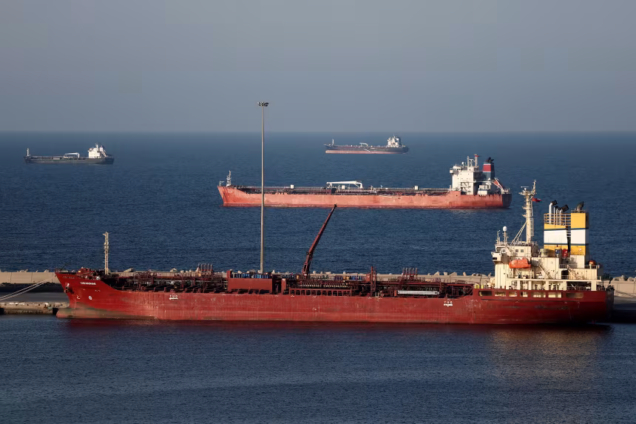
Iran has begun laying mines in the Strait of Hormuz, the world’s most important energy chokepoint that carries about one-fifth of all crude oil, according to two people familiar with US intelligence reporting on the issue.
The mining is not extensive yet, with a few dozen having been laid in recent days, the sources said. But Iran still retains upward of 80% to 90% of its small boats and mine layers, one of the sources said, so its forces could feasibly lay hundreds of mines in the waterway.
Iran’s Islamic Revolutionary Guard Corps, which now effectively controls the strait along with Iran’s traditional navy, has the capability to deploy a “gauntlet” of dispersed mine-laying craft, explosive-laden boats and shore-based missile batteries, CNN has reported.
The IRGC previously warned that any ship passing through the strait would be attacked, and the channel has effectively been closed since the start of the war. The state of the strait has been described to CNN as a “death valley” given the risks involved in transiting.
US officials said today that the US Navy had not escorted any vessels through the strait, though President Donald Trump said Monday that his administration was looking at options to do so.
President Donald Trump said in a post on Truth Social on Tuesday that “if Iran has put out any mines in the Hormuz Strait, and we have no reports of them doing so, we want them removed, IMMEDIATELY!”
He added that “if for any reason mines were placed, and they are not removed forthwith, the Military consequences to Iran will be at a level never seen before. If, on the other hand, they remove what may have been placed, it will be a giant step in the right direction!”
Trump also said during a Monday press conference that “the Strait of Hormuz is going to remain safe. We have a lot of Navy ships there. We have the best equipment in the world inspecting for mines.”
Nearly 15 million barrels per day (bpd) of crude production, plus another 4.5 million bpd of refined fuels, are now effectively stranded in the Gulf, CNN has reported, and producers like Iraq and Kuwait have no alternative to shipping oil through Hormuz. The G7 group of large economies have hinted they could move to release more oil to try to offset the shortages.
Uncertainty surrounding the ability to move oil through the waterway appeared to be causing severe volatility on the crude oil market on Tuesday, with the price per barrel fluctuating between more than $90 and less than $80 in a series of peaks and valleys.
Latest Stories
-
Russia launches largest attack on Ukraine energy infrastructure since spring
1 second -
GHABA launches first national Hair and Beauty Festival to promote skills and enterprise development
4 seconds -
ICU urges GHABA members to transform hairdressing skills into sustainable enterprises
14 minutes -
Ghana eyes stronger trade ties as Australia hosts multicultural trade and investment forum
23 minutes -
Margaret-Marie Krakue
26 minutes -
Ayariga announces plans for live broadcast of MMDAs’ meetings on local radio stations
29 minutes -
Mrs Anna Tackie
31 minutes -
Ghana links Afghan heroin and Brazilian cocaine to global drug markets – Global Organised Crime Index
38 minutes -
NHIA launches nationwide inter-school quiz to deepen students’ knowledge of NHIS
45 minutes -
Political protection could be masking Ghana’s cocaine trade – Global Organised Crime Index
50 minutes -
AFCON 2027Q: ‘We have to dissolve the GFA’ – Effia MP after Black Stars lose to Gambia
52 minutes -
NPP announces voting schedule and ID requirements for October 3 national elections
54 minutes -
Lupus can mimic HIV symptoms and damage kidneys if untreated – KNUST expert
57 minutes -
Focus on Sickle Cell Foundation seeks to introduce sickle cell education through comics in Ghanaian schools
1 hour -
NPP rewrites the campaign playbok as opposition reality shapes National Executive contest
1 hour