

Audio By Carbonatix
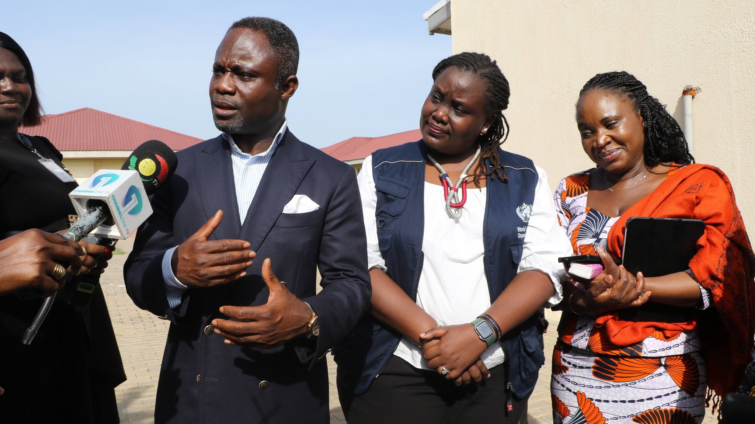
The Minister for Health, Kwabena Mintah Akandoh, has called for stricter public health measures across the country, directing that all mass gatherings should have hand-washing facilities as part of efforts to strengthen Ghana’s preparedness against Ebola.
The directive follows a comprehensive inspection tour of key national response facilities, including the Accra International Airport (AIA) Port Health Unit, the Noguchi Memorial Institute for Medical Research, and the Ga East Infectious Disease Centre.
Speaking after the tour, the Minister said that although Ghana has not recorded any confirmed case of Ebola, the country must remain vigilant and proactive.
“From today, there should be no mass gathering without a hand-washing station,” he stated, urging the public to embrace preventive measures to reduce the risk of any potential outbreak.
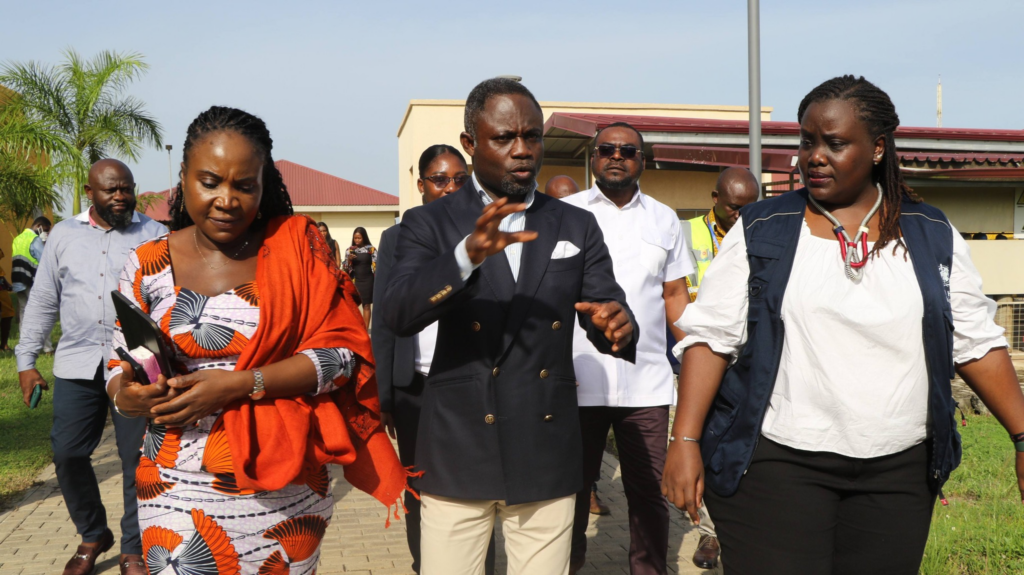
The Minister began his assessment at the Accra International Airport, where he reviewed screening procedures for arriving passengers. While expressing satisfaction with the measures currently in place, he directed immediate enhancements to strengthen surveillance at the country's entry points.
These include the deployment of advanced temperature scanners and improved passenger flow systems to ensure more effective screening of travellers.
As part of efforts to improve frontline preparedness, Mr Akandoh presented Personal Protective Equipment (PPE) to health personnel and emphasised that all travellers, regardless of their status, must comply fully with health screening protocols.
At the Noguchi Memorial Institute for Medical Research, the institute's Director, Prof. Dorothy Yeboah-Manu, assured the Minister that the facility is well prepared to respond to any suspected Ebola case.
According to her, the institute has the necessary expertise, laboratory equipment and reagents required for testing and diagnosis. She also disclosed that a dedicated sample reception centre has been established to ensure the safe and efficient handling of samples.
The World Health Organization (WHO) Country Representative, Dr Fiona Braka, also commended Ghana's preparedness efforts, describing the country's surveillance and laboratory systems as strong.
She highlighted the importance of rapid diagnosis, noting that suspected Ebola cases should be confirmed within 24 hours. Dr Braka, however, urged the public not to lower their guard, given the seriousness of the disease.
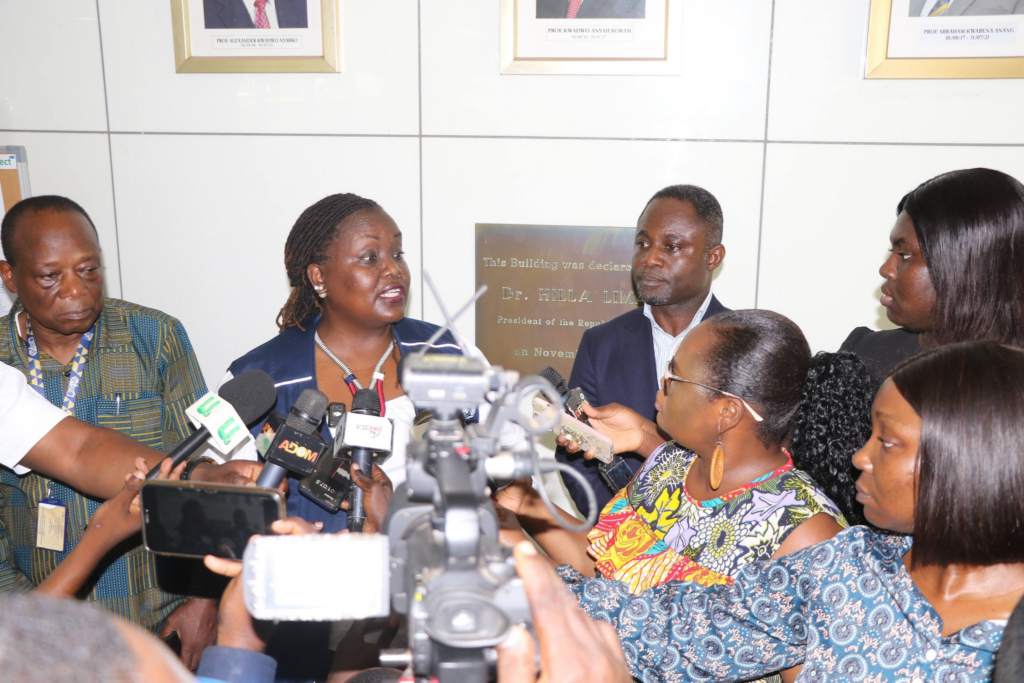
The Minister's final stop was the Ga East Infectious Disease Centre, where he observed that the facility remains fully prepared to manage any potential outbreak, drawing on its experience from previous public health emergencies.
Although no Ebola case has been recorded in Ghana, Mr Akandoh cautioned against complacency and encouraged citizens to strictly observe preventive measures.
He advised the public to practise regular hand hygiene, avoid handshakes where possible, and promptly report symptoms such as fever, vomiting, or unexplained bleeding to health authorities.
“There is no cause for panic, but we must all play our part,” the Minister said, stressing that collective responsibility remains Ghana’s strongest defence against any potential Ebola outbreak.
Latest Stories
-
Banks accounted for 86% total enquiries for credit in 2025
1 minute -
Over 25m enquiries conducted by financial institutions for credit appraisals, others in 2025
17 minutes -
Habib Iddrisu questions Speaker Bagbin’s rejection of motion after Parliament recall
1 hour -
More than 400 detained as France student protests escalate
2 hours -
Ballon d’Or Power Rankings: Lamine Yamal leads race for Golden Ball ahead of Rodri and Kane
3 hours -
‘Nothing worked for us’ – Gideon Mensah takes responsibility for Gambia defeat
3 hours -
Habib Iddrisu says rejected motion was exactly what triggered Parliament recall
3 hours -
Spain announces ban on evictions after protests over 87-year-old woman’s removal from flat
4 hours -
Habib Iddrisu ‘very surprised’ as Speaker rejects Parliament recall motion
4 hours -
Speaker’s decision to reject recall motion catches Dep Minority Chief Whip off guard
4 hours -
2026 Women’s Super Cup: FC Savannah beat Epiphany Warriors to win trophy for first time
4 hours -
Fifa accuses Uefa of ‘misinformation campaign’
5 hours -
Kane and Gordon give England victory over Czech Republic in Nations League
5 hours -
AFCON 2027Q: ‘The last time Ghana won was eight games ago’ – Carlos Queiroz
5 hours -
AFCON 2027Q: Gambia defeat doesn’t make me a loser – Carlos Queiroz
5 hours