

Audio By Carbonatix
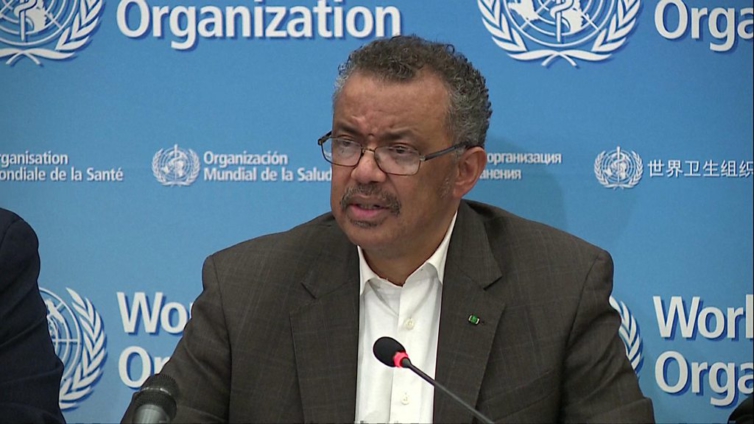
The World Health Organisation (WHO) has cautioned against the use of traditional medicine that has not been scientifically proven to treat COVID-19.
Most of the claims were being made on social media, it said.
However, the Malagasy Institute of Applied Research and branded COVID Organics, recently launched, amid much fanfare, what it said was a remedy for the coronavirus.
It contains Artemisia, a plant cultivated locally to combat malaria.
But the WHO warned in a statement on Monday: “As efforts are under way to find treatment for COVID-19, caution must be taken against misinformation, especially on social media, about the effectiveness of certain remedies.
“Many plants and substances are being proposed without the minimum requirements and evidence of quality, safety and efficacy.
“The use of products to treat COVID-19, which have not been robustly investigated can put people in danger, giving a false sense of security…and may also increase self-medication and the risk to patient safety.”
The UN agency said that it recognised the “long history” of traditional medicine in Africa and its “role in providing care to populations”.
“Medicinal plants such as Artemisia annua are being considered as possible treatments for COVID-19 and should be tested for efficacy and adverse side effects,” the WHO noted.
“Africans deserve to use medicines tested to the same standards as people in the rest of the world.
“Even if therapies are derived from traditional practice and natural, establishing their efficacy and safety through rigorous clinical trials is critical.”
The WHO said it welcomed “innovations around the world including repurposing drugs, traditional medicines and developing new therapies in the search for potential treatments for COVID-19”.
In 2000, during the 5th Session of the WHO Regional Committee for Africa, the continent’s ministers of health adopted a resolution calling for evidence on the “safety, efficacy and quality of traditional medicine”.
The health ministers also agreed to undertake relevant research and for national regulatory agencies to approve medicines in line with international standards.
These include following a strict research protocol and rigid tests and clinical trials.
The studies normally involve hundreds of people being monitored by national regulatory authorities over a long period.
The UN agency said that over the last 20 years it had been working with countries to “ensure safe and effective traditional medicine development in Africa by providing financial resources and technical support”.
It had backed clinical trials, which had led to 14 countries issuing marketing authorisation for 89 traditional medicine products that had met international and national requirements for registration.
Of these, 43 had been included in national essential medicines lists.
“These products are now part of the arsenal to treat patients with a wide range of diseases including malaria, opportunistic infections related to HIV, diabetes, sickle cell disease and hypertension.
“Almost all countries in the WHO African region have national traditional medicine policies, following support from WHO,” the agency said.
Latest Stories
-
Kwaku Azar writes: A-G vs OSP
7 minutes -
Mfantsipim–Adisadel rivalry built excellence, not division – Sam Jonah
32 minutes -
Vice President launches Mfantsipim’s 150 years of shaping Ghana’s greatest mind
49 minutes -
I assure Otumfuo, Mahama will join him to commission KNUST Teaching Hospital by end of this year – Haruna Iddrisu
2 hours -
Gov’t to roll out free special education for persons with disabilities from July 1 – Education Minister
2 hours -
“We used it to test our officiating officials’ readiness” – Bawah Fuseini after CAA Athletics event
2 hours -
Volleyball emerges as Ghana’s fastest rising sport
2 hours -
National Sports Fund needs strong leadership from the top – Administrator David Wuaku
3 hours -
JoySports Exclusive: Steve McLaren in talks with GFA after expressing interest in Black Stars job
3 hours -
Fire guts auto parts warehouse at Bubuashie, one fire officer injured
3 hours -
I owe my victory to coach Ofori Asare – Allotey after winning WBA Africa Gold Super Flyweight belt
3 hours -
Church of Pentecost supports over 2,000 BECE candidates in Obuasi with career guidance seminar
5 hours -
Brandon Asante and Coventry all but promoted to Premier League despite Sheffield Wednesday draw
5 hours -
GPL 2025/26: Late Kwartemaa strike downs Hearts in Tema
5 hours -
Ghana Faces Sierra Leone Moment as Prosecutorial Powers come under strain
5 hours