

Audio By Carbonatix
Ghana has over 2.3 million people living with various mental health conditions, yet mental health care remains a challenge, with a 98% treatment gap. Since 2022, the country has been implementing the Director General’s Special Initiative for Mental Health (DG-SIMH) in four regions to address the gaps and strengthen the standard of mental health and well-being.
The five-year initiative supported by the Government of Norway and USAID seeks to get 100 million more people to access quality and affordable mental health services in 12 countries around the world, including Ghana.
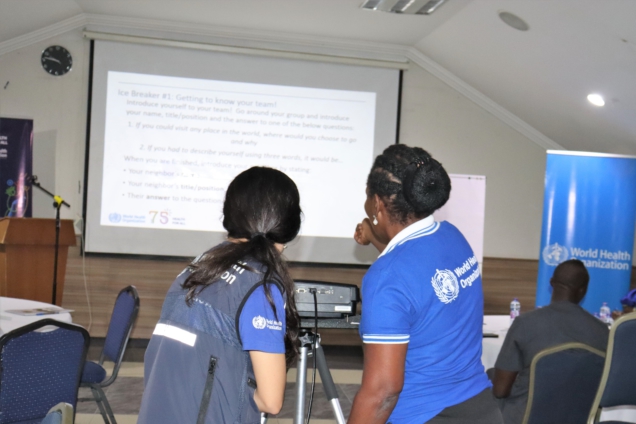
Now, the World Health Organization (WHO) is enhancing the capacity of the implementing regions and partners to ensure the sustainability of the initiative and other inventions even after the implementation period.
“Through the WHO Special Initiative for Mental Health, Ghana has stepped up efforts to improve mental health care. So now we are working to ensure that the significant effort being made is sustained beyond the lifespan of the initiative,” says the Noncommunicable Diseases & Risk Factors Officer at WHO Ghana, Dr Joana Ansong, during a sustainability planning and business case development workshop for the implementing partners in Kumasi.
On her part, the Deputy Director for Mental Health at the Ghana Health Service, Dr Amma Boadu lauded the foresight of WHO in seeking to enhance capacity for sustainable programming and pledged the service’s commitment to leverage the new skills sustain health programmes at all levels.
The workshop was aimed at building the foundational knowledge and expertise of the regions to effectively pursue, secure, and manage strategic partnerships for sustainable and impactful health programs.
“This capacity will help us to address gaps in our efforts to sustain mental health programmes and other health interventions, especially at the subnational level where resources are very constrained,” noted Dr Boadu.
Participants described the workshop as timely and insightful as they empowered with the requisite technical competence to build strong business cases for sustainable health interventions.
“This is the first time we are participating in this kind of workshop. We are ready to leverage the skills to not only mental health programmes but all other health interventions,” says Mr Edward Owusu, the Savannah Regional Mental Health Coordinator.
The four-day workshop saw participants taking through partnerships, resource mobilization and advocacy to strengthen their capacity to sustain their health programmes.
Latest Stories
-
Ghana Psychological Association calls for greater involvement of people with lived experience in mental health care
33 minutes -
Ablakwa says Ghana could evacuate more citizens from South Africa if the situation worsens
1 hour -
Violence against girls must be tackled through individual responsibility – Gender advocate
1 hour -
Ghana’s BRICS bid must be guided by national interest – International Affairs Analyst
1 hour -
Journalists look back on a decade of breast cancer reporting in Ghana
2 hours -
President Mahama ends Resetting Ghana tour of Ahafo Region
4 hours -
African negotiators seek delivery of climate commitments at COP31
4 hours -
BoG develops AI rules for financial sector
4 hours -
‘Big Push’: Government assures contractors of prompt payments
4 hours -
Court fines miner for breaking into gold buying shop
4 hours -
Tarkwa court jails labourer for three years over GH¢123,000 theft
5 hours -
GAEC must retain nuclear scientists for Ghana’s nuclear ambitions – Minister
6 hours -
Man reportedly mistaken for game and shot by hunter dead in forest
6 hours -
19-year-old mason jailed 15 years for defiling seven-year-old pupil
6 hours -
Ghana’s banking sector assets rise 20.47% to GH¢500.2bn – BoG Governor
6 hours