

Audio By Carbonatix
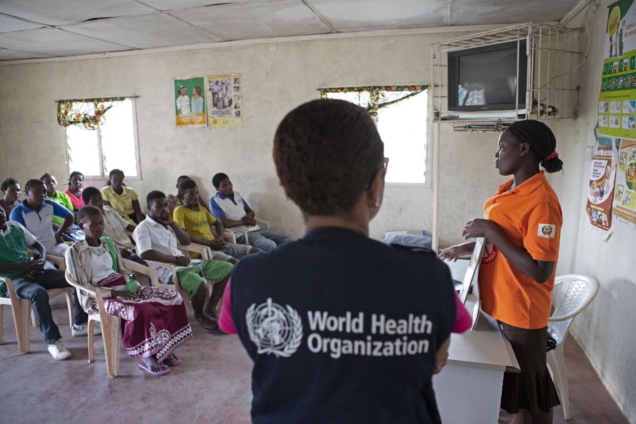
The World Health Organization (WHO) has held a four-day sustainability planning and business case development workshop for its partners to enhance mental health programmes in Ghana.
The workshop, held in Kumasi in the Ashanti Region aimed at building the foundational knowledge and expertise of the regions to effectively pursue, secure and manage strategic partnerships for sustainable and impactful health programmes.
A statement issued by the WHO Country Office and copied to the Ghana News Agency (GNA) said mental health remained a challenge in Ghana, with 2.3 million people living with the condition and a 98 per cent treatment gap.
Ghana has been implementing the Director General’s Special Initiative for Mental Health (DG-SIMH) since 2022 in four regions to address the gaps and strengthen the standard of mental health and well-being.
The five-year initiative supported by the Government of Norway and USAID seeks to get 100 million more people to access quality and affordable mental health services in 12 countries around the world, including Ghana.
It said the WHO was enhancing the capacity of the implementing regions and partners to ensure the sustainability of the initiative and other inventions even after the implementation period.
“Through the WHO Special Initiative for Mental Health, Ghana has stepped up efforts to improve mental health care.
"So now we are working to ensure that the significant effort being made is sustained beyond the lifespan of the initiative,” says Dr Joana Ansong, the Noncommunicable Diseases & Risk Factors Officer at WHO Ghana.
The Deputy Director for Mental Health at the Ghana Health Service, Dr Amma Boadu lauded the foresight of WHO in seeking to enhance capacity for sustainable programming and pledged the service’s commitment to leverage the new skills to sustain health programmes at all levels.
“This capacity will help us to address gaps in our efforts to sustain mental health programmes and other health interventions, especially at the subnational level where resources are very constrained,” Dr Boadu noted.
Participants described the workshop as timely and insightful as they were empowered with the requisite technical competence to build strong business cases for sustainable health interventions.
“This is the first time we are participating in this kind of workshop. We are ready to leverage the skills to not only mental health programmes but all other health interventions,” says Mr Edward Owusu, the Savannah Regional Mental Health Coordinator.
The four-day workshop saw participants taking through partnerships, resource mobilization and advocacy to strengthen their capacity to sustain their health programmes.
Latest Stories
-
Let’s give OSP time to mature, not to scrap it – Hassan Tampuli
2 minutes -
Nigeria convicts 386 Islamist militants in mass trials
8 minutes -
Djibouti president wins election with 97.8% of vote, state media says
12 minutes -
We don’t have mandate to deduct tax from rent allowance of security services personnel – Interior Ministry clarifies
26 minutes -
Ablakwa receives Presidential Special Envoy on Reparations to advance global agenda
44 minutes -
Christina Koch becomes first woman to travel around the moon on Artemis II
55 minutes -
Epstein survivors’ calls to meet King Charles and Queen harder to ignore as US visit approaches
1 hour -
UN Secretary-General names Ghana’s Anita Kiki Gbeho as South Sudan envoy
1 hour -
Mali withdraws recognition of Sahrawi Republic, backs Morocco’s autonomy plan
1 hour -
Gov’t distributes over 8,500 laptops to One Million Coders project
1 hour -
Julius Debrah, ‘man to beat’ as NDC’s James Agbey dismisses Musah Dankwah’s polls
1 hour -
GPRTU in Savannah Region to protest alleged eviction in Damongo
2 hours -
Re: Reinsurance does not replace process — A response to the SIGA–SIC defence
2 hours -
Gender Ministry supports Harriet Amuzu in ongoing abuse case
2 hours -
AG joins plaintiff to scrap OSP ?: We should be mindful of the mischief in this – Bobby Banson
2 hours