

Audio By Carbonatix
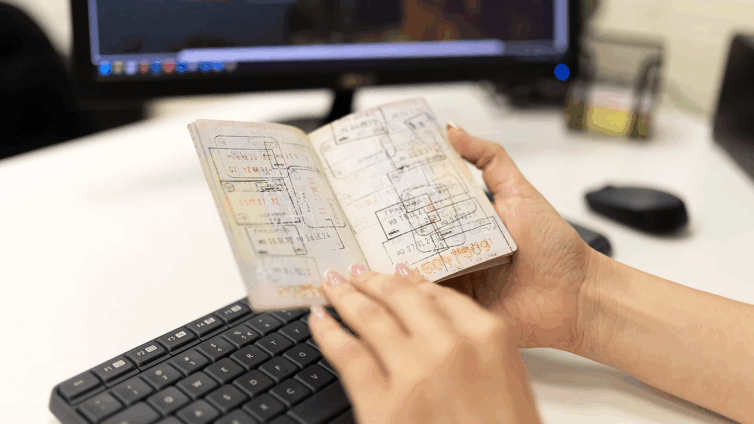
The process of handing your passport over to a border agent and getting a stamp that signals your arrival in a new nation may soon be a thing of the past.
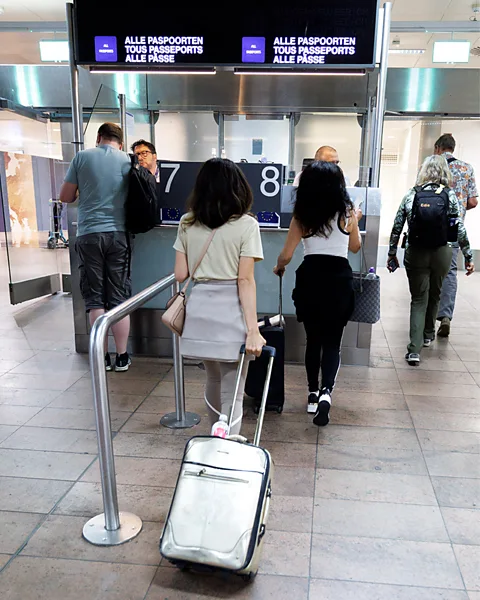
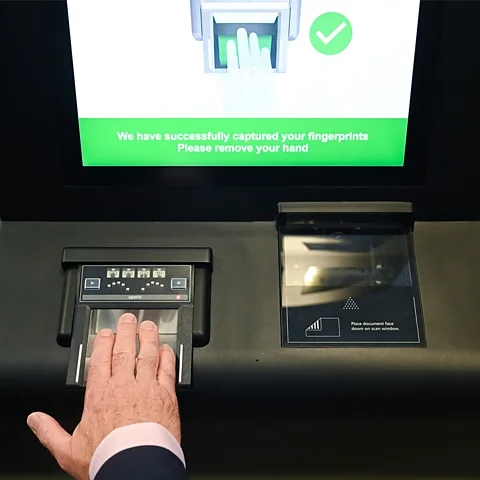
In October 2025, the European Union began rolling out its Entry/Exit System (EES). This new digital border-management tool records biometric data and the entry and exit dates of non-EU nationals travelling in and out of the Schengen area. Once fully implemented in April 2026, the system will replace manual passport stamping with digital screening, making the process more efficient and secure – and marking a significant shift in how some travellers cross European borders.
The change is part of a broader global trend. Countries like Australia, Japan and Canada already use biometric data at border crossings, while the United States has announced plans to expand similar systems. As digital processing becomes the norm, it could quietly spell the end to a time-honoured travel ritual: collecting passport stamps.
"Versions of passport stamps go all the way back to the Middle Ages or Renaissance," said Patrick Bixby, a professor at Arizona State University and author of License to Travel: A Cultural History of the Passport. "[A wax seal] would be put on letters of conduct by sovereigns in Europe. That's kind of the beginning, at least as far as I'm concerned."
While travel documents – and stamps of some kind – have existed for centuries, it wasn't until the early 20th Century that modern passports began to take shape. After World War One, the League of Nations helped formalise passport standards as borders became more tightly regulated.
By the 1950s, the more modern tradition of receiving passport stamps had become markers of mobility and status as the world entered the "golden age" of travel, when flights became more accessible to the general public.
"[It was] really only after World War Two and the resumption of international travel [that] the stamps begin to take on the kind of sentimental value that they have now," said Bixby.
With the possibility of stamps disappearing, reactions among travellers are mixed.
"I'll genuinely miss passport stamps," says Hristina Nabosnyi, who lives in London. "For me, they've always been more than just proof of entry – they're little memory markers of places visited and countries I travelled to."
New York-based writer Elle Bulado agrees. "Losing passport stamps feels bittersweet. Although I recognise the need for quicker and more effective processes, receiving a stamp has always felt like a little acknowledgement," she said. "It's evidence that you crossed a border and arrived somewhere you could only dream of. I will miss that custom if stamps vanish."
Others are more pragmatic. Jorge Salas-Guevara, president and founder the tour company New Paths Expeditions, is excited about how much time the new digitised process could save. "I spend about 250 to 300 days a year on the road, crossing borders constantly, so for people like me this change is a relief."
Though some travellers will miss the nostalgia of collecting passport stamps, many have plans to mark their travels in other ways instead, such as collecting fridge magnets or other souvenirs.
Still, for Bixby, there will always be something special about having a tangible record of your travels. "This is [really] a bigger question about analogue versus digital," he said. "There's something about having [a document] that was with you when you were there. [It creates] a kind of aura around the physical object that dissipates when everything becomes digitised."
Latest Stories
-
Bond market: Turnover declines by 59% to GH¢377.59m
5 minutes -
Touching children’s lives elevates me – James Kofi Annan
7 minutes -
Police arrest man over viral threats against High Court judge
7 minutes -
Parliament submits five bills to President Mahama for assent
11 minutes -
Otto Addo lacked credentials for Black Stars job – Ekow Asmah
18 minutes -
74% of SMEs collapse within 5 years; experts call for urgent business structuring reforms
18 minutes -
Agbodza commends Maripoma Enterprise for progress on Tema Motorway project
20 minutes -
Justice Dela Amevor leads PTA to deliver new girls’ dormitory at Anlo Technical Institute
20 minutes -
Ga Mantse urges strict enforcement of building regulations after Accra New Town tragedy
22 minutes -
Germany commissions border Sheds to boost Ghana’s immigration operations at Aflao
28 minutes -
Sam Jonah’s concerns fuel IMANI’s petition to Mahama over political interference in insurance sector
28 minutes -
Absa SME Business Clinic equips entrepreneurs with practical financial management strategies
41 minutes -
Franklin Cudjoe hails ‘productive’ civil society meeting with Mahama; backs inquiry into ‘Big Push’ procurement
42 minutes -
Telecel Foundation supports safer pregnancies with ultrasound outreach in Naaha
1 hour -
AU’s 10-year reparations agenda is essential to address historic injustices – Spio-Garbrah
2 hours